
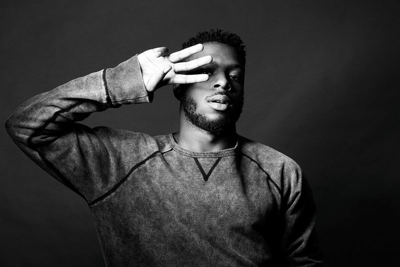


Chattanooga-born MC Isaiah Rashad tells the Scene that he used his stint at Middle Tennessee State University the way a fair number of future pros use college — namely, to get into the rhythm of making music. “I had a lot of freedom, so I used it to just record, and eat, and smoke,” he says with a laugh. “Kind of what I do now.”
It probably didn’t help his GPA, but Rashad honed his chops on tracks and hip-hop shows in Antioch and greater Nashville, rising further up the bill each time. After months of rumors, the news broke in September 2013 that he had moved to L.A. and signed with the dream team hip-hop collective Top Dawg Entertainment, home to Schoolboy Q, Jay Rock, Ab-Soul, SZA and magnetic superstar and contemporary hip-hop standard bearer Kendrick Lamar. Of all the rappers who’ve passed through Music City’s hip-hop scene (which hasn’t yielded a star since Yelawolf) at 22, Rashad found himself among the most likely to succeed.
His name-making Cilvia Demo dropped in January 2014. An all-killer 50-minute EP, Cilvia is one hell of an introduction. From the opening “Hereditary,” one of several tracks exploring the role his father’s absence played in his life, to the closing “Shot You Down,” a fierce declaration of his intent to do nothing less than dominate the game, the set showcases introspection and storytelling that are on par with the most seasoned MCs in said rap game — and while we’re at it, maybe even the best songwriters on Music Row.
Expectations were high for a follow-up. But months turned into years, and nothing came.
Incredible opportunities and success go hand in hand with incredible pressure that can tackle even the most self-assured and successful performers. Kanye West and Lil Wayne both faced health scares in 2016. Kid Cudi and Chance the Rapper both opened up to the media about stress, depression and substance abuse.
So did Rashad. In interviews promoting the September 2016 release of The Sun’s Tirade, his official debut full-length on Top Dawg, he revealed his addictions to alcohol and the anti-anxiety medication Xanax. The chemicals resulted in some memory loss and sent him to the hospital with damage to his stomach lining. Even worse, they strained his personal life and stalled his creative output to a degree that disturbed him.
The experience only fueled his hunger to record. And now he had a topic to explore. “I learned about myself,” he tells the Scene, speaking by phone. “Self-discovery — a better understanding of what I feel like is my philosophy of things.”
More than once, Rashad found he’d tested the patience of the Top Dawg crew, which you can hear in snippets of audio that frame The Sun’s Tirade, presented as voicemails from TDE co-president Dave Free. While all the sound bites reflect real concerns Free had, they’ve been re-recorded to soften the tone a little. As Free told the blog DJ Booth, “We not gonna let any of our artists go out there and do stupid shit.”
Fans and Top Dawg brass might have hoped to hear Tirade much sooner than they did, but the record is worth the wait. It brilliantly showcases Rashad’s development as an artist. Over tracks that create uneasy, sometimes-hazy atmospheres with ’70s-vintage R&B samples, he’s brutally honest about how he was sidelining himself from his own life.
Rashad’s also mastered a variety of different rapping styles he uses to illustrate different parts of the struggle. There’s the voice that struts and slurs but still speaks the truth on “Bday”: “Drunk / Lookin’ like a robber / Headed to the church / Or headed to the brothel / Poppin’ my collar / Ready like Bieber / How you tell the truth / To a crowd of white people?” And the clear-headed one that mingles with SZA on “Stuck in the Mud,” recognizing that the fruits of his success aren’t going to move him forward if he doesn’t do the pulling: “Range, Bimmer / Stuck in the mud / Look at what the reaper got / Stuck in the mud.”
There’s also Rashad’s panic-mode voice, which bears the influence of Kendrick Lamar’s on To Pimp a Butterfly’s “u.” Rashad uses it in describing the feeling of his world closing in during “Wat’s Wrong,” before Lamar himself comes in with a long, steady, rapid-fire verse. Like the guests spread across the album, Lamar isn’t simply there as a star to boost interest in the track — he comes across like an AA sponsor, someone who’s been there before and has valuable advice on how he made it through.
“I just like the musicality of the project and how it all fits together,” says Rashad, characteristically modest about an outstanding album that debuted at No. 17 on the Billboard 200. Reviews of recent tour stops show the rapper taking time to interact with as many fans as possible, as well as freestyling about staying hydrated.
His sold-out show at Exit/In on Tuesday — a homecoming of sorts — is his first headlining appearance in Nashville in a little over two years.
Email music@nashvillescene.com



Post a comment as anonymous
Report
Watch this discussion.
(0) comments
Welcome to the discussion.
Log In
Welcome to the discussion.
Keep it clean. Please avoid obscene, vulgar, lewd, racist or otherwise abusive language. Comments featuring hate speech or threatening or violent content will not be tolerated.
PLEASE TURN OFF YOUR CAPS LOCK.
Be truthful. Don't knowingly lie or mislead.
Be proactive. Use the “report” link on any comment that violates our comment policy.
Share with us. We'd love to hear your feedback.