
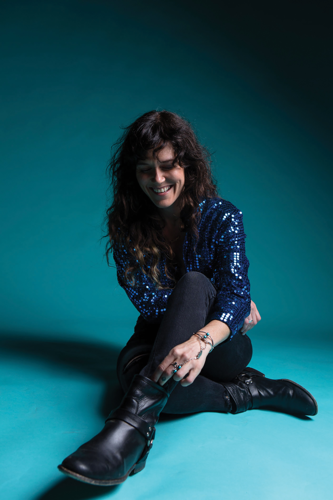
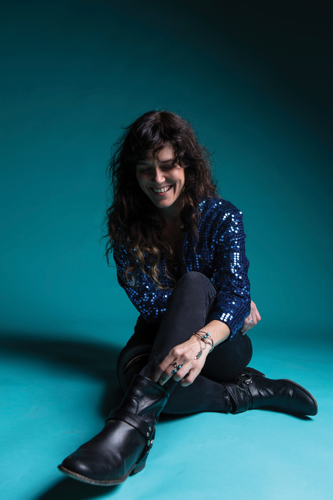


Lilly Hiatt is pacing outside her Trinity Lane apartment, the birds in the trees around her chirping loudly enough that I can hear them on the other end of our phone call. It’s a lovely backdrop for a conversation, though we were supposed to have met in person. First, our plan to have coffee at Sip Café was derailed by the tornado that tore across Middle Tennessee on March 3. Two days before our rescheduled date, social distancing to reduce the spread of COVID-19 became the norm, altering life as we know it for the foreseeable future. So here we are, talking on the phone, despite living barely a mile apart.
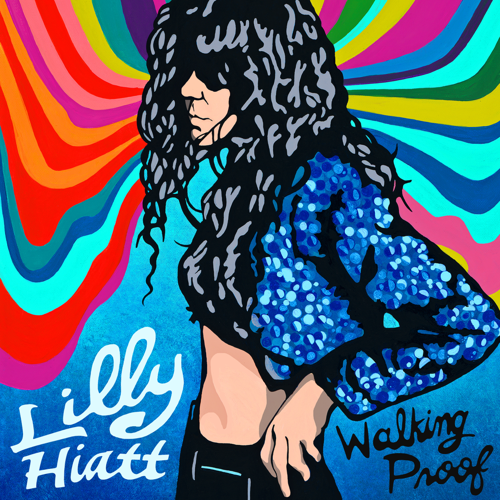
“I’m the most planted I have ever been,” says Hiatt, an outstanding songwriter who leads one of the best rock bands around. She’s been on the road so much that this break is almost tolerable. All the same, there’s a looming uncertainty about the whole world to contend with, as well as her fears about how the turmoil might impact the musical communities everywhere — not to mention the release of her fourth album, Walking Proof, out Friday via New West.
“Something that is comforting is that, ‘Hey, this business is still stressful, despite it all,’ ” she says, chuckling. “But I’m a go-with-the-flow kind of person. When something like this happens, I just take it as a sign.”
It’s a good thing Hiatt isn’t rattled by the unexpected. The plan for rolling out Walking Proof has had to change — a lot. A show at Grimey’s was canceled after the record store ceased all events during the pandemic. This was after the tornado severely damaged The Basement East, where her release party was originally scheduled. Instead of setting out on tour, she’s pondering digital marketing plans and listening to a lot of Sam Doores and Soccer Mommy at home. Walking Proof closes with “Scream,” which ends with a dramatic crescendo building around Hiatt as she howls, “Not gonna do it for him / Not gonna do it for her / I ain’t slowing down for nobody.” Those lines about persistence have a new meaning in our current landscape.
But it makes sense, in a way, that there’s a built-in pause in the proceedings. Hiatt toured relentlessly behind the deeply personal and frank Trinity Lane, which was produced by Michael Trent of Shovels & Rope. That album helped her earn a nomination for Emerging Artist of the Year at the Americana Music Association Honors and Awards in 2018. Walking Proof was written after Hiatt finally took some time off the road, reflecting on life before laying down the new songs with a new producer, former Cage the Elephant guitarist Lincoln Parish.

Walking Proof ended up being a collection of music about finding patterns and a feeling of safety in disorder. It’s about being confident in the framework you’ve established for yourself, and looking for consistency in a town — and a world — that changes faster than you can say “tall-and-skinny.” It’s about eating candy for lunch if you want to, because your rules matter, too.
In other words, it’s an album that’s perfect for our world right now.
Like Trinity Lane, Walking Proof is written in candid, potent detail. Conversational and confessional, poetic yet to-the-point, it comes across like passages from Jack Kerouac over electric guitar. But where Hiatt’s last album tackled extremely personal subjects like addiction and profound loss, Walking Proof expands her focus.
“Trinity Lane was very autobiographical,” she says. “I don’t want to make that album again. Of course, I will write a million more heartbreak songs, but I wanted to let other people in on the cast. There are a lot of friends here. It’s a record for everyone.”
Those friends include Amanda Shires, New West labelmate Aaron Lee Tasjan, pedal-steel player Luke Schneider and Hiatt’s father John Hiatt. The elder Hiatt joined his daughter on one of her songs for the first time with “Some Kind of Drug,” one of the album’s standouts. It was inspired by a time Hiatt volunteered with her sister to help Nashville’s homeless population, with the skyline of our booming, rapidly gentrifying city in the background.
“[My sister] has this job where she, on cold nights, canvassed on the streets and helped people,” Hiatt says. “That experience with her, going under the bridges and giving people blankets and propane — after coming home from tour and seeing condos everywhere while people are living in destitution — was very vivid and eye-opening.”
On one of her outings, Hiatt met a homeless man named Cory, who eventually made it into the lyrics of “Some Kind of Drug.” He was maybe 32, or 33, she thought, but he didn’t actually know his own age. “That blew my mind,” she says. “I know my age, I have the privilege of that, of having a birth certificate. It just really put things into perspective.”
Those kinds of experiences built the foundation of Walking Proof. They take on a different kind of significance in a city where people are trying to get back on their feet, dodging developers who see dollar signs in devastation, at the same time as the national economy is grinding to a halt amid efforts to slow the spread of a viral pandemic.
On the new LP, Hiatt also brings a renewed approach to how she blends her country roots with her love of electric guitars. “Walking Proof” plays like a rock ’n’ roll version of “Will the Circle Be Unbroken,” thanks in part to Shires’ fiddle, and everything strikes a pitch-perfect balance on the tightrope between genres.
“It’s all rock ’n’ roll to me,” Hiatt says, those background birds getting louder. “I’m a Tennessee girl. I made the record with Lincoln, and his background is rock ’n’ roll. But there is a cardboard cutout of Alan Jackson in his studio. I grew up singing ‘Chattahoochee,’ and both Faith Hill and Belly songs. I’ve always been a little bit country and a little bit rock ’n’ roll. These are all my words and feelings, but I’m getting more comfortable with the folk elements.”
Those words and feelings make for a record that, in a time when it feels like everything’s up in the air, provides a way to organize the chaos. That suits Hiatt to a T.
“I hope this album is simply a shoulder to lean on — a ray of sun in the darkness that will dissipate eventually. I hope that it brings some sort of solace to anyone who is listening.”



Post a comment as anonymous
Report
Watch this discussion.
(0) comments
Welcome to the discussion.
Log In
Welcome to the discussion.
Keep it clean. Please avoid obscene, vulgar, lewd, racist or otherwise abusive language. Comments featuring hate speech or threatening or violent content will not be tolerated.
PLEASE TURN OFF YOUR CAPS LOCK.
Be truthful. Don't knowingly lie or mislead.
Be proactive. Use the “report” link on any comment that violates our comment policy.
Share with us. We'd love to hear your feedback.