



Shovels & Rope
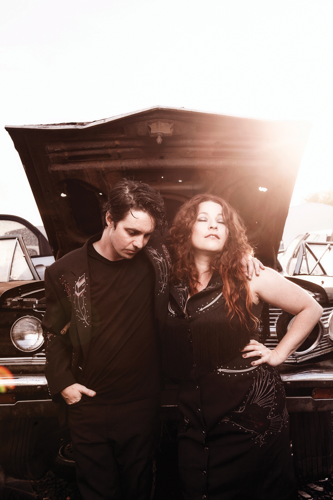
There is a song on Shovels & Rope’s fifth album, Little Seeds, that they’ve rarely performed live. “BWYR,” the track in question, is a solemn, half-spoken chant: “Black lives, white lives, yellow lives, red / Let’s all come together and share the bread.” It’s one of Michael Trent and Cary Ann Hearst’s most overt moments of social commentary, written in response to the horrifying racially motivated shooting at a church in their current hometown of Charleston, S.C. For a duo that titled its first record O’ Be Joyful, this moment is just too tender, too tough.
But on Jan. 21, the day after Donald J. Trump was sworn in as president of the United States, Trent and Hearst found themselves not only ready to march, but ready to sing.
“When you look at the set list, we have an hour and 45 minutes to get work done,” Hearst tells the Scene, calling from a hotel in London. “And we’ve chosen not to include ‘BWYR’ because of an overall vibe we’re trying to create. But the day after the election, we did play it, because we were feeling it. And the audience was with us in agreement. They wanted to hear that song.”
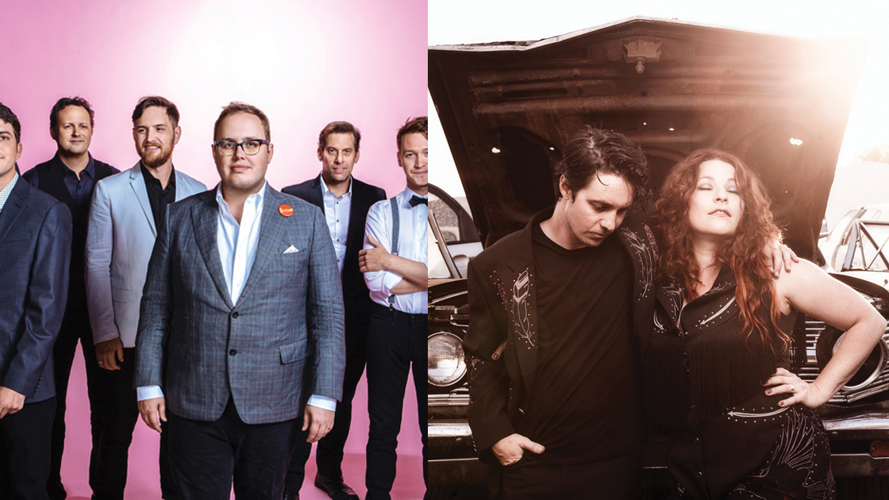
Folk music has historically engaged in activism, but for bands like Shovels & Rope and St. Paul and the Broken Bones, who are both headlining two-night runs at the Ryman this week, it’s a difficult balance. It’s a balance between the joyous nature of their sounds — the ramshackle roots-rock of Shovels and the big-band gospel-soul of St. Paul — and the underlying sociopolitical tones of their music, which are blaring ever more loudly in a world where racial inequality doesn’t just exist, it’s part of the White House agenda. Trent, Hearst and St. Paul lead singer Paul Janeway found that staying quiet isn’t an option — but they also didn’t want to turn their live shows into exclusive rallies, either.
“I was raised to look at all sides of an issue,” says Hearst. “I understand where coal miners are coming from — my dad’s a pipe fitter, and we understand some of their anxiety. When we perform, our responsibility is to entertain, and use our art to give you a little relief from the day-to-day bullshit. That’s why you buy a ticket. We’re not using our big platform to preach. But we’re wearing holes in our marching shoes and running up phone bills calling congress people. It’s our civic duty to participate. Just like everybody else, we have a right to participate in the system.”
The duo exercised that right by participating in the Women’s March, and they’ve sparingly addressed some issues on their social media accounts — including one post on Instagram of Trent and their dog, captioned “FEMINISTS.” “As for how we go about our daily lives,” says Trent, “we’re just trying to do positive things within our own community, figuring out how we can help in a physical way.”

St. Paul and the Broken Bones
The topic of racial injustice and police brutality also weighed heavily on the mind of Janeway as he prepared to write material for his eight-piece Alabama blue-eyed soul ensemble’s second album, Sea of Noise. He found himself turning to Bryan Stevenson’s Just Mercy: A Story of Justice and Redemption in the wake of the shooting of Trayvon Martin (and the acquittal of George Zimmerman). The book explores rampant bias in the American judicial system, and it crept into the music in unexpected ways — a left turn from the band’s less-topical 2014 debut, Half the City.
“That definitely wasn’t how I approached the first record,” Janeway tells the Scene. “For me, it’s finding whatever touches your creative impulse. At that time in my life, I didn’t have much money, and now I’ve started making some, and it became this self-conflicting thing. You start being more socially conscious. ‘Where am I going to put this energy?’ It’s what scratches this creative impulse.”
Like Hearst and Trent, Janeway remains very connected to his Southern roots, and still lives in deeply conservative Alabama, as does much of his fan base. As a liberal in a red state, he’s had to find a comfortable equilibrium when it comes to speaking out, reconciling that conflict by not pushing a political platform in his band’s live show without stifling his personal opinions.
“Personally, I’m in a band,” Janeway explains. “We all vary what we think about [politics], so I’ve always approached it from a very personal level. I had to read a lot of Dr. Martin Luther King lately, and civil rights issues need to be protested. But at the same time, this is the country we live in. We have to have conversations. But I don’t ever say, ‘This is the band’s stance.’ ”
Like “BWYR,” St. Paul tracks such as “I’ll Be Your Woman” (which flips the strongly gender-normative nature of Americana on its head) and “All I Ever Wonder” (which features lines like, “Rent, it will rise / But our doctors keep us high”) resonate with greater urgency in the changing climate. “It is interesting that there is some kind of shape-shifting that goes on with the songs, due to the nature of them,” Janeway says.
Both bands have also found themselves in the unique position of touring abroad while President Trump ominously declared “America First” back at home — something that’s particularly relevant when you’re part of a genre with “America” in its title. “Everyone is saying, ‘Can you please explain what’s going on?’ ” says Hearst. “I’m a product of the Nashville public school system. I worked at a produce place, and all my co-workers were Kurdish survivors of war, and are some of the finest Americans I’ve ever met in my life.”
“In every interview, I got asked about it,” echoes Janeway of his role as an inadvertent ambassador. Still, neither band went for an explosive Dixie Chicks-style takeaway, not because they fear commercial repercussions, but because they wanted to maintain the inclusive nature of the collective live experience.
“Music has always been about coming from a place of love and acceptance,” says Janeway. “If you want to talk about more or less government, that’s fine, but as long as you are coming from a place of love and acceptance, you’re always welcome to our show. I don’t thump my Bible. If I protest, I protest on my own.” Though Janeway hasn’t noticed much backlash from discussing politics in interviews, Hearst and Trent received a slew of “shut up and sing” comments on their social media channels. It all speaks to Americana’s peculiar position of progressivity amid Southern roots, when you can both sing lyrics like, “The poor go hungry and the fat get fed” from “BWYR,” and create music that resonates with someone who spends as much time at church as a rock club.
“It hurts our feelings when someone says, ‘Shut up, you’re just a singer,’ ” Hearst says. “The, ‘What do you know about that?’ It’s a hurtful thing. We’re Americans, we’re citizens, we’re business owners. I’m not particularly well versed in the Bible, but I’m pretty sure we are supposed to look after our brothers.”
“It’s a good time for us to just be good, kind, compassionate people,” adds Trent. “Within and around our job.”
Email music@nashvillescene.com



Post a comment as anonymous
Report
Watch this discussion.
(0) comments
Welcome to the discussion.
Log In
Welcome to the discussion.
Keep it clean. Please avoid obscene, vulgar, lewd, racist or otherwise abusive language. Comments featuring hate speech or threatening or violent content will not be tolerated.
PLEASE TURN OFF YOUR CAPS LOCK.
Be truthful. Don't knowingly lie or mislead.
Be proactive. Use the “report” link on any comment that violates our comment policy.
Share with us. We'd love to hear your feedback.