

“Singing about economics,” “dancing about architecture” — why bother
writing about musicat all? You can sing it, you can play it — not only does it live and breathe, but it walks around and dances! Doesn’t scrutiny take the life out of it? One Friday morning, I tuned in to Nashville Jumps, Pete Wilson’s program on the late, lamented WRVU, and had one of my first experiences with writing that really does justice to music and musicians, bringing them to life in a way I hadn’t thought possible. Wilson’s guest that day was Peter Guralnick, a native of Boston who teaches creative writing at Vanderbilt every spring.
A blues enthusiast since his teen years, Guralnick’s body of work rests on a foundation of three seminal studies of the stuff we call “roots music”: Feel Like Goin’ Home, a portfolio of profiles on blues musicians published in 1971; Lost Highway, a similarly styled text that expanded his reach into country, rockabilly and R&B; and Sweet Soul Music, an exploration that broadens its focus to include producers, promoters, talent agents, songwriters and record executives, as well as the incredible musicians whose fusion of gospel and R&B took the world by storm in the '60s. Guralnick’s other work includes Dream Boogie, an extensive biography of Sam Cooke that further explores the origins of soul, as well as key roles in several music documentaries, including Sam Cooke: Legend, and the Solomon Burke biopic Everybody Needs Somebody to Love, as well as a forthcoming biography and completed film about Sun Records’ visionary founder, Sam Phillips.
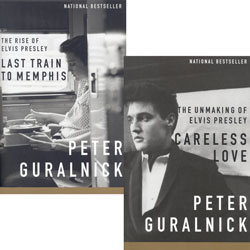
Arguably, Guralnick’s most ambitious project to date is his biography of Elvis Presley, published in two volumes by Little, Brown in 1994: Last Train to Memphis covers the star’s rise, while Careless Love details his decline. Few if any public figures are surrounded by as much myth and legend as Presley, whose first recording became a hit when the singer was just 19. Like any figure born poor but full of quiet persistence in his aspirations, Presley is easy to canonize: the 20th century Atlas who, when faced with the choice, chose to shoulder the whole country’s dreams and desires. He became a transformational cultural figure, whose work changed the face of popular music. He was profoundly human, struggling constantly with questions of purpose and identity: Even his personal faults make him into a larger-than-life figure. In Elvis’ case, it seems like enough work to separate fact from fiction, but Guralnick takes extra pains to make the eminent singer and movie star as real as possible, as he explains in this passage from his author’s note:



