

Neda Agha-Soltan's death horrified the world. The young Iranian woman drove to Tehran with her voice teacher in June 2009 to watch anti-government protests, but she was shot in the chest when she got out of her car. A video of her agonizing final moments elicited universal condemnation of the Iranian government.
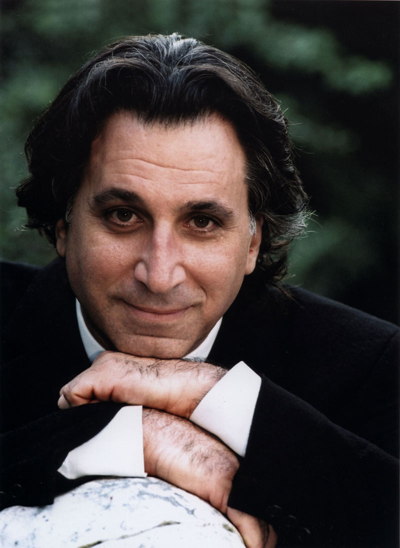
The violent crackdown in Iran had a profound effect on American composer Richard Danielpour. His ancestors on both sides of his family were Persian Jews going back at least 20 generations. Agha-Soltan's demise stirred something deep within his psyche.
"I was born in New York and was raised to be an American," says Danielpour, whose family fled Iran for the United States during the height of World War II. "I deliberately kept my Iranian ancestry at arm's length, especially after the Islamic Revolution, but after Neda's death I couldn't ignore it anymore."
Danielpour is in town this week for the world-premiere performance of Darkness in the Ancient Valley, the composer's heartfelt tribute to Iran's long-suffering people. The work is a joint commission of the Nashville Symphony Orchestra and Pittsburgh Symphony Orchestra. The NSO under the direction of Giancarlo Guerrero will record the performances Nov. 17-19 at the Schermerhorn Symphony Center for future release on the Naxos label.
Danielpour's first reaction to Agha-Soltan's death was to create an intimate piece of chamber music, a trio for flute, cello and piano called Remembering Neda. He gave the different movements quasi-liturgical headings — "Lamentation," "Desecration" and "Benediction." And he infused the piece with a few choice Persian modes and rhythms.
Danielpour has often used music as a sort of cathartic response to violence. Following the 9/11 terrorist attacks, he composed Songs of Solitude for orchestra and baritone, which set some of William Butler Yeats' poetry to music. Danielpour felt that Yeats' "The Second Coming," written in the aftermath of the First World War, perfectly captured the cataclysmic mood of 9/11.
The unrest in Iran brought Danielpour back to another favorite poem, this one by the great 13th century Persian poet Rumi: "I swore that I would not flinch, even if you struck me with a blade. My faith in you is green and strong, it would rise again unscathed."
The poem is written in the voice of a woman who refuses to retaliate against an abusive spouse. Danielpour believed the poem could serve as a fitting tribute to Agha-Soltan, but he also thought it could have a deeper meaning.
In his program notes for Darkness in the Ancient Valley, Danielpour writes: "The voice of this woman is, for me, a metaphor for the voice of the people of Iran, who have endured much under the present regime, but who nonetheless refuse to retaliate with violence."
Danielpour had been toying with the idea of scoring a piece to Rumi's verse for more than a decade. The Iranian protests — along with the joint commission from Nashville and Pittsburgh for a new symphonic score — finally gave him the impetus to put words to music.
In many respects, Darkness in the Ancient Valley is like a greatly expanded version of Remembering Neda. The 30-minute orchestral score is divided into five movements that also boast sacred-sounding titles — "Lamentation," "Desecration," "Benediction," "Profanation" and "Consecration."
The Rumi verse is scored for soprano, which will be sung in Nashville by the Grammy Award-winning soprano Hila Plitmann. Danielpour wrote the music with Plitmann — a contemporary music specialist — in mind.
"I love the fact that she has a pure, luminous sound that is not overly operatic," says Danielpour. "I also love that she memorizes everything, which gives the music greater immediacy and emotional impact."
Darkness in the Ancient Valley, like the earlier trio, strives in places to sound Persian. But Danielpour does not artificially insert Sufi rhythms and modes into his Western-style music to create a gimmicky, crossover score. His music is actually a response to his childhood.
"I remember my mother listening to Persian records when I was little," says Danielpour. "I appropriated my memory of that music when I wrote Darkness. It's not an accurate, note-perfect representation of the music I heard, but I think it's more interesting because it is more personal."
This weekend's program includes two other works — Anton Webern's Passacaglia, Op. 1 and Gustav Mahler's Symphony No. 4 in G major. Like Danielpour's music, Mahler's Fourth Symphony is also scored for orchestra and soprano and will feature Plitmann as soloist.
Many of Mahler's monumental symphonies are philosophical journeys of wrenching emotional intensity. The Fourth Symphony, in contrast, is a much more approachable work that's known for its optimistic outlook.
The opening, with its bright flutes and sleigh bells, immediately establishes a cheery mood; the finale includes Mahler's setting of "Das himmlische Leben" ("The Heavenly Life"). The poem notes that, "No worldly tumult is to be heard in heaven. All live in greatest peace." For the often hysterical Gustav Mahler, that makes for a remarkably happy ending.
Email arts@nashvillescene.com.



Post a comment as anonymous
Report
Watch this discussion.
(0) comments
Welcome to the discussion.
Log In
Welcome to the discussion.
Keep it clean. Please avoid obscene, vulgar, lewd, racist or otherwise abusive language. Comments featuring hate speech or threatening or violent content will not be tolerated.
PLEASE TURN OFF YOUR CAPS LOCK.
Be truthful. Don't knowingly lie or mislead.
Be proactive. Use the “report” link on any comment that violates our comment policy.
Share with us. We'd love to hear your feedback.