

Céline Dion
There is something Lovecraftian about downtown Nashville these days; a maddening, non-Euclidian geometry that makes the act of traveling in a straight line seem distorted and deformed by GPS, the potential eruption of a sporting event, or $30-plus parking fees. Thankfully, there’s some degree of consistency to be found — friendly faces, conscientious servers, bartenders who know what the deal is. But the mood was weird heading over to Bridgestone Arena for Céline Dion. Part of it had to do with some nonbinary/gender-nonconforming friends getting hassled at a restaurant’s bathroom minutes before. Then, the strangely labyrinthine means of ingress at the Arena reintroduced the disquieting eldritch vibe, and all bets were off as to where the evening might take us.
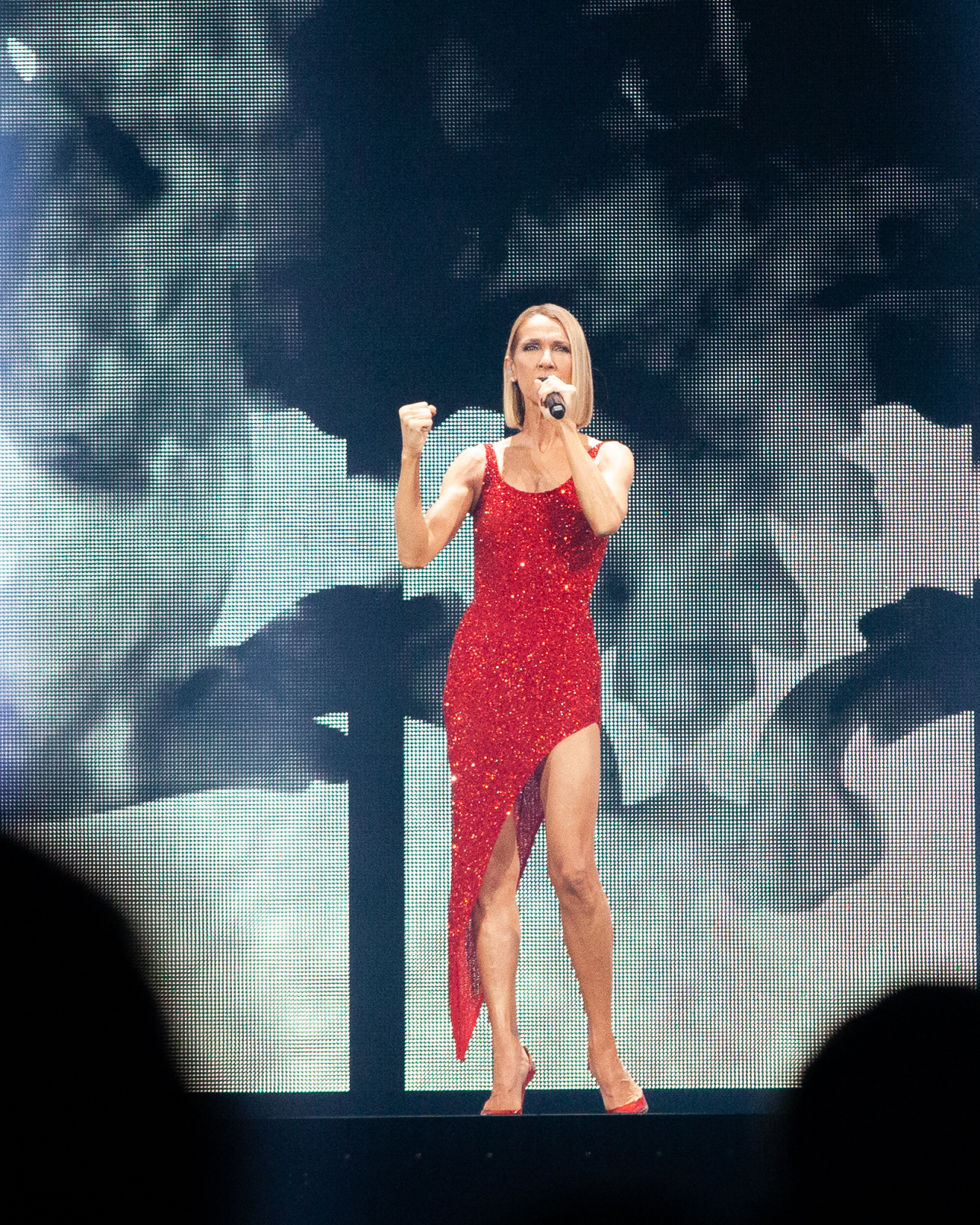
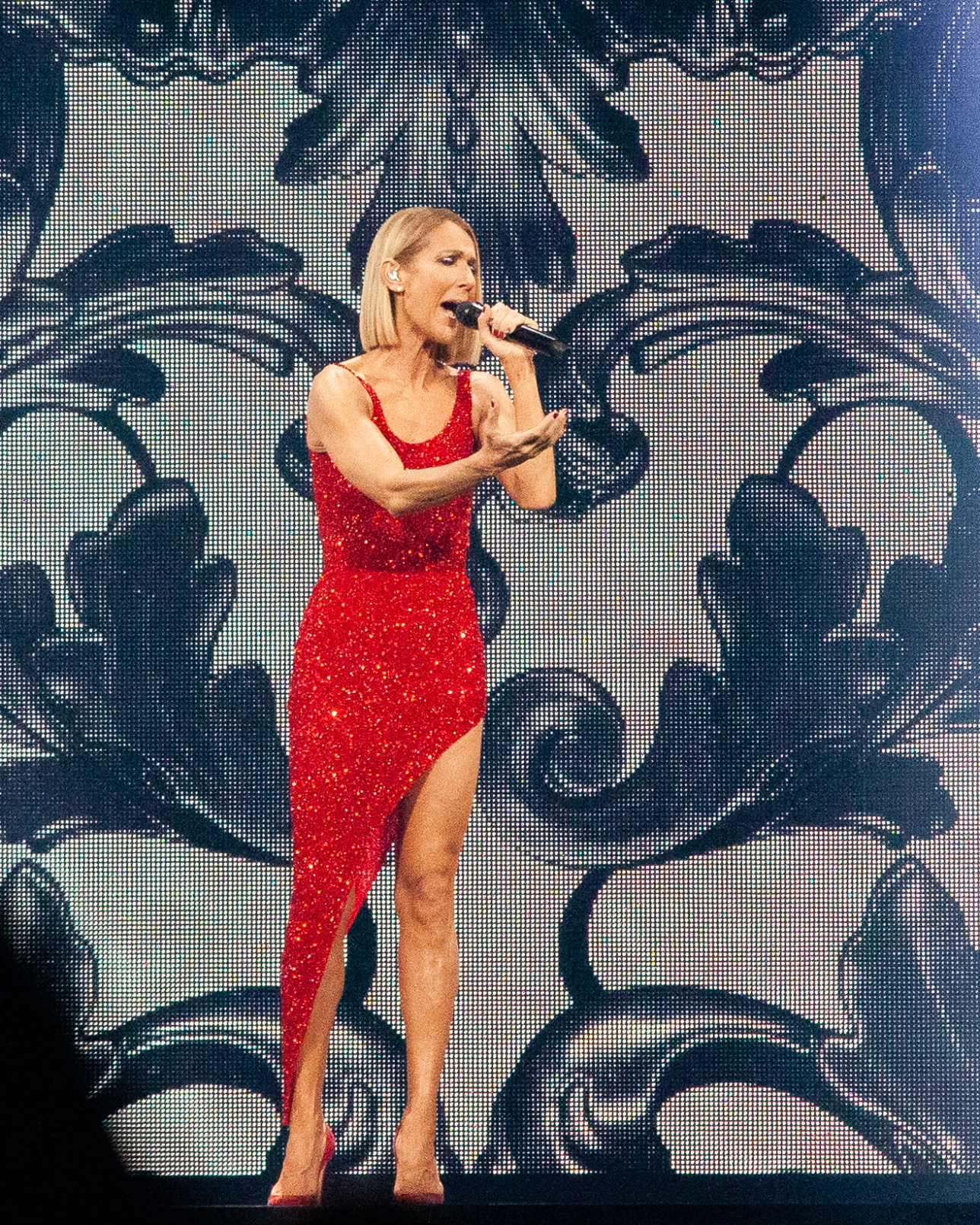
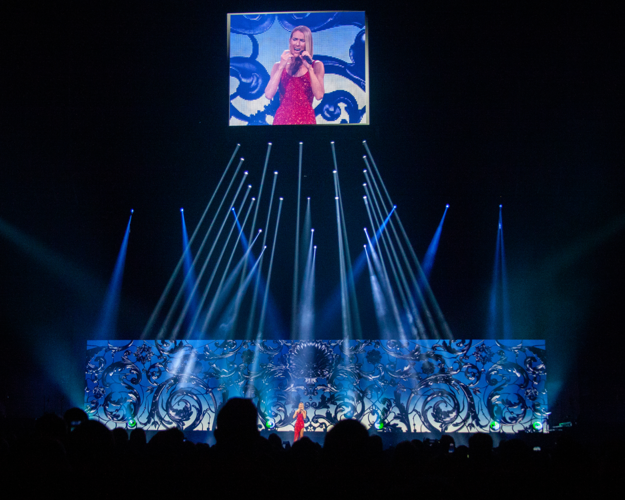
Thankfully, Dion is so many things to so many thousands and thousands of people. The production of the Courage Tour seemed very refined and stripped-down, using a monstrous LED screen and a minimalist and versatile set for Dion and her 16-person ensemble, who took the stage to the majestic thunder of the Jim Steinman/Pandora’s Box classic “It’s All Coming Back to Me Now.”
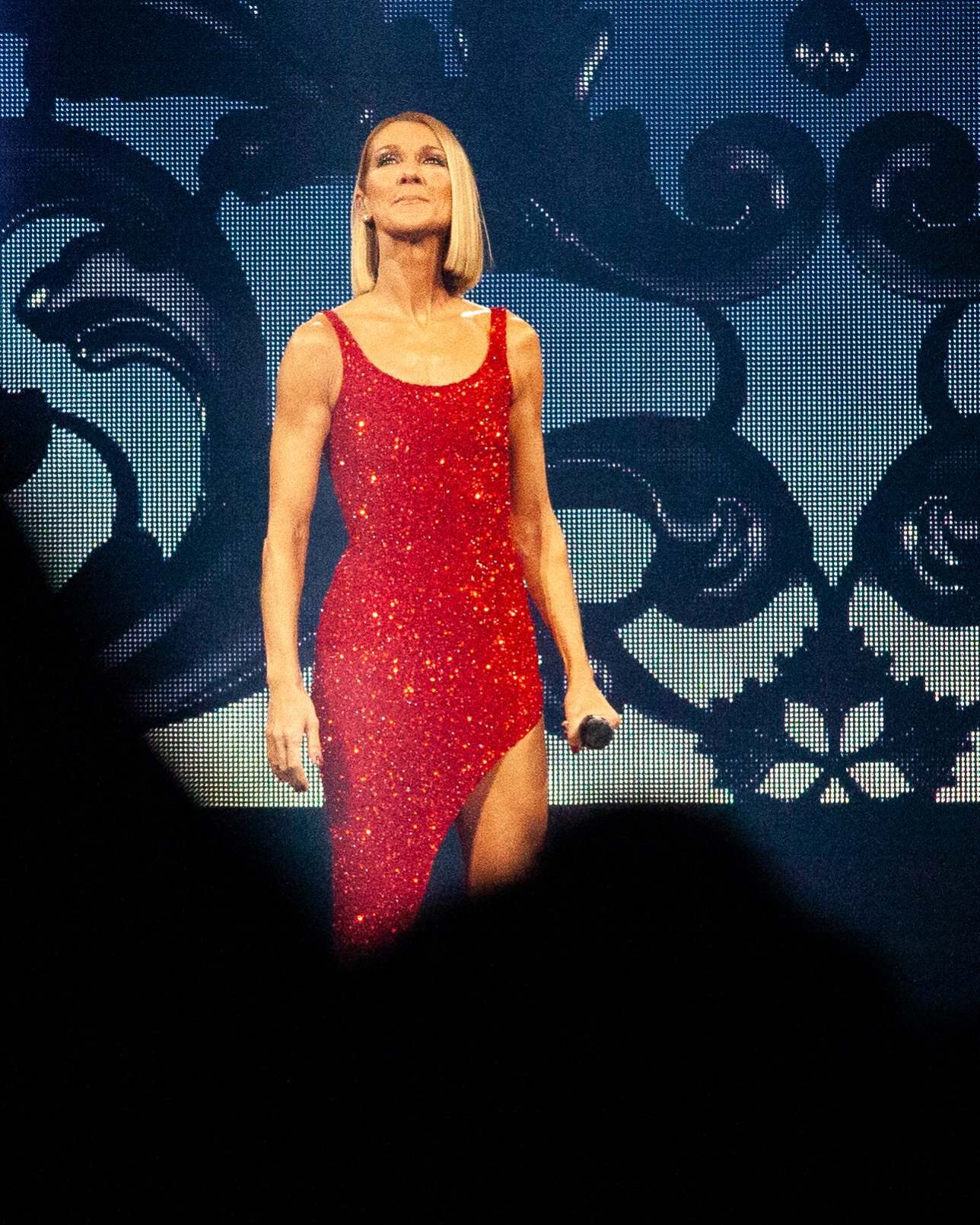
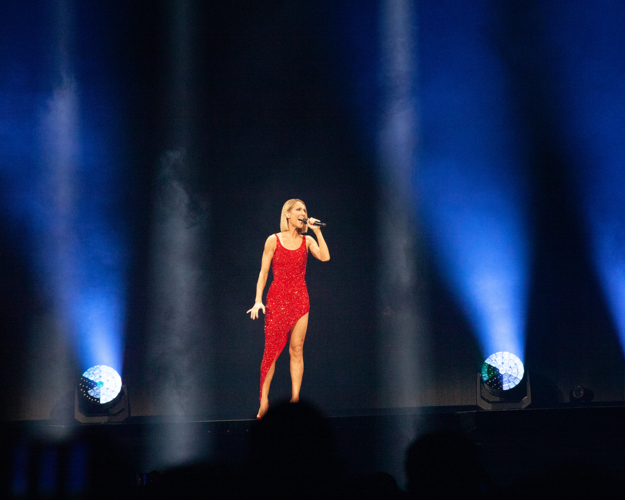
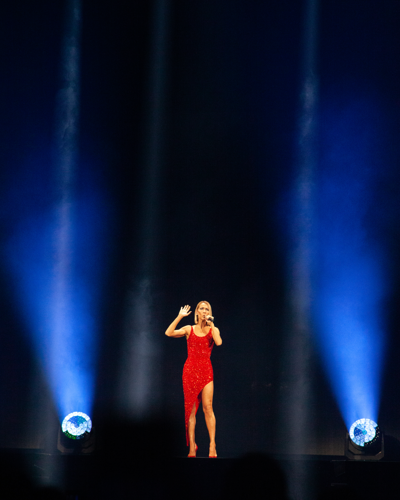
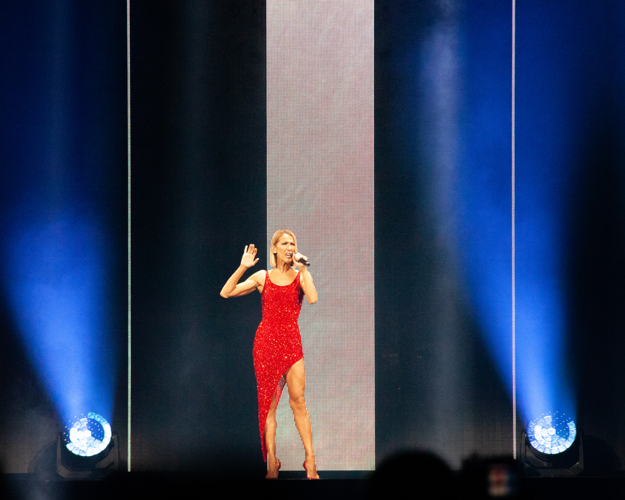
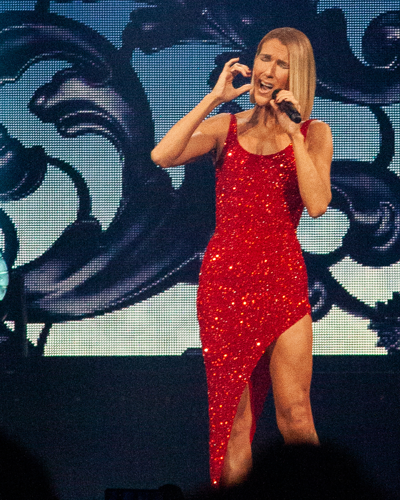
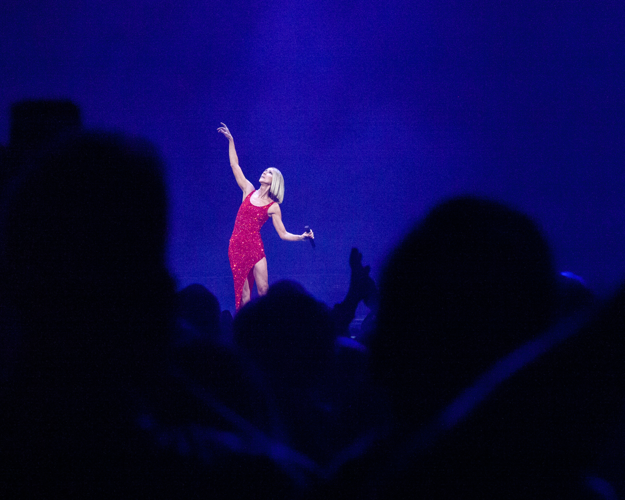
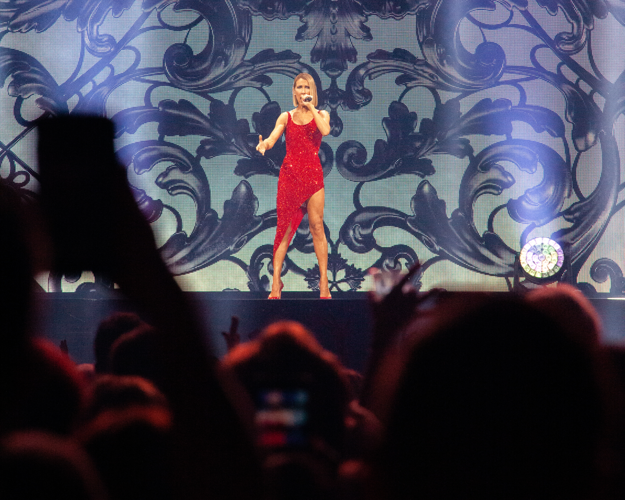
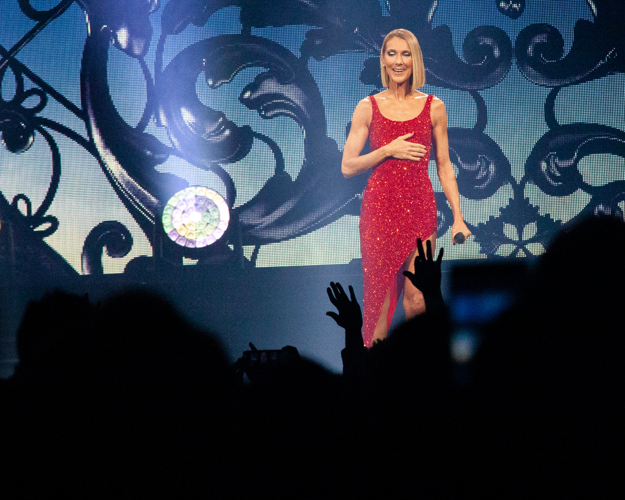
It’s 2020, and some would say that the old rules of performance are not ironclad. But mark my words, there is one thing you can rely on, and that’s that if someone opens with a Jim Steinman song, they did not come to fuck around. Dion hit the stage in some intimidating-ass heels and a tasteful red number — her costumes are a vital part of the experience — and tore through a four-song sequence that set the tone for the evening. The hits were mixed in with some shoulda-been-hits and heartfelt covers. She judiciously deployed her vaudevillian instincts for undercutting serious proclamations, which in no way diminished the big feelings powering the engine of the night’s show.
The sing-along with the as-close-to-sold-out-as-I-could-tell crowd on the wordless refrain of John Farnham’s “You’re the Voice” was a wild treat. That was in part because of the sweeping sound and ecstatic euphonia, but also because it couldn’t help but bring to mind the immortal scene in Hot Rod where the song is used to score a parade that becomes a riot.

Céline Dion
There was no such altercation here — though there was Dion’s second outfit of the evening, a tuxedo shirt with giant, OG Psylocke sleeves that demanded your attention with graceful forcefulness (or was it forceful grace?). The Jennifer Rush/Laura Branigan/Air Supply ballad “The Power of Love,” Dion’s cover of which was one of her early American breakthrough hits from the mid-’90s, is a supple jam that never feels dated. It’s one of those examples of how Dion's voice spans the decades, collapsing time into pointillist explosions of sound and memory.
“To Love You More,” with its lush, stringed counterpoint, served as one of those moments that sweeps you away and leaves you where you wash up. Dion renders it as dynamic and powerful, but listen closely to the lyrics: It’s a plaintive, resigned, near-fatalist diagram of the unrequited. None of our contemporary big-ticket divas gets vulnerability and performs it like Dion does. She carries out the exorcism of our own doubt even as she emphasizes the commonality of the experience. At the same time, she’s clearly and distinctly the performer, demonstrating this phenomenon while maintaining just enough distance for folx who can’t engage with those kinds of feelings except through some irony or elevation.
There are always moments in a Céline Dion show that stay with you for the rest of your life. For some in attendance Monday, it will be the scintillating disco bodysuit accompanying the David Bowie/Freddie Mercury/Prince/Tina Turner/LaBelle medley that ended the main part of the show. For others, it might be the moments when the Québecoise wonder was genuinely overcome by emotion, moved to tears by the blend of song and audience. But just as with her Fifth Element/moonview setting at her first Vegas residency (called A New Day), “My Heart Will Go On” was the song with which she demolished every emotional barrier in the arena.
Dion appeared clad in a ball gown (confirmed by a friend of a friend that it has its own road case, and rightfully so) and lit primarily by a focused spot. Behind her, an array of lights that appeared to be mounted on drones became the bluest waves of the ocean. Then, they rose to become the stars in the sky, and, during that part (you know, “You’re here! There’s nothing I fear,” the part that rips your heart out every single time), they fell — gradually, gracefully, to devastating effect. I don’t know how many artists it took to make it happen, but it bowled me over completely.
There was still a heartfelt take on “Imagine,” John Lennon’s ever-timely appeal for peace, to come. And with that, it was all over — two hours of transcendent majesty. Dion appears in Nashville so rarely that the arena has had a different name each time she’s played here. Let’s hope it doesn’t take another decade to get her back.
The Spin: Céline Dion at Bridgestone Arena, 1/13/2020
Céline Dion




