
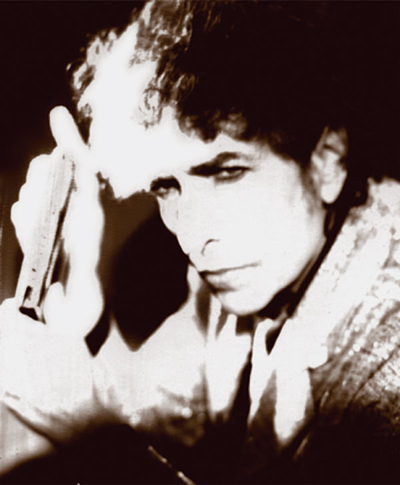

Though I've no doubt we'd be better for it, Bob Dylan is not the voice of my generation. He's never been much for being the voice of generations in the first place, but even if he were to take up such a mantle, we millennials seem an unlikely constituency. After all, ours is a generation mostly enamored with the sudden vibration in our jeans and subsequent smart-phone glow, signaling the arrival of the latest shorthand proverb in 140 characters or less. One can hardly imagine one of Dylan's sprawling stream-of-aphorisms — "Subterranean Homesick Blues," say, or "It's Alright Ma (I'm Only Bleeding) — being engaged in a similar way. The mere suggestion of him using an iPhone is enough to get folk purists crying "Judas!" all over again. On the other hand, we're plenty pissed off about plenty of things, and like our parents (and their parents), we're damned sure that Dylan would agree with us.
When I first engaged Dylan's vast discography a few years ago, I did so drunk off progressive spirit induced by Obama pop art. I came out the other side convinced I had found an absolute truth in music and that the times ... ah, hell, you know. Admittedly, the jury is still out on the a-changin' status of the times, but Bob Dylan and his half-century of transcendent music is still very much real, even if the man himself seems less so. The trouble is, we giddy members of a fishbowl-age — in which overexposure is a bare minimum for being relatable — don't often know what to do with artists who only give us ... art.
The self-appointed voices of our generation (looking at you, Kanye West) keep us so updated we're as likely to discuss the ups and downs of their day over a post-work beer as we are to mull over our own. They're news feeds of minutiae without a whisper of mystery. In comparison, Dylan seems a recluse who talks to us only through his music. He won't give you Tweets every three minutes, he'll deliver a new tablet from the mountaintop every three years. Anything he has to say to us these days, he's going to do it over a wicked organ groove, not Facebook.
Lucky for us, 1988 marked the beginning of the aptly named Never Ending Tour that has had Dylan performing roughly 100 concerts a year. Even in concert, though, he keeps talk at a minimum. Words may be shoveled by the spamload elsewhere every millisecond, but Dylan has held fast to one constant: communication, like a parent's love, is all the more precious when withheld. Sure, his weathering voice betrays his age, but Dylan's vocals have always been more a shot of whiskey — on actual rocks — than a tall glass of water. He would remind you, though, as he did when he famously hijacked Time magazine reporter Horace Judson's attempted interview in 1965, that although you have to listen closely, he hits all those notes.
The King of Rock 'n' Roll and the King of Pop are no longer with us, and while two Beatles remain, the fact remains that Dylan is one of the few larger-than-life artists still living. When you're eating breakfast in the morning, it's hard to imagine Bob Dylan doing the same — he's that big. But that may be because he won't tell you what he's having for breakfast, at a time when even minor celebrities are supposed to keep us apprised of their whereabouts and stray thoughts practically as they appear. Kanye would. It's as if there's so much competing for our attention these days, pop figures fear that if they're out of touch for even a few minutes, they're out of mind. Maybe they're right. For most of them, being there is all they have to offer.
So if you're like me, there is a sense of urgency, verging on panic, to see the man while we still can. It's as close as we'll ever get, and still not as close as he is on record. For those of us who swear that Dylan means more than he will ever admit, it is not a question of attendance. It is the same question posed to Horace Judson: You're going to see the concert tonight — are you going to hear it?



