
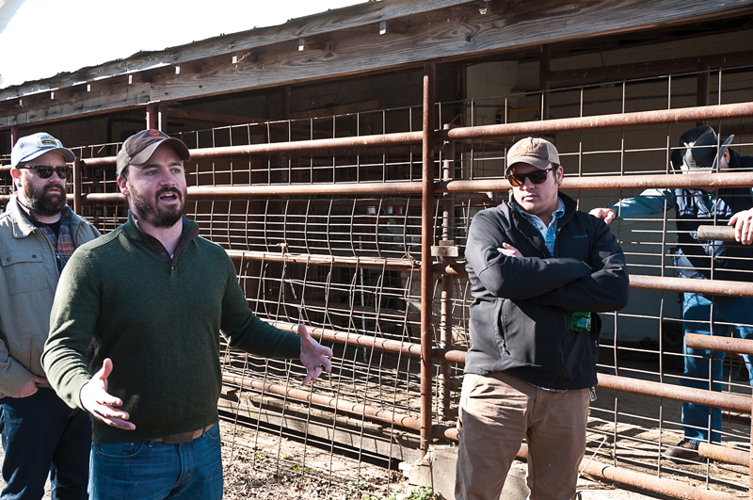
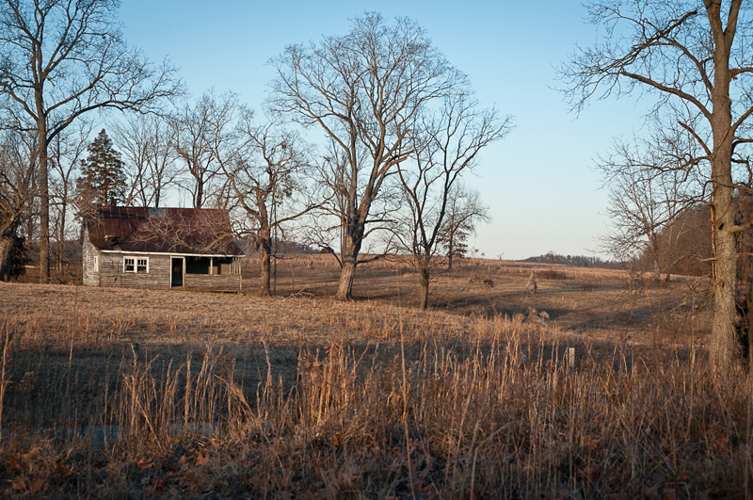

Leaning against one of Phil Baggett's fences around a pasture full of grass in Montgomery County, you understand why someone would want to be a farmer. On a January day without a cloud in the sky, it's just stunning out there.
Baggett's Tennessee Grass-Fed Beef operation raises more than half of the beef that ends up in Porter Road Butcher's two Nashville shops. It's better than most grass-fed beef, in part because of the pasture rotation plan the cows are on, moving on to a different field — and different type of grass — every day. There is more intramuscular fat and hence more flavor in the meat. The cows avoid the feedlots, steroids and hormones of industrial cattle production and are treated very well. As Baggett is fond of saying, they have about 700 good days and one bad day.
The PRB staff is out there to visit Baggett on one of their farm days, when co-owners Chris Carter and James Peisker close down the shops, load up a van and take staff around to the farms that raise their products. The theory — and it's a good one — is that seeing where the beef, pigs and chickens come from will help them explain to their customers just how different their shops are from almost any other place selling meat in Nashville.
But there's another reason for the trip. Carter and Peisker are putting the final pieces together to buy a slaughterhouse and processor in Princeton, Ky. The sale was complete last week, and they will soon launch Porter Road Meat Co., a wholesale operation where they hope to be able to provide beef and pork to many Nashville restaurants.
"It's the missing link," Peisker says, "because we have these farmers that take such great care and have such pride in what they do for two years, and it can be ruined in 15 minutes [at slaughter]. It's the same thing I tell the guys at the butcher shop — there's two years of work between many men and women that go into this piece of meat already.
"To us, it's important. All the products we use are the best we can find and the best we can source. So for us to be able to control this and control those final moments and how they're done and try to utilize as much of the animal as I'm legally allowed to — that's huge."
Carter says finding someone who could consistently process beef and pork to their standards was tough. In addition to the ethical dimensions of wanting to provide a humane end for livestock, the fact is that when animals are distressed prior to slaughter, it changes enzyme levels in muscles, leading to poorer quality meat.
"We've had issues with processing since the beginning and people not doing it right," Carter says. "James and I always wanted to look out for the proper slaughter, the most humane possible way to do it. In fact, it really made James and I have to be there for kills and make sure people were unloading [livestock] properly. Basically, we found ourselves having to be employees of other people's slaughterhouses."
Enter Baggett. The beef farmer introduced the pair to Keith Franklin at Kentucky Specialty Meats because he had admired their slaughter practices for years. With Franklin and his wife looking to retire and PRB wanting to expand, it was a good match. After securing a loan from their bank, the deal closed on Friday, Jan. 30.
Starting this week, Carter and Peisker began commuting to Princeton to run the operation. They say they feel confident enough in the managers and staff of the two butcher shops to devote their energy to Porter Road Meat Co. In the near term, they will run the Kentucky operation themselves until they can get their own manager up to speed.
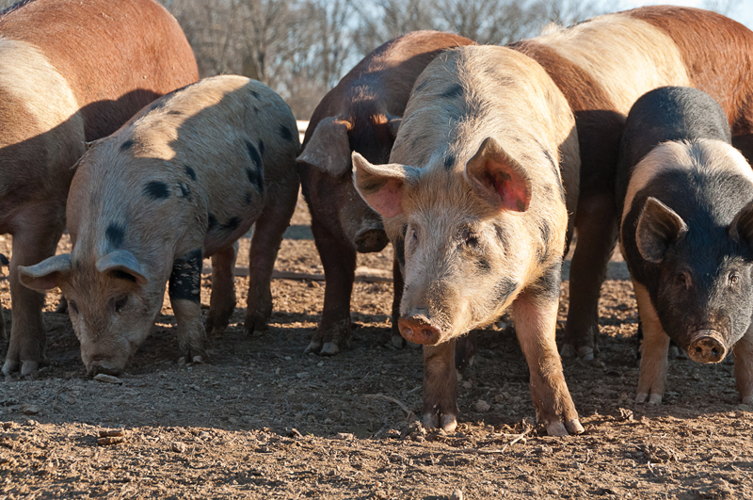
"It just means that we've gotta wake up a lot earlier," Carter says. They'll also be closer to their heritage hog operation, which was moved to a farm north of Russellville, Ky., before Christmas.
What will it mean for Porter Road Butcher retail customers? The two shops should have more items readily available, particularly prepared goods like sausages, and eventually more plentiful cuts of pork and beef. At peak periods like holidays, the butcher shops simply run out of storage space to meet the demand, something Porter Road Meat Co. will alleviate.
But the ability to start supplying restaurants excites them the most. Coming up as chefs, they were always concerned with a kitchen's ability to get meat that is raised the right way. It's the attitude that led them to open PRB to begin with. They'll provide meat to the newly opened Flip Burger and continue to supply ground beef for Hoss' Loaded Burgers' two food trucks. But with huge smokers, sausage grinders and casing machines at the new place, they hope to be able to bring down some prices, too.
"We're going to get into a few other [restaurants], steak-wise," Peisker says. "What we'd really like to do is to get our hot dogs and sausages to a price point where they can utilize them. I'd like to see our hot dog on the menu at a place that's always lovely to have a beer at."
Those prices reflect a direct relationship with their farmers. If it means it costs a little more, Porter Road's meat men think it's worth it.
"They succeed as we succeed," Peisker says. "We grow together."
Email arts@nashvillescene.com



Post a comment as anonymous
Report
Watch this discussion.
(0) comments
Welcome to the discussion.
Log In
Welcome to the discussion.
Keep it clean. Please avoid obscene, vulgar, lewd, racist or otherwise abusive language. Comments featuring hate speech or threatening or violent content will not be tolerated.
PLEASE TURN OFF YOUR CAPS LOCK.
Be truthful. Don't knowingly lie or mislead.
Be proactive. Use the “report” link on any comment that violates our comment policy.
Share with us. We'd love to hear your feedback.