
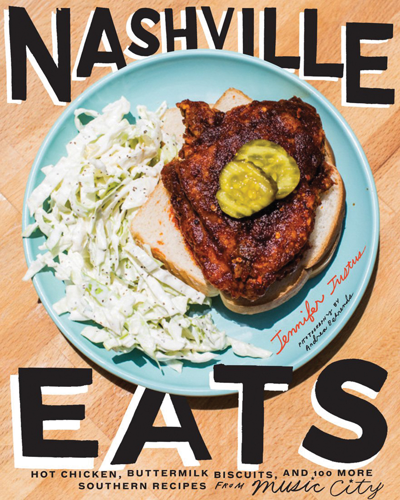

Editor's note: In her new book Nashville Eats: Hot Chicken, Buttermilk Biscuits, and 100 More Recipes from Music City (Stewart, Tabori & Chang, 256 pages, $35), veteran food writer and former Tennessean food culture reporter Jennifer Justus pays tribute to the dishes, recipes and chefs that provide the boundaries of Nashville's hard-to-define food culture. "Unlike the Low Country with its shrimp and grits, or even Memphis with its barbecue, Middle Tennessee doesn't have an easily recognized cuisine," Justus writes in the introduction. "We mostly celebrate what comes from the earth here." To join the celebration, she calls upon award-winning chefs, food bloggers and home cooks to share remembrances as well as recipes. In this excerpt, she talks to Phila Hach, the woman who pioneered local cuisine with her Nashville-produced television show Kitchen Kollege. This weekend, Hach will be honored with the Ruth Fertel Keeper of the Flame Award at the Southern Foodways Symposium in Oxford, Miss.
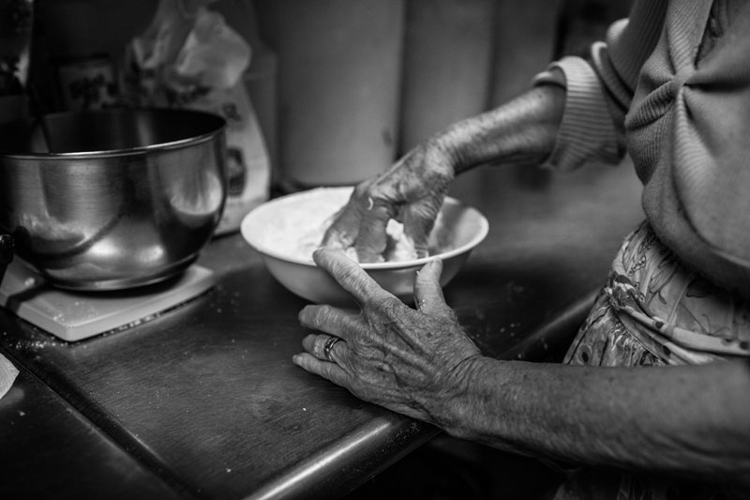
When Phila Hach makes biscuits, she doesn't mess with measuring cups, pastry cutters or spoons. She plunges her crooked fingers directly into the mound of flour and cream. "What is life except for the feel?" she asked, batting the dough with swift experience as bowl rattled against counter.
She made her first batch of biscuits at age 2 in 1928. It's how her mother taught her to count: "One ... two ..." she remembers, folding the dough over on the floured surface and stopping just past 10. Then she cut the dough into circles with an old snuff can from a brand that's long been discontinued. "I used to have hundreds of these and gave them away," she says.
Growing up on a farm with a Swiss mother, who also worked as one of the first home demonstrators in Middle Tennessee, Phila picked up cooking early and easily. She still recalls peering over the edge of a saucepan to watch the magic transformation of an egg cracked onto the hot surface. Yet with the lessons of the country around her, she longed to learn from the city too. "I want to learn," she told a hiring manager at the airline where she took a job as stewardess in the 1930s. "I still do," she says now. "But it takes guts to step out there and be your authentic self."
It also took guts to walk into the kitchens of the world's best hotels and ask to cook alongside the chefs. That's what she did at the Savoy in London and the George V in Paris during layovers. She gathered tastes and techniques like stamps in a passport, adding a worldly touch to her strong Southern foundation.
She wrote the first catering manual for the airlines in the 1930s and then became a local celebrity as hostess of the first cooking show in the South, welcoming June Carter Cash and Duncan Hines the man, among others, to her table.
She married a German tobacco importer whom she had met briefly in the lobby of a swanky Parisian hotel. He offered to carry her bags, and she politely refused his help. A few years later, he moved to Tennessee, turned on his television, and the lovely American flight attendant he had met in Paris was looking back at him in black-and-white. He wrote to her, but she tossed his note into the garbage — for a moment. Then, on second thought, she fished it out of the wastebasket and accepted his offer for a date. "I never saw another man," she said. They honeymooned for a year before opening Hachland Hill Dining Inn just outside Nashville.
Even with her travels, Phila has remained rooted in her Tennessee farmland upbringing, which instilled in her an honest resourcefulness — the ability to make the best of what's on hand. "What is intriguing to me still are the resources our land supplies us with. But the most intriguing to me is the resources of our ingenuity," she said. "When I was growing up, we had no grocery store. What did we need? Sometimes in our life, we get all mixed up. What we want is not necessarily what we need."
With her white hair pulled into tight bun, she ties on an ankle-length apron (it's where she keeps her cell phone) before buzzing through her kitchen. She imparts wisdom partly through the many cookbooks she penned, sometimes for making biscuits and other times for living life.
"One of the things that I learned is to be free in the way that you live. Don't make work out of anything. When people say, 'I'm gonna work on it,' I say, 'Work on what?' I'm all about the moment," she said, "because, it's gone."
Country Pain Perdu
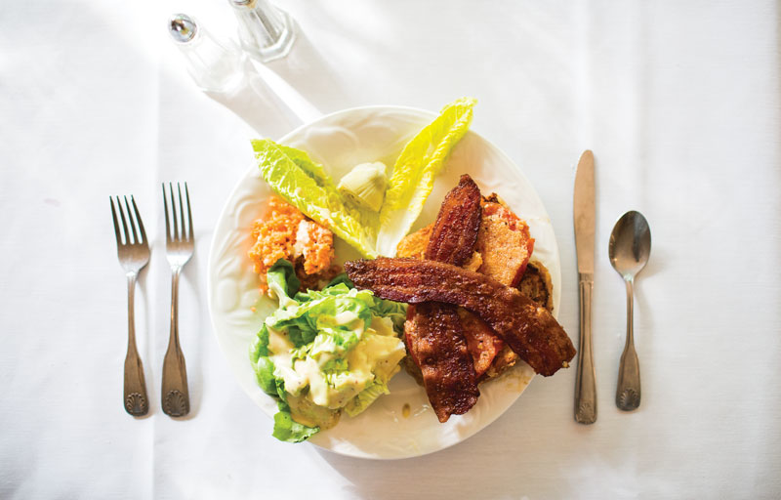
When friends visit, as they often do, Phila Hach still displays the ingenuity and resourcefulness she's called on for years, like many who grew up in this region. She might pull together this pain perdu made with half a loaf of nearly stale bread and egg yolks (saving the whites for her grandmother's meringue cookies). Topped with tomato and slices of bacon and paired with a grated carrot salad, it's simple, chic and as comfortable on the plate in Tennessee as it is in Europe. "What more could you want?" she asks.
Makes 4 servings
4 large egg yolks
1 1/3 cups (315 ml) whole milk
½ teaspoon sea salt
½ teaspoon black pepper
½ cup (60 g) yellow cornmeal
1 teaspoon dried oregano
2 small tomatoes
4 thickly cut slices bread (I used a Tuscan-style boule)
1½ teaspoons to 1 tablespoon extra virgin olive oil
1 tablespoon butter
8 slices bacon
1 tablespoon finely grated Parmesan cheese
In a small bowl, combine the egg yolks, milk, salt and pepper.
In a separate bowl, combine the cornmeal and oregano. Slice the tomatoes and place them on paper towels.
Place the bread flat in a casserole dish. Pour the egg custard mixture over it and let it sit while you heat a sauté pan over medium-high. Add just enough oil to coat the pan and then add the butter. When the oil and butter are hot, carefully move the bread with a spatula from the casserole pan to the sauté pan.
Fry the bread for about two minutes on each side until it is golden, browning and crispy in places. Set the bread aside. Remove the pan from the heat and wipe out excess oil with a paper towel. Return the pan to the heat and add the bacon. Fry until they reach the desired crispness.
Meanwhile, dredge the tomatoes in the cornmeal mixture. When the bacon is done, remove it from the pan and pour off a bit of the grease, leaving just about 1 tablespoon, and then fry the tomatoes for about 2 minutes each side until the cornmeal mixture is lightly browned.
Top the bread with the tomatoes and sprinkle with Parmesan cheese. Drape bacon across tomatoes and serve.
Email arts@nashvillescene.com



