

When I was growing up in Silicon Valley, that term was just reaching the mainstream, and was decades away from being a punch line. The area wasn’t dominated by orchards then as it was in my parents’ childhood, but I certainly remember the dusty squares of land dedicated to prunes, plums and enough cherries that my alma mater nearly guaranteed its permanent athletic futility with the name Cherry Hill High. Luckily, they settled on Homestead.
To longtime Nashvillians, this might sound familiar: Finding my hometown’s old soul now seems to require a dedicated search. The beloved pizza joints of my youth are now fast-casual techie feeding troughs. The whole area is much wealthier, more crowded and less interesting. But one piece of land in the Santa Cruz Mountains, eight miles up winding Montebello Road, grows more interesting as it sits unchanging.
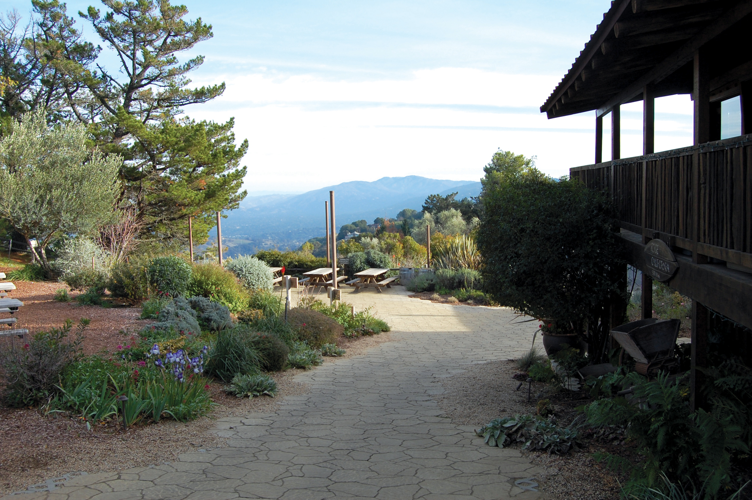
Technically within the city of Cupertino, Ridge Vineyards is so removed from the valley that everything below — Homestead High and Symantec and Apple’s annular new headquarters — looks flat and phony through miles of atmosphere. As the rush goes on 2,300 feet below, the only sounds at Ridge are the hawks, and the wind that whooshes over from the Pacific. This is where Ridge Monte Bello, one of the most famous wines in the world, has been made since the early 1960s.

Learning that a place so far from the grape’s Napa hotbed produces such an iconic cabernet can surprise even aficionados. It’s akin to learning that Shel Silverstein wrote A Boy Named Sue. The word iconic does not simply refer to the wine’s fame. The name now signifies a kind of consistency, elegance and restraint that opposes the bombastic California wines that many see as trained at simpler palates. Monte Bello, it is generally agreed, aims higher.
Ridge’s site in the Santa Cruz Mountains was purchased in 1959 by four friends from Stanford Research Institute who shared a desire to get away from the frenetic valley, which, compared to now, bustled like a narcotized monastery. One of the Monte Bello refugees, Dave Bennion, made a quarter-barrel of cabernet sauvignon from the 10-year-old vines that had been planted by the previous owner. The group instantly recognized the wine as something special.
At first, the winemaking was an imprecise affair. The crew would peek into the fermenter on the weekend, then leave it to its own devices until they ascended Monte Bello again. Ridge was bonded as a commercial winery in 1962, and in 1969, the company hired philosopher-winemaker Paul Draper, who promptly made the 1971 Monte Bello that showed so well at the infinitely cited 1976 Judgment of Paris tasting. The same wine took top prize when the participating wines were retasted in 2006.
Acknowledging the recently retired Draper’s accolades and influence without getting mired in them is a challenge. By both measures, Draper is Dylan. His honors make the EGOT look like a participation trophy. Ridge’s consistent presence on Drinks International’s annual list of the world’s most admired wine brands is a global hat-tip to Draper and his deputies. Opus One is perhaps the only California wine whose reputation equals that of Monte Bello, and I once asked Michael Silacci, the winemaker at Opus, who his winemaking influences were. Guess who he named, in a tone that added … but I assume you assumed that.
Monte Bello is expensive and demands decades of age. In other words, it asks more than most drinkers are willing to give. Ridge zinfandels don’t. They are more modestly priced and more hedonistic, in that they don’t torment the drinker by withholding gratification during a long cellaring period. They are zinfandel as it should be: fruity, plush and infinitely pleasing. Able to accompany barbecue and steaks, but fantastic on its own.
Cabernet may grab the headlines and fetch the highest prices, but zinfandel is California’s grape. The variety thrives up and down the state, and it teems with traces of California’s disappeared orchards — the sun-baked fruits and citrus that proliferated in places like the Santa Clara Valley back when the area was known as the “Valley of the Heart’s Delight.” Ridge Monte Bello is a California wine that tastes miraculously European. Ridge zinfandels taste unmistakably Californian.
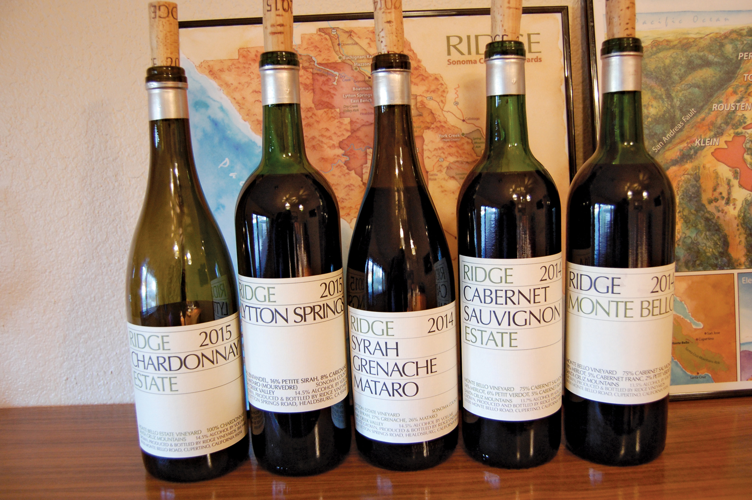
With the exception of Geyserville and their wines from the Benito Dusi Ranch in Paso Robles, Ridge zinfandels and zin-based blends are produced at its second winemaking facility, at Lytton Springs in Sonoma County. The grapes are grown at single-vineyard sources across the county that are either owned and farmed by Ridge, or by long-term partners: The Lytton Springs blend comes from Dry Creek Valley, and Geyserville from Alexander Valley. Only Three Valleys — Ridge’s most affordable zinfandel blend — is sourced from multiple sites. Until California’s four-season drought slashed vineyard yields and tightened the supply, Three Valleys was a welcome sight on restaurant by-the-glass lists and supermarket shelves. Now it’s a bit of a rarity as a glass pour, and the retail supply is increasingly going to fine wine shops.
I have been going to Ridge for years — as a curious hometown tourist, wine-lover, sommelier and writer — and every time, I learn something new. It may just be a bit of arcana, like the fact that the Optima typeface was first used commercially on Ridge’s distinctive label. Or it may be something that crosses into the social and political arenas: Eighteen employee families live and work year-round at Monte Bello, which does not regularly bring in any migrant labor for the harvest. Brothers and sisters and cousins move to Monte Bello to work, and many don’t ever leave. A young man named Israel works in the tasting room, and if a visitor asks him where he grew up, he can just point to the ground and tell them he grew up here. In Cupertino? No. At Monte Bello.
I find the solitude of Monte Bello irresistible, and I was surprised when Israel told me that he goes down to the valley every day. But he is in school, in his early 20s, and probably craves a little more action than the hilltop provides. “I could do that drive in my sleep,” he boasted, referring to the vertiginous road that eventually spits him out at Stevens Creek Dam and into the Cupertino that someday he might barely recognize. But he is able to navigate Montebello Road in his sleep, and always will be. At Monte Bello, not much ever changes.
Email arts@nashvillescene.com



