

It’s been 17 years since the phrase “Me Too” was coined as a means of bringing awareness to sexual abuse and harassment. Sixty years since the Equal Pay Act passed. Six years since celebrity chef John Besh left his own company in a flurry of headlines after allegations of sexual harassment by 25 different women.
Yet here we are. The Scene receives tips about sexual harassment in Nashville’s hospitality industry with stunning regularity. Among the things reported: Women are asked to dress in short skirts and low-cut shirts to work behind a bar, or to lose weight before going onstage in prime time. They are cornered in walk-in coolers and called names. They’re groped. And assaulted.
It feels like we ought to be past this by this point, with more awareness of what constitutes harassment, with younger workers who have grown up in an age when such behavior isn’t dismissed. Not everyone is turning a blind eye to behavior that feels endemic to the hospitality industry. Some restaurant managers, chefs, trainers and other professionals are being proactive about what it might take to significantly reduce the incidence of sexual harassment in Nashville hospitality hot spots.

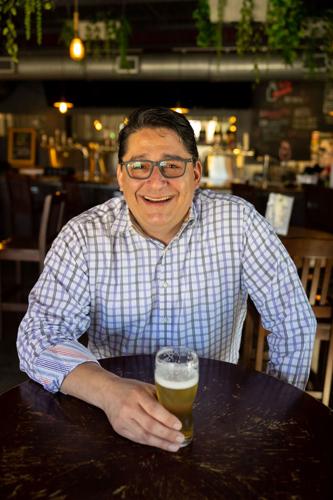
Joe Guerra, director of hospitality for The Nations Brewing Co.
“It blows my mind that any workplace, any owner, any CEO, any director, any manager, any co-worker, would allow this to happen,” says Joe Guerra, director of hospitality for The Nations Brewing Co., which operates several bars, including Fat Bottom Brewing and Lucky Duck Lounge.
Through the Nashville Sexual Assault Center (SAC), Guerra became trained to lead Safe Bar programs as a way to encourage his staff to talk openly about harassment and assault, notice the signs of such activities among their co-workers and customers, and learn how to safely de-escalate. He says that like all the solutions folks are implementing, training isn’t a once-and-done solution. That’s partly because turnover in bars and restaurants is high; not only do managers need to reinforce teaching with existing staff, they also need to regularly train newcomers. One of the criteria to become a Certified Safe Bar with SAC is to have 50 percent of employees trained at any given time.
Guerra conducts training about every six months at different bars. Now his staff will let him know when it’s time to schedule another.
Much of the public attention on the Safe Bar program has been on its focus on training hospitality workers to recognize the signs of sexual harassment and assault in order to keep customers safe. That work is crucial. But Safe Bar also helps address sexual harassment in hospitality businesses among employees, and that can also change attitudes.
“We want people to be prepared to intervene in the emergency situations, but we also want people to understand that these emergency situations don’t just emerge out of nowhere, but that it is part of a broader rape culture that we live in,” explains Maria Michonski, statewide training specialist for SAC, who works on the Safe Bar program. “General sexist attitudes, rape jokes, stalking, catcalling, unsolicited exchange or taking pictures: These kinds of things build a culture in which the more overt forms of violence — like drugging, rape, molestation — are normalized and viewed as acceptable.”
Michonski notes that other prevention programs on different issues — such as seat belt usage or cigarette smoking cessation — have used bystander intervention and prevention education models successfully. “Having everyone … be motivated and prepared to intervene in those behaviors would make the biggest difference and kind of turn the tide on the more overt severe forms of violence,” she says.
Training is a big step, but not the only one.

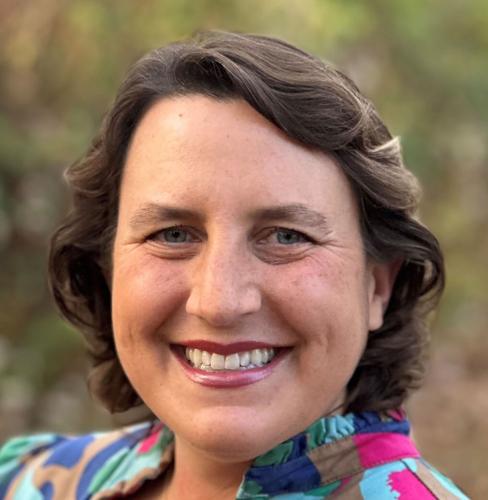
Sarah Worley, Biscuit Love co-founder
Sarah Worley, who founded the Biscuit Love restaurant chain with her husband Karl, used “an immense amount of intentionality to create something different” when it comes to company culture. Over the years, her company has learned how dialed in and dialed down they needed to be with their expectations, she says. “It’s great to say you have a ‘no gossip policy,’ but if you do not know what gossip is, then you can’t follow that.”
Worley starts the explanations in the job interview and continues on the first day of work, when new employees “have the opportunity to say ‘no,’” she says. That means being clear about what a lewd joke is and why it’s not OK, and underscoring that employees are not permitted to comment on the appearance of their co-workers or their customers. That doesn’t mean violations don’t happen, but when they do, Worley has learned that action is critical. “When you have a top performer who is behaving poorly, the instinct is to try to resolve it,” she says. But, she says, a zero-tolerance policy is the only way to reinforce your values.
Worley says when Biscuit Love fired someone who violated the sexual harassment policy, that decision set the company back financially, because that employee had been involved in strategic operations. It took six months to get back up to speed. But, quoting Ari Weinzweig of the Zingerman’s chain, Worley says, “Your beliefs are only words on paper until they cost you something.” (The Worleys have participated in ZingTrain, Zingerman’s management training program for entrepreneurs.)
Both of the Worleys make their cell numbers available to staff and encourage them to reach out if there are issues, but Worley knows not everyone is comfortable doing so. So there’s also an anonymous tip line and an outside investigator to look into any allegations. (That investigator has been called once in nine years.)
Chef Sean Brock was vocal about wanting to create a different kind of restaurant company when he opened Audrey, June, Joyland and Bar Continental (the last of which was formerly The Continental). He wanted people to have a different experience than the stereotypical kitchen. But even with that forethought, the issue of sexual harassment has come up repeatedly within the organization. Earlier this year, two high-profile staff members were terminated for inappropriate behavior, and recently an anonymous Instagram account was created alleging concerns about inappropriate and harassing behavior experienced by front-of-the-house staff. None of the impropriety is attributed to Brock himself, but some of those involved say they felt neither Brock nor his human resources team responded quickly enough to concerns.
Brock says he can’t talk about specific allegations, but he does talk to the Scene about the big-picture issue and his efforts to fight stereotypes. Seeing that Instagram account was “heartbreaking,” he says.
“One of the complicated things for me as a business owner is that those [sexually inappropriate] comments are not being made while I am in the room,” says Brock. Like the Worleys, Brock makes his cell number available to staff if they have concerns. No one has ever used it, although he has received emails.
The company hired a human resources director to address that stumbling block. Brock, who is public about his own use of therapy in his sober recovery work, thinks approaching sexual harassment as an action born of mental illness may be useful. “If someone chooses to sexually harass, then we need to look at it from a mental-health perspective,” he says. As a result, therapy is available to all staff. (The Worleys also make therapy available for their employees.)
Michonski stresses that any efforts to change culture in a hospitality business must include both front-of-house staff (servers, hosts and management) and back-of-house staff (kitchen employees). If the front of house is undergoing trauma-informed training, she explains, and the back of house is telling sexually explicit jokes, then progress won’t be made.

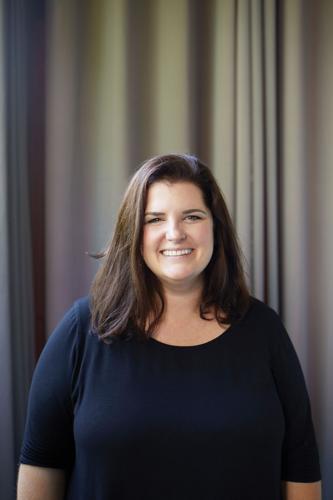
Rachel Freeman, president and CEO of the Nashville Sexual Assault Center
Lt. Col. Michael “Moose” Moore is a former fighter pilot and air marshal who founded The Vigilance Group, which offers interactive workshops on self-defense and harm reduction. He would like to see more support activities to reduce sexual violence on the part of the city. One of his concerns is the safety of hospitality workers when they’re leaving their late-night shifts. Management at some downtown bars and restaurants say they will walk people to their cars after their shifts, but some workers tell the Scene that that doesn’t happen in practice. Guerra has policies, depending on the location of the bar, that require two people to always walk out together. But Moore would like to see the city operate a shuttle to ferry workers from Broadway to remote parking lots.
“My personal opinion is that bartenders and people who work in restaurants are very brave individuals who are going to be exposed to this type of activity more than in other fields or other professions, because of the correlation of alcohol and sexual assault,” says Rachel Freeman, president and CEO of SAC. (Disclosure: Freeman is the daughter-in-law of Bill Freeman, owner of the Scene.) “The more equipped somebody is to say, ‘This is not acceptable,’ the greater likelihood that we can reduce sexual assaults.”
If you have experienced sexual assault, contact the Sexual Assault Center confidentially at 866-811-7473. More information on participating in the Safe Bar program is on the SAC website.



Post a comment as anonymous
Report
Watch this discussion.
(0) comments
Welcome to the discussion.
Log In
Welcome to the discussion.
Keep it clean. Please avoid obscene, vulgar, lewd, racist or otherwise abusive language. Comments featuring hate speech or threatening or violent content will not be tolerated.
PLEASE TURN OFF YOUR CAPS LOCK.
Be truthful. Don't knowingly lie or mislead.
Be proactive. Use the “report” link on any comment that violates our comment policy.
Share with us. We'd love to hear your feedback.