


Bassam Habib and Molly McCarthy
It has been a long, hard year.
In the early hours of March 3, an EF3 twister tore through Nashville, killing two people, injuring dozens more and destroying millions of dollars in property. Not even a week later, on March 8, a Nashville resident tested positive for COVID-19, bringing the global pandemic to our doorstep. Since then, Davidson County has racked up more than 22,000 confirmed cases and more than 200 deaths from the disease.
But glimmers of good can be found in the (sometimes literal) rubble. This summer, two new community-driven food-focused operations have started up in hopes of filling the gaps that have begun to show in the city’s traditional operating systems.
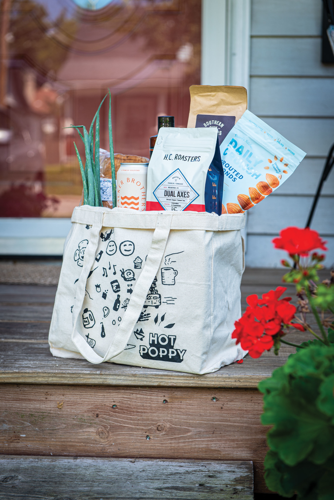
The first, Hot Poppy, is a grocery-delivery service that offers produce, pantry items and home goods exclusively from Tennessee-based farms and businesses. You place an order on their website (hotpoppygo.com), and the next day they bring everything to your door, like a more ethical and locally sourced Amazon Fresh or Instacart.
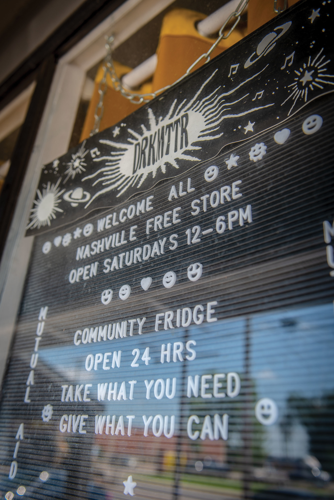
The other, the Nashville Free Store, is a completely free market run by volunteers and stocked by donations. It’s open every Saturday noon-6 p.m. in the currently quiet independent East Nashville music venue Drkmttr, and it gives Nashvillians the opportunity to stock up on food, cleaning supplies, toiletries and more, no questions asked.
Nashville Free Store
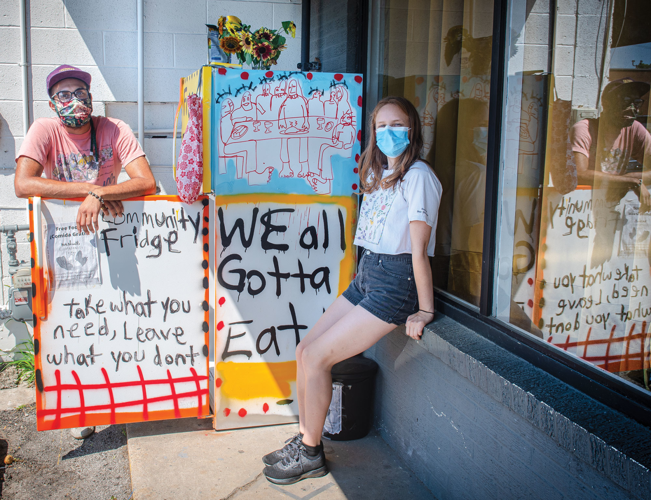
Various models of free stores have existed for decades — you can find both nonprofit and for-profit versions in Portland, Baltimore and Birmingham, Ala. Nashville Free Store co-founders Molly McCarthy and Bassam Habib say the movement is less about slapping a temporary Band-Aid on a problem and more about creating a lasting foundation that can actually lead to change. Their unofficial motto is “Solidarity, not charity.”
“Charity is part of a capitalist system,” says Habib. “When you see somebody who has no money, has no home, is living on the street, the capitalist system sees that person as, ‘This is your fault that this has happened to you.’ But mutual aid says, ‘It’s not your fault, you’re just in a system that is not working for you.’ ”
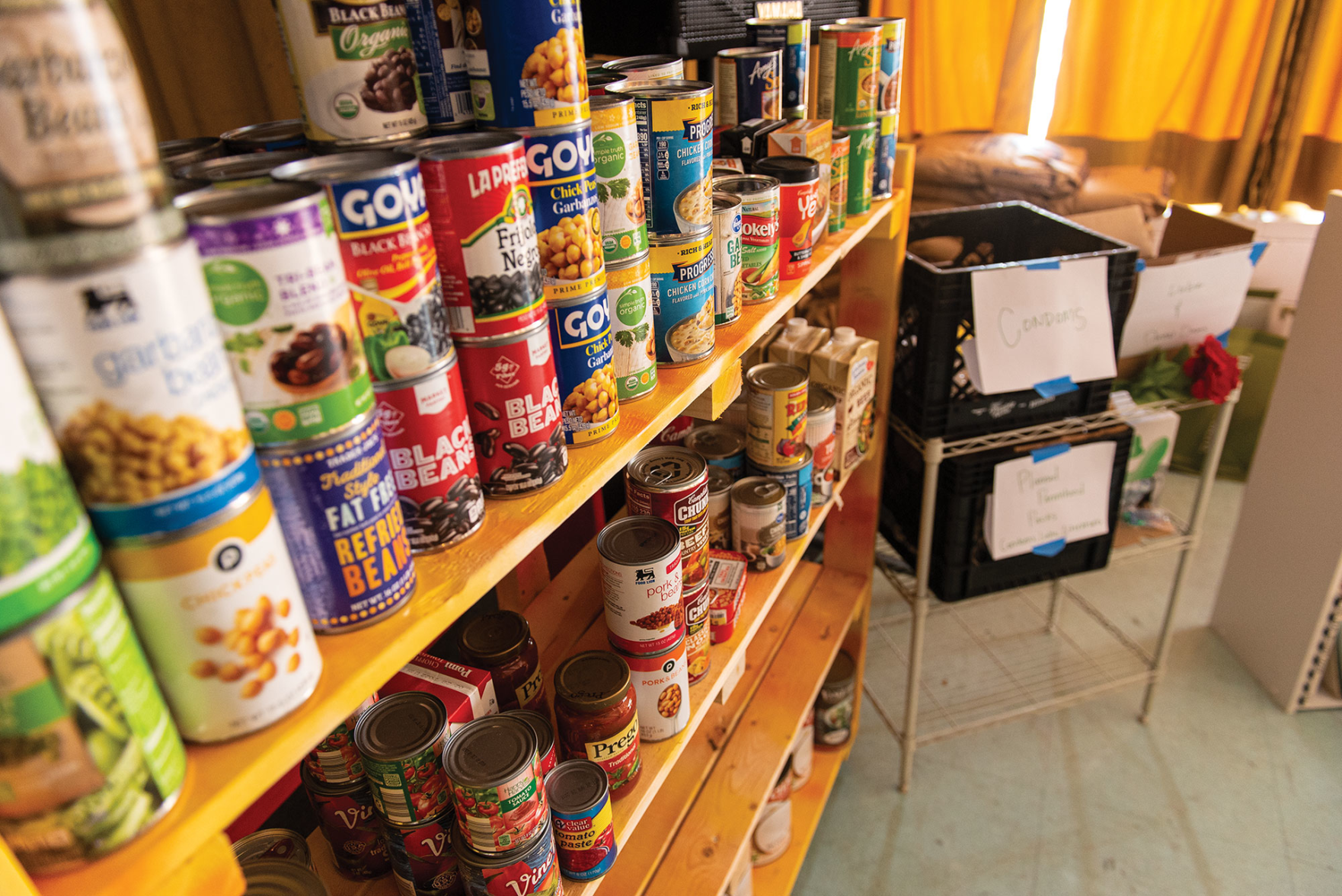
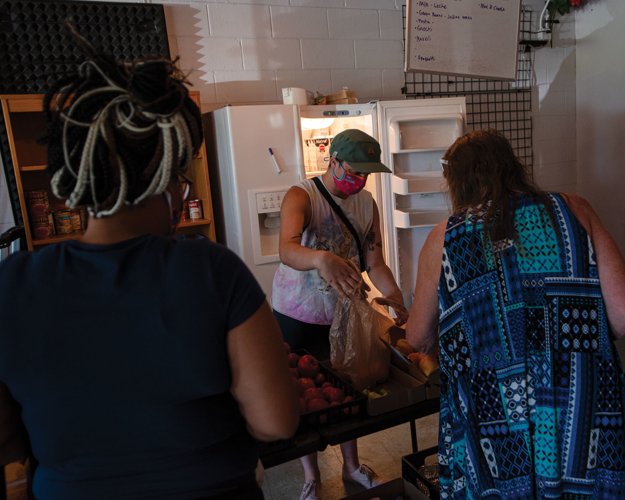
In the few weeks it has existed, the Nashville Free Store has used social media, flyers and word of mouth to pack the shelves with canned goods, snacks, school supplies, toiletries and even COVID-19 relief supplies. Much of the inventory is name-brand. There’s a fridge and freezer filled with perishables, too — milk, meat, cheese and fresh fruit and vegetables, some of which has been donated by local farms.
The selection of goods feels almost as plentiful as that of a small New York bodega (though there’s no lackadaisical cat wandering around Drkmttr). That abundance, McCarthy says, is an important part of what separates the Nashville Free Store from the usual food banks and charity drives. It’s all about letting the person in need decide what and how much they get, instead of the other way around.
“We’re not gonna ask you, ‘Why do you need five boxes of diapers?’ ” says McCarthy. “Because you can’t assume anything.
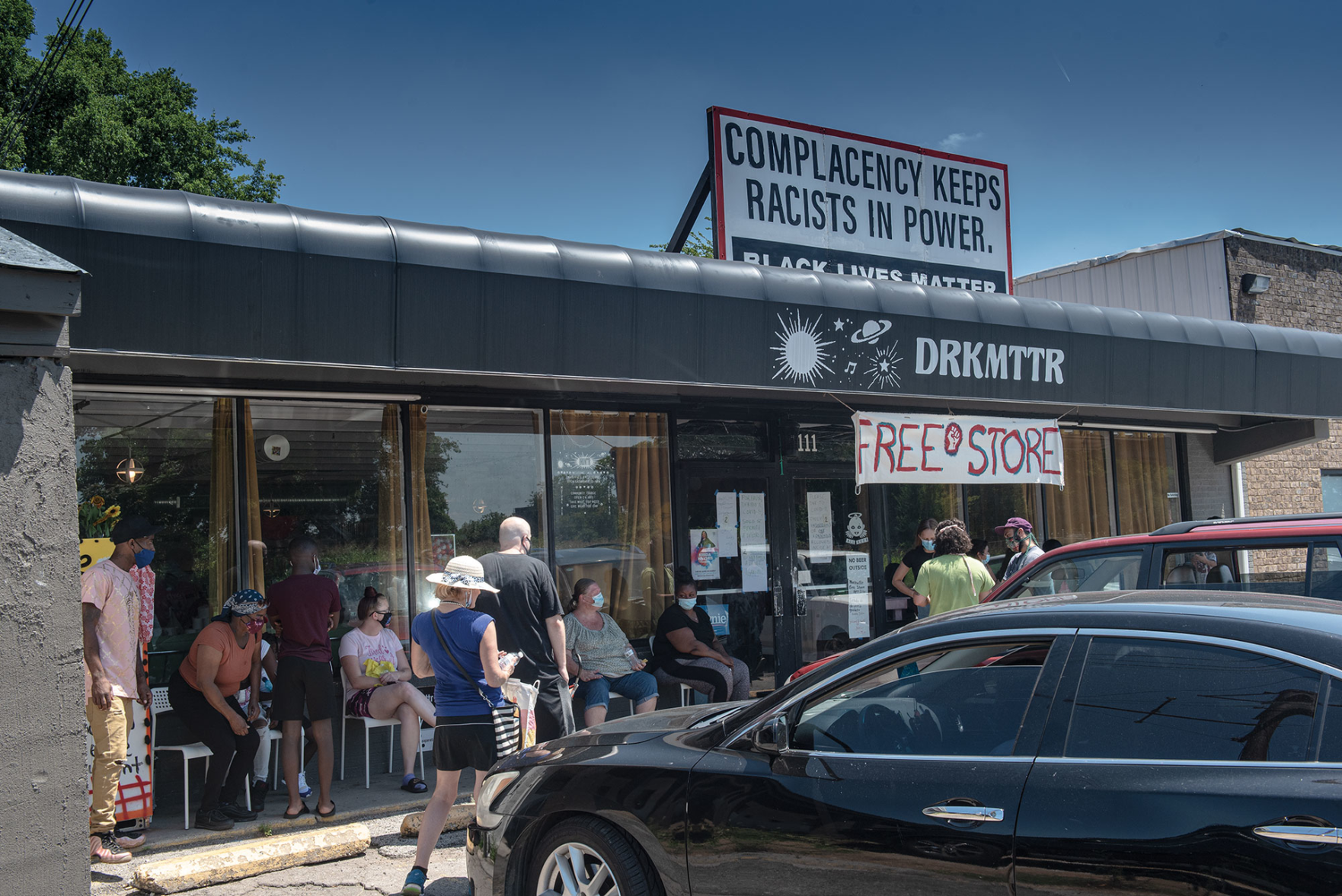
Nashville Free Store
“That’s why we’re doing the once-a-week thing, so we can get enough [supplies] to give out,” she adds. “We want people to feel that abundance, to feel this isn’t scarce and that we’re here for each other. That’s how — I guess, again, bringing it to capitalism — [capitalism] wants you to feel like there’s scarcity, it’s stressful and there’s not enough for everyone. But the reality is —”
“We’re not running out of anything,” Habib breaks in. “No one is running out of anything.”
“We’re here every weekend, says McCarthy. “And even if we ran out of donations today, we have funds donated so we can go to the store and buy stuff. There’s no stress about it.”
Hot Poppy

Hot Poppy
The co-founders of Hot Poppy — Stuart Landis, Storm Sheler and Vinny Maniscalco — first started thinking about getting into the grocery-delivery game in early April.
“For a couple of us, it was our first time using options like Instacart and Amazon,” Landis tells the Scene. “We were going on local businesses’ sites to support them as we could, but it was becoming more and more difficult to avoid using the large online options. The combination of a tornado and then a worldwide pandemic has been extremely daunting to this community, small businesses in particular. We wanted to help.”
Hot Poppy’s online “shelves” are stocked with goods from more than 40 local vendors. The dairy section features JD Country Milk, Wise Butter, Kenny’s Farmhouse Cheese and Hen-iscity Farm’s eggs; the pantry’s packed with Hummus Chick dips, Bae’s Butters nut butters, BE-Hive’s meat alternatives and a variety of honey, jams and sauces. There’s fresh pasta from Alfresco Pasta, breads and pastries from Bobby John Henry and Bonjour bakeries and even some bath, body and home products like Roux Maison laundry detergent, Little Seed soap and Paddywax candles.
The best part is the produce section. It’s an ever-changing selection based on what local farms — Bloomsbury, Shiloh and Servant Farms — have available, and while you can often get familiar staples like potatoes, tomatoes, onions and greens, Hot Poppy also sometimes carries more niche produce you won’t see at Kroger or Publix. Recently they’ve stocked colorful Mardis Gras beans, puffy lion’s mane mushrooms and pints of cucamelons, a tiny fruit that looks like a grape-size watermelon but crunches like the most refreshing, tangy cucumber you’ve ever had.
Landis says there’s lots more to come.
“We are just getting started,” he says. “Shopping local is not going anywhere. Amazon and Instacart are not going anywhere, and we plan to grow the local alternative even after [the pandemic] passes. People are waking up to the idea that they have the option to know where their food comes from. If you are in a position where you have to order online, you can still have a say where your dollar goes.”
Nashville Free Store’s McCarthy and Habib are optimistic about their future, too. In just three weekends, they’ve already served hundreds of people, and donations keep coming in as word continues to grow. They hope the Free Store can become a permanent fixture.
“This is the birth of what we would hope to see 100 years from now, which would be toppling a capitalist system, and mutual aid would be the system in place,” says Habib. “This is not a charity organization. We’re not volunteering to help the community. This is how we want the world to be.”



Post a comment as anonymous
Report
Watch this discussion.
(0) comments
Welcome to the discussion.
Log In
Welcome to the discussion.
Keep it clean. Please avoid obscene, vulgar, lewd, racist or otherwise abusive language. Comments featuring hate speech or threatening or violent content will not be tolerated.
PLEASE TURN OFF YOUR CAPS LOCK.
Be truthful. Don't knowingly lie or mislead.
Be proactive. Use the “report” link on any comment that violates our comment policy.
Share with us. We'd love to hear your feedback.