


Among the things that many folks probably never considered prior to this life-changing and habit-changing year is the concept of shopping online for groceries and staples. I took joy in wandering the produce aisles of supermarkets and stalls of farmers’ markets picking out my groceries, and the idea of depending on an online service or someone else to do my shopping for me was never even a thought.
Then came, well, this. And now meandering the aisles, even in a socially distanced one-way fashion, just doesn’t seem like the healthiest way to shop healthy anymore. At first, grocery stores and external services like Instacart and Shipt struggled to staff up to meet demand, and the internet was filled with complaints about poor substitutions as personal shoppers scrambled to fill orders from shelves emptied by pandemic scavengers/hoarders.
Over time, the system has pretty much worked itself out, and grocery delivery/pickup has become a more accepted option for many shoppers seeking to minimize their contact with other humans. Stores have streamlined their services and blocked off rows of their parking lots for contactless store-to-trunk deliveries.
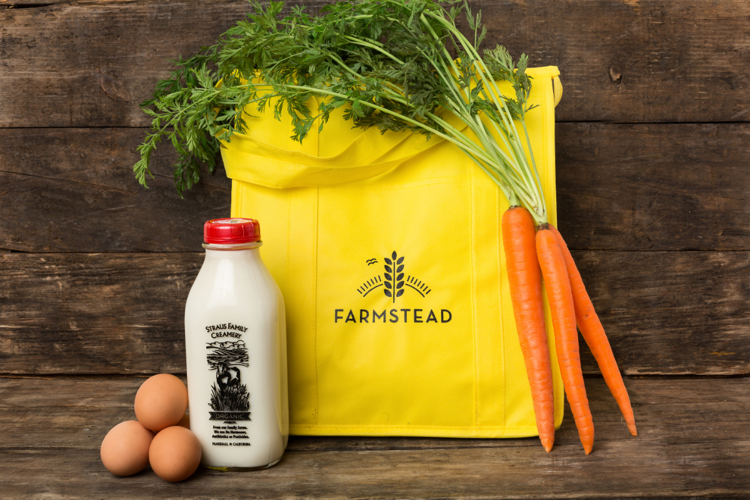
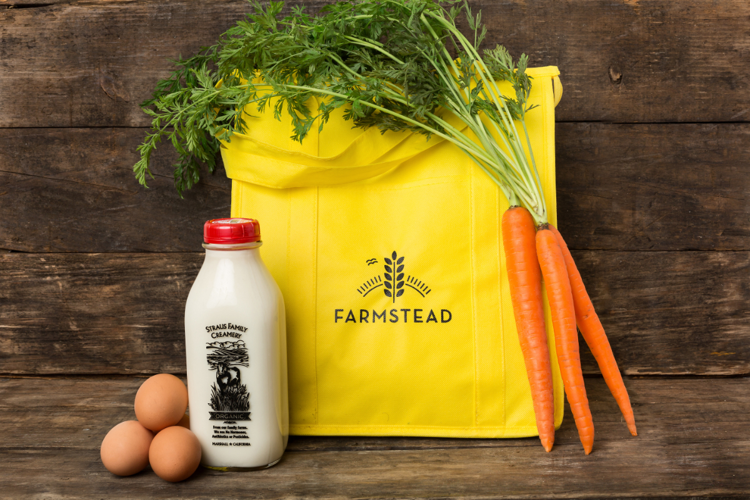
Into this new environment enters Farmstead, a San Francisco-based company that claims to have leveraged proprietary AI to optimize how food moves across the country, delivering locally sourced items when possible for no delivery charges and at lower prices than local supermarkets. They also aim to significantly reduce food waste by using predictive algorithms to stock “dark stores,” warehouses built around demand patterns within a 50-mile delivery radius that stock products for delivery to shoppers’ doorsteps.
Growing by double digits month over month in 2020, Farmstead has grown from servicing the notoriously difficult-to-please Bay Area market to North Carolina, with plans to expand to at least 14 new cities in 2021, concentrating on midsize markets. Nashville fits nicely in those plans, and Music City will be their next new market with a goal to start up service in the first quarter of 2021.
“Nashville is a great fit for Farmstead delivery; it’s a thriving, densely populated city that fits our mid-market profile customers who want their favorite brands and fresh groceries, all delivered to their doorstep with no markups,” says Pradeep Elankumaran, co-founder and CEO of Farmstead. “Farmstead cracked the code on how to make grocery delivery fast and inexpensive without sacrificing quality or wasting food, and we’re excited to roll out our service to Nashville residents in early 2021.”
With plans to start up with 1,000 initial customers, Farmstead has already opened up the Nashville wait list, offering $30 off your first order if you sign up at their special webpage. There you’ll find a demographic survey and questions about your current shopping preferences, as well as the opportunity to request specific local brands you’d like to see Farmstead carry in their warehouse. They have already committed to carrying products from some local heroes like Goo-Goo Cluster, Olive & Sinclair and Bongo Java, along with national brands that you’re already familiar with.
The company is also committed to sourcing produce locally when in season, but they will follow the calendar and ship from areas where fruits and vegetables are ripe to maintain a consistency of supply, so it’s not necessarily a totally locavore solution.
I asked Elankumaran about the company’s commitment to local sourcing, and he replied via email. “Farmstead customers typically go to multiple supermarkets each week," he says. "We aim to replace those trips with a single online shopping experience that gives customers high-quality, fresh, local food whenever and wherever possible. As the growing season progresses each year, we prioritize access to local produce, dairy and other products while also keeping nationally available products accessible to our customers. For example, during the period of time when tomatoes are harvested near Nashville, we will carry those tomatoes. Later on in the year when tomatoes are no longer harvested, we source tomatoes from other regions.”
I also inquired about what sort of differentiating factors raise Farmstead above a crowded grocery delivery market. “Unlike Instacart (which operates on top of existing national supermarkets), Farmstead is a grocer that opens smaller-format warehouses that serve as distribution hubs for the products we sell," Elankumaran explains. "We write in-house software that allows us to control our costs and pass those savings down to customers, while giving them an incredible online grocery experience with on-time deliveries, low substitution rates and high produce quality.”
Food distribution models are constantly changing, and conditions mean that the ability to forecast and make smart decisions is critical to ongoing success. While Farmstead is relatively new to the grocery industry and brand-new to the Nashville market, perhaps that means the company will be unafraid to “move fast and break things” as they seek to reinvent how consumers shop for food. If you think you might want to go along for the ride, it’s free to at least sign up to find out.



