

I’ve long been impressed by the whiskeys produced by B.R. Distilling Co. out of Memphis. The parent company of Blue Note Bourbon, B.R. Distilling sources really good whiskeys from contract distilleries in Kentucky, Indiana and Tennessee, which is a smart plan considering the overabundance of good whiskey on the market right now. It’s a great time to not be distilling your own stuff.
After allowing some of their products to age in Kentucky to qualify as straight Kentucky bourbon when desired, they ship the barrels to their West Tennessee facility where the talented blenders can start to plan their magic. In addition to choosing complementary barrels to marry in a larger batch, Blue Note blenders also finish the original whiskeys in all sorts of interesting used barrels to impart specific desired characteristics into the already-excellent whiskeys.
Three recent Blue Note releases definitely benefit from these types of secondary cask finishing, and all of them have been released in Tennessee at the fair suggested retail of $64.99 per bottle. Let’s dive in and take a sip!
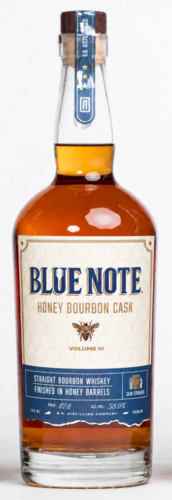
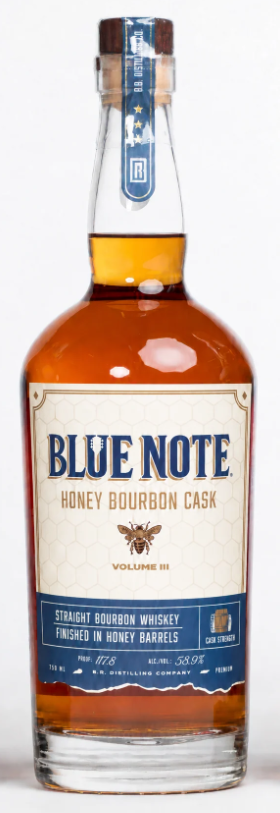
The first new whiskey is one that I know will get a lot of locals excited, because almost everybody likes a honey barrel. This is the process where finishers fill a used whiskey barrel with honey to impart sweet flavors to the wood and wood flavors to the honey. After the now barrel-aged honey is removed, the barrels are filled for a third time with whiskey, in this particular case, a 70 percent corn, 21 percent rye, and 9 percent malted barley straight bourbon whiskey. Not that it especially matters, but that particular mash bill is the fingerprint of Green River Distilling in Owensboro, Ky., and they make some fantastic whiskeys, both for themselves and for outside contractors.
Bottled unfiltered at a cask strength of 117.8 proof, Blue Note Honey Bourbon Cask is a remarkably smooth-drinking whiskey for such a high alcohol content. The extra ABV draws plenty of vanilla out of the oak casks to contribute to the nose along with the expected sweet wildflower honey. The high rye content of the mash bill shows itself in warm baking spices on the first taste, immediately followed by the golden buttery sweetness of the honey. If you could drink a snickerdoodle, I imagine it would taste like this.
Even at a higher proof, the finish is not overly hot or tannic. Instead, it is lingering and pleasant, inviting another sip. It’s hard to screw up a honey cask whiskey, but I really feel that Blue Note has nailed it with this one.

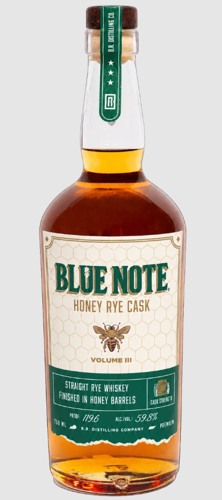
More novel is the second new Blue Note product I sampled recently: Their Blue Note Honey Rye Whiskey. I don’t know why more distilleries don’t pair rye whiskeys with honey casks. The flavors seem to be natural complements, especially if you like Manhattans like I do. The particular Straight Rye Whiskey that is the base for this product is a 95 percent rye and 5 percent malted barley, which is a common recipe at many distilleries. The majority of this mash bill is produced by MGP in Indiana, but it’s also one of Green River’s rye options.
If the Honey Cask Bourbon was a snickerdoodle, the rye whiskey is more like a graham cracker. The nose is fleetingly fruity and reminiscent of winter baking spices. Bottled at an even higher proof of 119.6, this unfiltered rye is still quite pleasing on the palate. Buttery and spicy with a hint of toffee, this would be fantastic in cocktails or sipped from a snifter.

Right when I thought I had tried almost every conceivable different tree that could be used to make a finishing barrel, from Japanese Mizunara oak to South American amburana to Oregon Garry oak, along comes B.R. Distilling with one I should have thought of years ago.
I smoke a lot of meats, so I’m pretty familiar with the effects of specific woods on flavors. Hickory balances savory and sweet; mesquite is biting and a little bitter; oak is earthy; apple is fruity. But, for some reason, I hadn’t considered cherry wood as a finishing wood for whiskey. That’s probably because it’s so darn expensive, and I imagine it’s probably not easy to raise a barrel made with cherry staves.
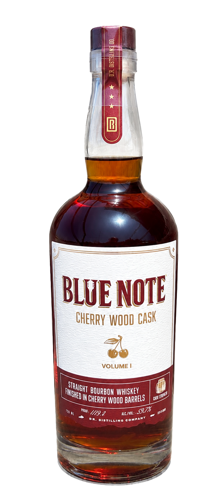
But pork tenderloin smoked with cherry wood and served with a nice Oregon pinot noir is one of my favorite meals to prepare at home, so I feel like I should have thought of this sooner: Limited Release Blue Note Cherry Wood Cask is an outstanding example of B.R. Distilling’s creativity in finishing.
The same mash bill as the Honey Bourbon is aged in traditional oak barrels and then finished in rare, sustainably harvested wild-cherry wood casks from the Jura region of eastern France. Since the finishing takes place in the hot and humid climate of Memphis, the cherry was able to contribute even more character to the whiskey, offering the same sort of brightness and warm spices that I love when I cook with it in my Primo smoker.
Bottled at a robust 120 proof, the cherry wood whiskey finishes with a long, toasty and rich smokiness. I found it truly delightful, and I look forward to trying it again with tenderloin and pinot pairing and maybe extending the evening with another snifter and a nice light-bodied cigar. I would definitely recommend searching for this one!



Post a comment as anonymous
Report
Watch this discussion.
(0) comments
Welcome to the discussion.
Log In
Welcome to the discussion.
Keep it clean. Please avoid obscene, vulgar, lewd, racist or otherwise abusive language. Comments featuring hate speech or threatening or violent content will not be tolerated.
PLEASE TURN OFF YOUR CAPS LOCK.
Be truthful. Don't knowingly lie or mislead.
Be proactive. Use the “report” link on any comment that violates our comment policy.
Share with us. We'd love to hear your feedback.