

"Chief among the takeaways from the Music City's revival," a parachuted-into-Bricktop's Jon Meacham wrote recently for Time magazine, is that "culture is commerce."
Scene contributor Betsy Phillips wrote a sharp response for Think Progress. "There's something nebulous that's being commodified here," she wrote. "And that nebulousness starts to turn ugly when you think about it." To illustrate this point, Phillips listed everyone mentioned in Meacham's essay. That list included 24 people. Every one of them was white.
About a month after Two Ten Jack — the "Japanese-inspired neighborhood pub" offering "the true izakaya experience," according to its website — opened in East Nashville, I went there to celebrate my brother-in-law's birthday. We were told it would be a 60 to 90 minute wait, so we crossed Eastland Avenue and split a pitcher of margaritas. We returned after about 60 minutes had passed. We were told we could wait at the bar, which, as is de rigueur these days, was attempting to also be a kind of miniature Patterson House; I ordered a cocktail that included "orange shrub" as one of its ingredients. Ninety minutes passed. Then 100. Then 110. As we stood at the overcrowded bar — or near it, anyway — I watched the bartender slide ice into a cloth bag and then thump it ceremoniously with a small wooden mallet.
Somewhere around the 130-minute mark, we headed for the door and bid the maitre d' good night, at which point a table suddenly, finally opened up. I wish I could remember the meal itself — food really tends to "improve" the longer I've been drinking on an empty stomach, and at this point I could have watched Breakfast at Tiffany's in its entirety with time to spare — as much as I remember the amount of time I spent waiting for it. But it was quite good. I'll be back.
What really struck me, though, was the atmosphere. Here, next door to the new climbing gym, an elaborate kabuki of Japanese-ness all the way down to the textiles hung artfully from the walls — which have been studiously made to look older than they are, a kind of impromptu wabi-sabi — was being performed by a staff composed entirely, as far as I could tell, of white people. There's a reason I just referenced Breakfast at Tiffany's.
The owners of Two Ten Jack, Patrick Burke of Seed Hospitality and chef Jason McConnell, are white. Executive chef Jessica Benefield is white. To be clear: I have no problem with white people making Japanese food, any more than I have a problem with Korean people making Japanese food (which happens more than many realize) or Mexican people making Korean food (as is common in my hometown of Chicago). Food is culture. It's transmittable. "Race," as comedian Hari Kondabolu reminded us during a recent Late Night With David Letterman appearance, "is a social construct." But as Nashville stays busy nextifying itself for a still-adoring national press corps, the question the city has not done a good job of reckoning with lately — never mind what parts of town are seeing this "revival," or what qualifies as such — is this: Whose "culture is commerce," and who gets to profit from it?
Speaking to the Scene, Burke described Two Ten Jack as an "unpretentious neighborhood gathering spot, with authentic cuisine." One could argue where a 12-dollar drink comprising Yamazaki 12-year single-malt Scotch, Pierre Ferrand Amber cognac, Benedictine, lemongrass, lemon, lime and Angostura bitters falls along the "unpretentious" spectrum, or to what degree chasing cocktail trends undermines the "authentic cuisine" claim further.
But more importantly, why would Burke feel entitled to use the word "authentic"? The menu is built on Japanese food, yes — and reverently so. But the concept is clearly a hybrid. The peak-artisanal mixology, the rugged heritage-style workwear for the staff, the Budapest Hotel-like meticulousness of mood — these are the trappings of "the New Nashville." And all for the good! But why call a studied and purposefully alloyed aesthetic "authentic"? Because you can?
A few weeks ago, I was sitting at Golden Coast, the relatively unglamorous Chinese restaurant a few miles down West End Avenue from Bricktop's. As I dug into a plate of rice noodles, a group of restaurant staffers — clad in standard-issue black pants and white button-downs — stood chatting in Cantonese. I don't know what they were talking about, but it got the attention of one diner. As he walked past the counter, he looked over at them and barked pointedly, in a voice sharp enough to cut across the entire dining room, "Speak English!"
From the corner of my eye I could see the startled hostess who had seated me straighten like a soldier. "OK!" she exclaimed, over-enunciating uncomfortably and a little defiantly. "Yes, sir! We can do that!" I kept my eyes glued to my noodles — partly out of embarrassment, partly to keep myself from standing up and telling this man to leave the restaurant if it bothered him so much to hear another language, partly to avoid becoming the next target of this disgruntled American who was determined to consume Asian culture only in the forms that pleased him.
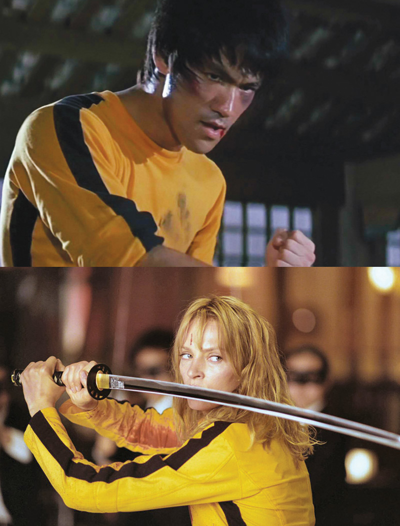
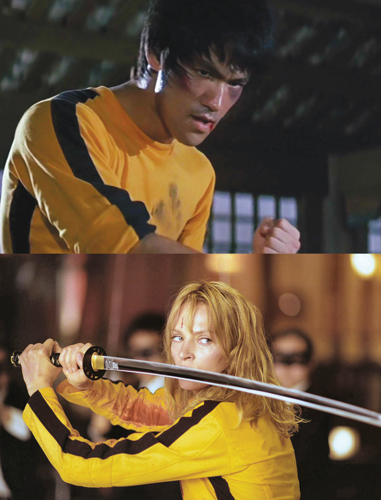
In the stunned awkwardness that followed, I thought back to my meal at Two Ten Jack. I thought about Uma Thurman in the Kill Bill movies, and how a generation of filmgoers thinks of the yellow-and-black jumpsuit as her trademark, not Bruce Lee's. I thought about how Thurman's character defeats the half-Japanese character played by Lucy Liu — slicing the top of her head clean off — while wielding a blade made from the finest Japanese steel. "Authentic" steel, you might say.
The object of the Japanese card game two ten jack is to collect the most points by taking tricks containing positive-point cards while, at the same time, avoiding those tricks containing negative-point cards. In a way, white privilege is like this. White privilege means you can play Asian for an adoring foodie public, but go to work without being harassed for the language you speak. You can go to Home Depot without having someone mockingly play-act kung fu at you, as happened to me recently when I ducked away from a 2-by-4 that had been swung inadvertently in my direction. You can walk the streets of Nashville without being interrogated about where you're from — no, where you're really from. You know, where your family is from.
I support chefs who admire, study and honor food traditions they weren't raised in. But before you play the authenticity card, don't forget who still has to live with the negatives. For some of us, these are the cards we were dealt.
Email editor@nashvillescene.com.



Post a comment as anonymous
Report
Watch this discussion.
(0) comments
Welcome to the discussion.
Log In
Welcome to the discussion.
Keep it clean. Please avoid obscene, vulgar, lewd, racist or otherwise abusive language. Comments featuring hate speech or threatening or violent content will not be tolerated.
PLEASE TURN OFF YOUR CAPS LOCK.
Be truthful. Don't knowingly lie or mislead.
Be proactive. Use the “report” link on any comment that violates our comment policy.
Share with us. We'd love to hear your feedback.