

As a child growing up just outside Atlanta, Ogemdi Ude spent many a Friday night at the local high school football game. Admittedly, she had no real interest in the game itself. For Ude, it was all about majorette dance — a vibrant form that originated in the 1960s with historically Black colleges and universities.
“I would always sit right behind the dancers, just taking it all in,” says Ude, a Nigerian American dance/theater artist and educator currently based in Brooklyn. “I was obsessed. I started practicing in middle school, and it was a big part of my life from the ages of 11 to 14. Then I went away to boarding school and college — places where majorette dance was not really an option. But a few years into my career, I hit a point where I really just wanted to get back to it. It’s interesting because I don’t think that I was like the best majorette dancer, but I do think that was the place where I was most passionate about what it meant to move — and what it meant to move with other people.”
Such passion has been a driving force throughout Ude’s career. Using movement and voice to honor and interrogate rich themes of grief and memory, her work often blurs the line between personal and cultural narratives. Ude’s latest project, Major, arrives at OZ Arts this weekend, following an exciting world premiere at Hamburg’s Kampnagel International Summer Festival in the summer, a sold-out run at New York Live Arts in January, and recent stops in Seattle and Los Angeles.
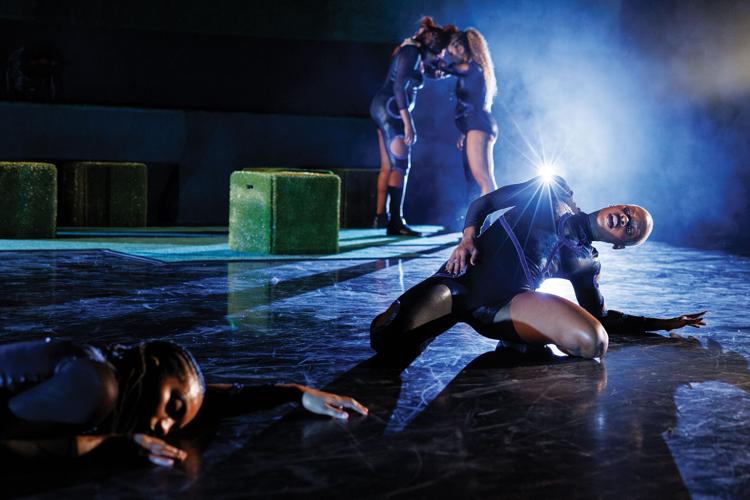
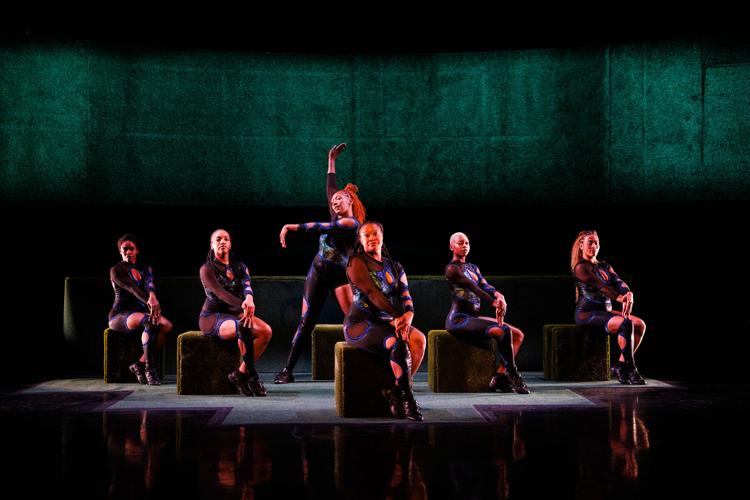
Described as a “dance theater project exploring the physicality, history, sociopolitics and interiority of majorette dance,” Major features a dynamic team of Southern Black femmes as they employ “the movement of their girlhood to answer the questions of their present.” And while Major strives to celebrate the spirit and energy of majorette dance, Ude says the piece is also quite introspective.
“I wanted to think about what it means to dive back into the body and the work you once knew, while still acknowledging where you are now,” she says. “There’s so much depth and fullness to majorette dance. But we’re not out there trying to be a majorette team. The piece is more about the desire — the wanting to be a majorette. And that feels distinct to me in the sense that we’re honoring the stewards of the form, but we’re also honoring the fact that we have a variety of histories within it.”

Major
Ude says Major has been warmly embraced by audiences from the beginning, though she is particularly excited to be returning to the South, where “audiences have a certain familiarity and understanding of what majorette dance is about.” She’s also happy to have members of TSU’s Sophisticated Ladies majorette squad, along with a drum line from the Aristocrat of Bands, taking part in this weekend’s performances at OZ Arts.

The AOB is nominated for two Grammys and poised for the HBCU All-Star Battle of the Bands
“It’s been really exciting to integrate the work intergenerationally, and we’re so happy to be working with TSU,” Ude says. “There are spaces where I feel like we’re introducing people to the form, and then there are spaces where we’re able to learn … to dance alongside and learn from, to respect and revere, and really be in conversation with the people who are doing it big — and have been for years.”
That sense of reverence is reflected in The Chord Archive, an evolving archive that’s being presented alongside all Major performances. Developed and nurtured by archivist Myssi Robinson, The Chord blends physical and digital documentation, highlighting both the creative process and the personal stories of former majorettes.
“The Chord Archive is a multidisciplinary memory-keeping container that attends to the interior intimacies and external legacies that feed the Major ecosystem,” says Robinson, a Bessie Award-winning performer and multidisciplinary maker. “There’s a mixed-media lobby installation, quilted together from responsive drawings, video poetry, photography and process materials that give poetic context to the work, while zooming in on the individuals who make it happen. Also developing through interpersonal connection within our cast and on tour is an online oral history collection that enshrines the stories of majorette originators.”
Robinson says she hopes audiences will recognize Major as more than just a work of dance theater, adding that “once the performance manifestation of Major has quieted, The Chord Archive will remain a gathering place that community can visit to dive into a brilliant web of intimate Black femme histories.”
For Ude, it’s how we navigate — and heal from — the gaps in our own histories that is key.
“Not practicing majorette dance for like 12 years, and then wanting to go back to it — that certainly creates some gaps,” she says. “I mean, I’m in a different body. There are holes in my history and training. But I think the return is still worthy — to sit with those histories and nostalgias, to forgive those gaps and create something beautiful within that fissure. And then to ask people to go with us on that intimate journey — that’s powerful.
“Sometimes when we try to draw on those past dreams and ideas, we feel like that makes us a fraud, but I think it makes us full.”



Post a comment as anonymous
Report
Watch this discussion.
(0) comments
Welcome to the discussion.
Log In
Welcome to the discussion.
Keep it clean. Please avoid obscene, vulgar, lewd, racist or otherwise abusive language. Comments featuring hate speech or threatening or violent content will not be tolerated.
PLEASE TURN OFF YOUR CAPS LOCK.
Be truthful. Don't knowingly lie or mislead.
Be proactive. Use the “report” link on any comment that violates our comment policy.
Share with us. We'd love to hear your feedback.