

Silent Friend is two-and-half hours of a centuries-old tree soaking up other people’s bullshit. Tell me you don’t relate to that.
I’m quite certain Hungarian writer-director Ildikó Enyedi (On Body and Soul) had a mission in mind that was more profound and less profane than my summary when she made this time-bouncing, dreamlike salute to nature and all its wonders. The tree in question is a female ginkgo biloba that’s been around since the 1800s, in a botanical garden near Marburg University in Germany.
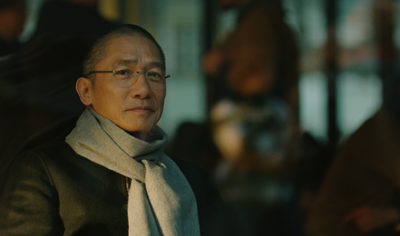
The tree catches the attention of several soft-spoken introverts throughout the decades. There’s Dr. Tony Wong (Tony Leung Chiu-wai), a Hong Kong neurologist who gets stuck on campus during the COVID-19 pandemic. Originally there to conduct research on newborn brain activity, he shifts his focus to engaging neurologically with the ginkgo, getting help via video calls from a fetching French botanist (Léa Seydoux, naturally) and quietly pissing off the groundskeeper (Sylvester Groth, who played Goebbels in Inglourious Basterds).
We shift from digital to black-and-white 35 mm to meet Grete (Luna Wedler), a young woman who becomes the university’s first female student in 1908. Immediately hit with scorn and snide, sexist remarks from both the faculty and the student body (it appears German people didn’t care for smart, independent women back in the day), she does find a couple of male allies in a helpful, easy-on-the-eyes adviser (Johannes Hegemann) and a senior portrait photographer (Martin Wuttke, who played Hitler in Basterds) who takes her under his wing. She often slips away to the garden, where she and other ladies participate in some liberating, early-morning frolicking around that ever-present ginkgo.
We then go 16 mm and the early 1970s, when we see country-boy student Hannes (Enzo Brumm) trying to relax in the garden while his fellow students talk of revolution and sit-ins. He begins a will-they-won’t-they relationship with flirtatious student Gundula (Marlene Burow), who lives in the same boarding house as Hannes and studies interactions between plants and humans via a geranium houseplant that’s connected to an activity sensor. While Gundula’s away on a trip, temporary caretaker Hannes begins to have a better relationship with the geranium, even giving the flowering plant the ability to mechanically open the front gate when he needs it.
As the kids would say, Silent Friend is a mood. Once Enyedi introduces the main players, she spends most of the movie fluidly flowing in and out of their stories, presenting each one in a visually distinctive fashion. She uses a lot of stark, static, barely populated shots in Wong’s story, while she shoots most of Grete’s story in tight close-ups, making viewers feel just as tense and anxious as she is. As Enyedi and cinematographer Gergely Pálos craft spellbinding sequences in which we get to the roots (sorry, I had to do it!) of that tree and other sources of plant life, you might get the feeling the director cares more about living things that come from the ground than those who walk the earth. (I can’t help thinking this movie would kill at those IMAX theaters located inside science museums.)
But she does have a sympathetic soft spot for her gentle-soul protagonists, a trio of people who get along with vegetation more than humans. It is great seeing Hong Kong icon Leung — who already mastered the art of playing lonely guys when he did movies for John Woo and Wong Kar-wai back in the day — once again working that cozy charisma of his as the introverted Wong. His character has gotten so used to being by himself, he doesn’t seem all that fazed that COVID-19 has forced everybody to stay indoors.
Part nature documentary, part visual tone poem and part meditation on finding connections during turbulent times, Silent Friend is a hypnotic journey through the secret life of plants — and the people who bond with them — starring a giving tree that would make Shel Silverstein proud.



