

TOY STORY 3
For children of the 1990s, the movies of Pixar measure notches of development like pencil marks on a doorjamb. Parents can chart their kids' changing tastes from The Incredibles to Cars to Up and beyond — while noting wistfully the day they no longer just had to watch Finding Nemo. That pang of eventual obsolescence was present already in Pixar's first feature, 1995's Toy Story; by the time of 1999's Toy Story 2 — my vote-getter for the best sequel ever made, and a movie that breaks a parent's heart like no other — it had swelled into a steady ache.
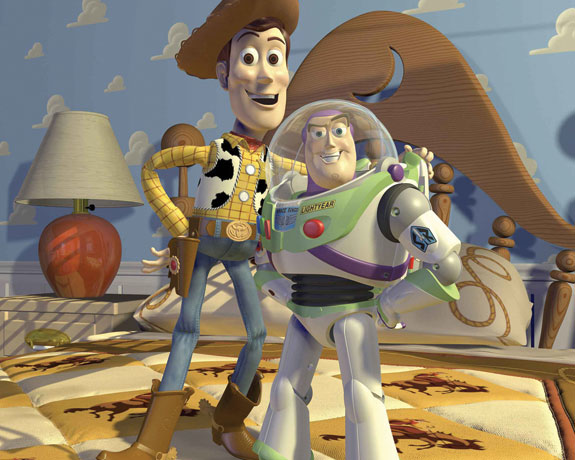
This third Toy Story walks the same emotional tightrope between lighthearted fun for kids and utter devastation for adults, and it's very nearly as much a joy as the first two. The toys are again the center of the action, as all-grown owner Andy prepares for college, leaving hand-me-downs Woody (voice of Tom Hanks), Buzz Lightyear (Tim Allen) and the rest in the equivalent of nursing-home hell: a daycare center run by a folksy teddy bear (an ideally cast Ned Beatty) whose true nature is closer to Orwell than Berenstain. But the emotional focal point, largely absent from the other movies, is Andy — whose mixed feelings about growing up are something parents will feel anew and kids will sense distantly.
The only thing lacking in this sequel, written by Michael Arndt and directed by Lee Unkrich, is the same sense of surprise — although Michael Keaton's paisley-brained Ken doll is a hilariously ditzy addition. The movie's about bonds of time, however, and our familiarity with the characters is inseparable from its impact. By the time Andy cradles his beloved toys uncertainly before passing them on, parents will have to be mopped from the floor with Swiffers. He may be ready to put away childish things — but these movies are not childish things. (Opens Friday) JIM RIDLEY
THE SQUARE
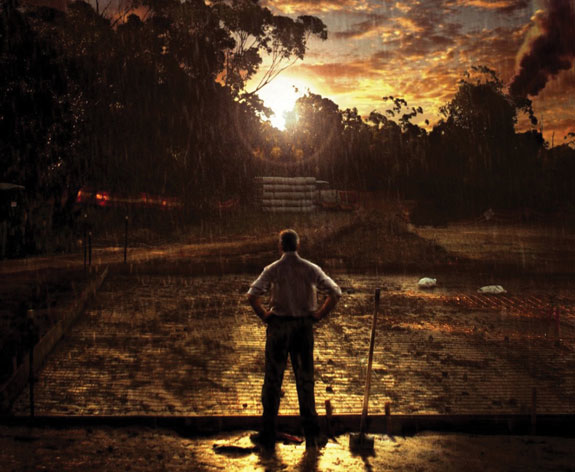
Noir is the genre of dark city streets and urban canyons, but the expected twists of this tightly wound variation — directed by Australian stuntman turned filmmaker Nash Edgerton and co-written by his brother Joel — benefit from a suburban milieu of tidy homes, community picnics and pitiless broad daylight.
The title might well be referring to the Edgertons' protagonist, a married, seemingly upright construction chief (square-jawed David Roberts) who's carrying on a hot affair with a younger married neighbor (Claire van der Boom). He's got cold feet about ditching his stable life; she's got a plan that will allow them to run away together — and it involves that mysterious bag of money sitting upstairs in her ne'er-do-well husband's attic. At this point the entire Jim Thompson bibliography should flash before your eyes, and in classic, unhurried fashion the Edgertons and co-screenwriter Matthew Dabner topple every domino that follows from the hero's one fateful decision to go along: a carefully rigged nightmare scenario of inept accomplices, inconvenient witnesses and a mounting body count.
The movie's drawing comparisons to the Coen brothers' nifty debut Blood Simple: If the dialogue and characters aren't as memorable as the Coens', director Edgerton is still a born cinematic storyteller with a nearly unerring sense of how, why and when to move a camera — as when a casual scan of an imminent crime scene takes in the one sickening detail the crook overlooked. As further proof, there's the added attraction of Edgerton's short film "Spider," a nasty little jack-in-the-box whose Nashville Film Festival screening a few years ago had viewers jumping from their seats like dolphins. (Opens Friday at The Belcourt) JIM RIDLEY
PLEASE GIVE
I have Tracy Moore to thank for introducing me to the Bechdel Test, created by cartoonist Alison Bechdel to measure the extent of women's presence in a movie. To pass, all a film has to do is meet three measly criteria — it has to have 1) at least two women characters who 2) talk to each other about 3) something besides men — and yet you'll be hard-pressed to find three movies on a megaplex marquee that won't fail. The stats would look even worse without Nicole Holofcener, the gifted writer-director whose Walking and Talking, Lovely and Amazing and Friends with Money are among the sharpest ensemble comedies of the indie-film age — and whose characters and concerns are the ones typically shunted to the margins.
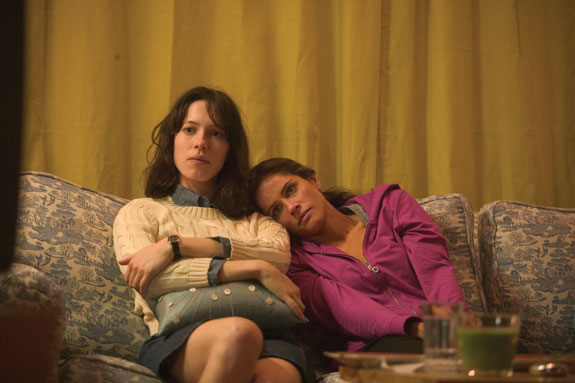
This is the most abrasive and off-putting of her films: a study of ethically challenged New Yorkers whose gnawing consciences have finally chewed to the surface. As the most immediately troubled of the bunch — an estate-sale shark who finds that tipping the homeless just won't cut it anymore as penance — Holofcener's muse Catherine Keener embodies spiritual ache without begging for the viewer's sympathy. Indeed, the movie's characters are so hateful — with the exception of Rebecca Hall's nurse, who resembles the uncomplaining center of one of Mike Leigh's tart human comedies — that their confounding behavior is initially a slap in the face.
But Holofcener's method, light on backstory and weighted toward inflection and observation, lets her characters explain themselves through interaction. At their best, the performers here, from Amanda Peet as a coolly hostile beautician to Sarah Steele as Keener's seething teenage daughter, don't seem like performers at all — just people existing on film. (Opens Friday at Green Hills) JIM RIDLEY



