


Marriage Story
The 50th Nashville Film Festival is in full swing at Regal Hollywood 27. Check out all of our coverage in this week's issue of the Scene. Here's what we liked this weekend.
Marriage Story
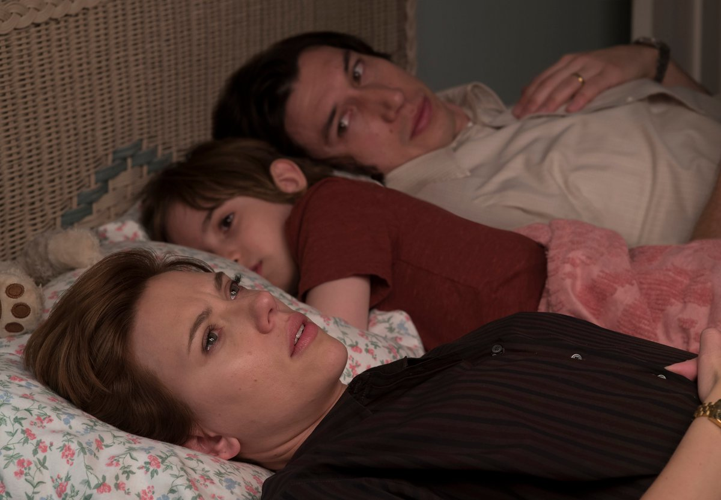
It was downright exciting for NaFF to land Noah Baumbach's Marriage Story, one of the de-facto critical darlings on the 2019 festival circuit, and the film very much lived up to its reputation in its Tennessee debut. It tells a crushing story of a divorce between two dramatists, one a rising star in the theater community (Adam Driver), the other an actress (Scarlett Johansson) who forwent a career on the big screen to act in her husband’s theater company. Their marriage fractures, and we watch them pick up the pieces, exorcise the demons that haunt them, and engage in a nasty divorce settlement.
Baumbach plays the material with the same levity-in-a-tornado wit and wisdom that hallmarks the best works of James L. Brooks, and gets powerhouse performances out of Driver and Johansson — the type of nervy groundswells of emotion and bravado that lead to little gold trophies.
The film’s script walks the razor edge between cathartic shouting matches and funny anecdotal conversations, and squeezes in just enough light to give you hope. Randy Newman’s score provides a needed balm to the blister.
Millennial parents might’ve found their Kramer vs. Kramer. Marriage Story is a downright excellent film, maybe even a borderline masterwork for Baumbach. It has a staying power that you just don’t find often. CORY WOODRUFF

Greener Grass
Greener Grass
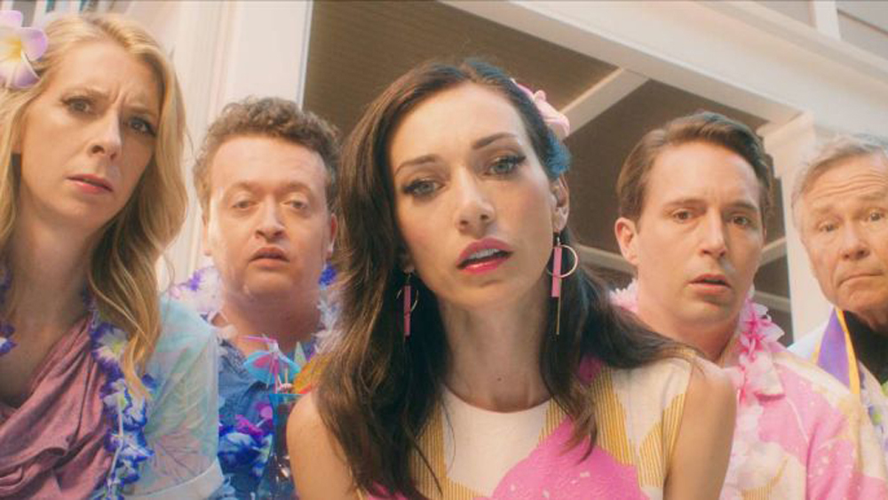
In the world of Greener Grass, all adults wear braces on their teeth, no one moves to go first at a four-way stop, and protagonist Jill can’t stop letting people walk all over her. She lives in a suburban hell scape that’s masked by saccharine smiles and matching pastel outfits on every married couple. Like The Planters, Greener Grass is directed and written by the film’s stars: Jocelyn DeBoer and Dawn Luebbe.
It’s truly absurd — just short of what I’d call Lynchian — with a fantastic supporting performance from Saturday Night Live’s Beck Bennett as Jill’s husband, a man who has developed a insatiable appetite for pool water. DeBoer and Luebbe take so many risks in Greener Grass, including truly unlikable characters, a milk-curdling color palette, a main character who inexplicably turns into a dog in the second act, and heightened emotional tension that often amounts to nothing more than a fart in the narrative arc. But somehow, this bizarre reflection of suburban married life just works. Jill’s anxieties about being a good mother, a doting wife and a loyal friend are all wrapped up with her own physicality. Though it’s taken to absurd extremes, it still rings very true. When she questions her reality, her friends and family assure her that all is well. Greener Grass is a lot like George Cukor’s 1944 thriller Gaslight, in which another woman, this time played by Ingrid Bergman (truly that bitch), is taught not to trust her perceptions. Bergman’s character flirts with madness, and so does Jill, but in the latter’s case, our always-Instagram-ready culture is to blame for her warped view of reality. ERICA CICCARONE
The Planters
I try to make it to as many films in the New Directors category as possible, knowing that there will be some hits and some misses. I got my ticket to see The Planters out of sheer curiosity. The dark comedy was directed and written by its stars, Alexandra Kotcheff and Hannah Leder. They were also the sole members of the crew, taking on all of the on-set production roles. I didn’t think it would be great.
But The Planters is a work of art. It’s gorgeously shot in the California desert and in a trailer in Palm Springs, Calif. In it, Kotcheff plays Martha Plant, an introverted telemarketer who is extremely bad at her job. She supplements her income as a “planter,” burying trinkets in the desert and posting clues for the public on where to find them. A “receiver” digs up the plant and leaves a monetary reward in its place. It’s an odd enterprise but Martha is tremendously proud of her work, viewing it as an exchange that’s emotionally satisfying. Her routine takes a turn when Sadie, played by Leder, runs into her (literally) in the desert. At first, Martha is standoffish, but Sadie’s kind and unassuming nature wins her over. Then, Sadie’s multiple-personality-disorder sets in. The Sadie mayhem disrupts Martha’s regimented routine and makes her open her heart to her first ever suitor, a telemarketing customer named Robert Cox, played ridiculously well by Phil Parolisi.
The lesson is a basic one, but it’s so well-told. Charming, original and funny, The Planters portends great things for Kotcheff and Leder. I’ll be keeping my eye on what’s next for them. ERICA CICCARONE
Documentary Shorts 1
The rain didn’t put a damper on the Nashville Film Festival on Sunday evening, where a bustling audience ducked out of the weather and into the theater for the fourth day of the fest. I’ve got several feature films on my watch list, but shorts programs are always my go-to at festivals, and Sunday’s Documentary Shorts 1 block was consistently excellent.
All the movies in this category focus on people: “All Inclusive” is a brilliant portrait of the anonymous throngs populating a massive cruise ship. Directed by Corina Schwingruber Ilić, the movie mesmerizes for 10 full minutes, but most of the films here are much more personal: “Take Me to Prom” pictures a selection of queer folks reminiscing about their bittersweet experiences with their high school proms, and “The Clinic” (directed by Elivia Shaw) takes viewers inside a broken-down bus that serves as a mobile health clinic and needle exchange for intravenous drug users in Fresno, Calif.
There are seven films in this block. They’re all very good, but “All on a Mardi Gras Day” was my favorite. Director Michal Pietrzyk’s look at the art and culture of New Orleans’ African American Mardi Gras Indians is a tale of creative obsession that highlights the redeeming power of a life in art. Grab your best Spyboy and catch this great selection of docs when it screens again at 3 p.m. Wednesday, Oct. 9. The second documentary shorts program screens at 6 p.m. Tuesday, Oct. 8. JOE NOLAN

Burning Cane
Burning Cane
Burning Cane, the impressive debut from young filmmaker Phillip Youmans, screened at NaFF after taking the 2019 Tribeca Film Festival by storm. It’s an ambitious tale of vice, virtue and all the grey area in between. Youmans began working on the film at the beginning of his junior year in high school and completed it around graduation time.
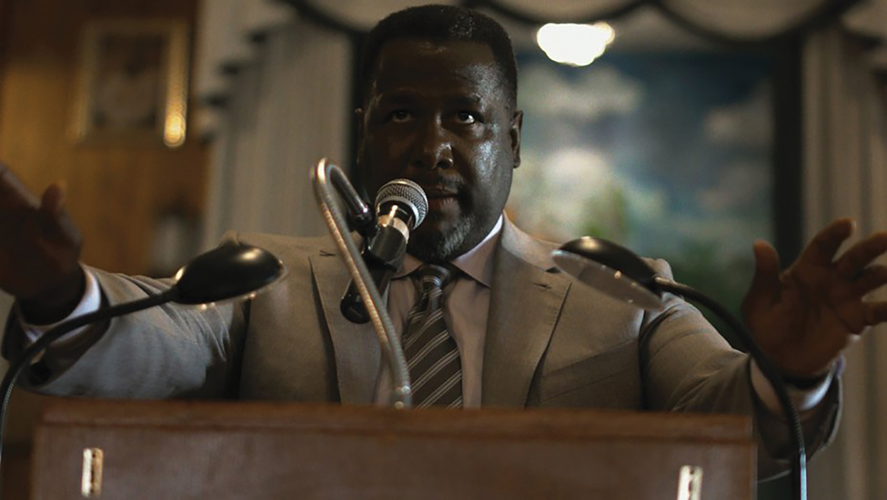
Striking homilies from an alcoholic preacher (a superb Wendell Pierce) interweave with scenes of Daniel (Dominique McClellan), who is also an alcoholic, and his young boy. The flaws of both men are similar and make a grander point about burdens that are both in and out of their control. Youmans borrows from filmmakers like Terrence Malick and his executive producer, Benh Zeitlin, to show a lot without telling much in the way of narrative.
Although this film could’ve benefitted from a less observational and more engaged narrative, the imagery is stark and unforgiving, highlighting the disarrayed lives of Youmans’ characters. Youmans, who also acted as cinematographer, lets his camera linger on dilapidated barns, televisions buzzing with static and crushed cans of beer. Youmans has better films ahead of him, with Burning Cane an impressive — but somewhat flawed — debut. CORY WOODRUFF



