

Remember when Will Smith slapped Chris Rock at the Oscars? Of course you do. Chris Rock was onstage to present the award for Best Documentary Feature, which went to the Questlove-directed Summer of Soul. For a brief moment, the slap did what publicists spend millions trying to do: It thrust an award-winning documentary into the center of public attention.
Well, wait. No it didn’t.
We only remember THE SLAP. And the attention was at the expense of Questlove’s big moment and the documentary category itself — which the Academy periodically floats the idea of removing from its broadcast altogether, citing time. Docs can’t get no respect. And yet, there is hope.
I was in Los Angeles in early December catching screenings of documentaries vying for spots on the Oscar short list. One a day. Packed theaters. Lively Q&As. Amid the churn of celebrity biopics and algorithm-approved true-crime “docs,” the format survives. Five exceptional feature-length documentaries from around the world are vying for an Oscar at the March 15 Academy Awards, and they deserve our attention. All but one are currently streaming on various platforms.

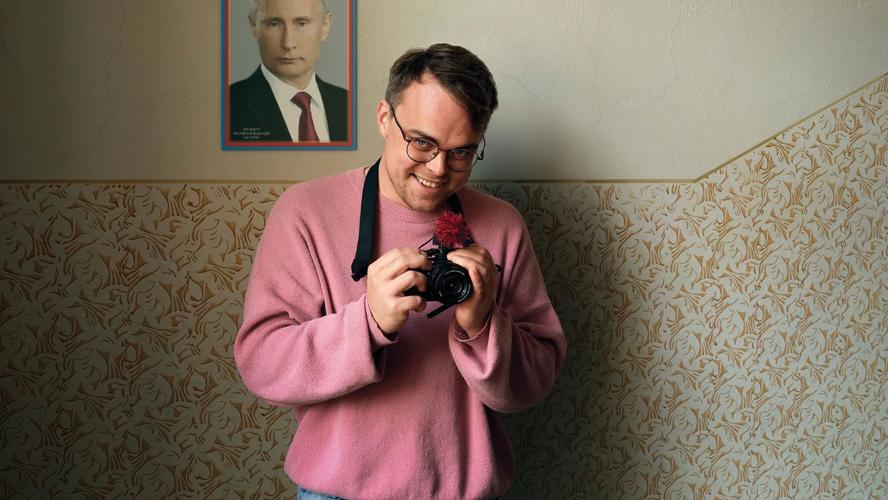
Mr. Nobody Against Putin
Mr. Nobody Against Putin, available to rent or purchase, coming to the Belcourt in March
In the mining town of Karabash, Russia, propaganda doesn’t arrive with jackboots. It comes laminated and stapled, slipped quietly into a school curriculum in the lead-up to Putin’s invasion of Ukraine. Pavel “Pasha” Talankin (imagine your favorite theater or English teacher with the cool, arty office) has been recording student life for years with his video camera. Now he documents the shift to fascism happening in real time.
History bends. Patriotism hardens. Teachers stumble pronouncing “denazification.” Children are indoctrinated, pushed to become future soldiers. And Pasha begins to rebel.
The film is mordantly funny. And terrifying. You can imagine the slide into these circumstances happening in our own country. After the screening, Pasha told me he now lives in exile in the Czech Republic. In Moscow, he said, he would be in prison. In his hometown, people who disagreed with him still protected him. And they loved the film.

Cutting Through Rocks
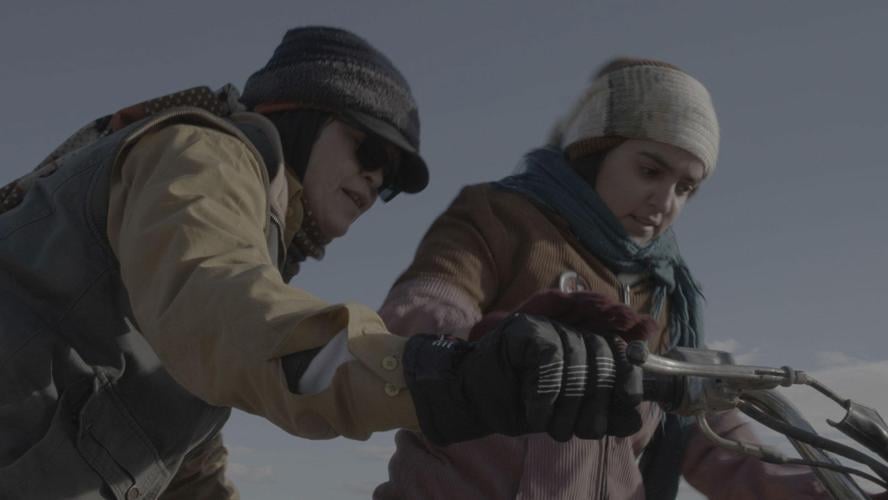
Cutting Through Rocks, not currently streaming or showing locally
We ride on a motorcycle into the life of Sara Shahverdi, 43, a divorced midwife and motorcycle enthusiast recently elected to city council in a village in northwest Iran. She is the first woman ever elected. I can’t recall another recent film that made me tear up so many times.
Shot over nearly a decade, Cutting Through Rocks follows Shahverdi’s effort to reform her village, curb child marriage and open girls’ minds to a better future. The men are slow to adopt her vision. The regime in Tehran is firmly opposed. Toward the end, things take a surreal turn — the kind possible only in an authoritarian country.
The film is exquisitely beautiful, attentive to life’s quiet charms, and feels guided by Abbas Kiarostami’s hand. Shahverdi has my vote for the Oscar! Unfortunately, this one is currently only available in select theaters, and is not showing locally.

Come See Me in the Good Light
Come See Me in the Good Light, streaming via Apple TV+
This film centers on the bravery of American poet Andrea Gibson, willing to let us in as she is dying from ovarian cancer. I came in wary, expecting something saccharine, a mix of Hallmark and reality TV. The familiar beats are there, but the film’s power comes from its willingness to stay with Gibson, her partner Meg Falley and their love.
To be this vulnerable. This thoughtful. It’s heart-scalding.

The Alabama Solution
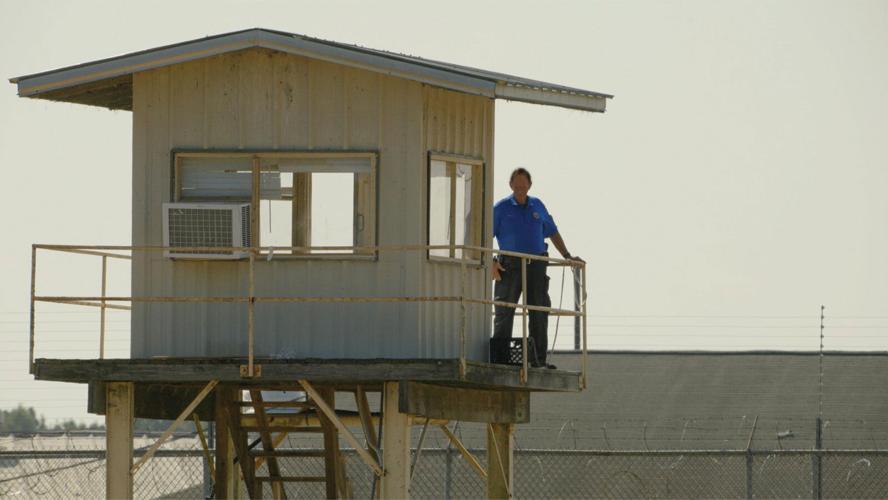
The Alabama Solution, streaming via HBO
This may be the most urgent American film up for an Oscar this year. Built from a decade of contraband cellphone footage, it follows two long-incarcerated organizers, Melvin “Bennu Hannibal Ra-Sun” Ray and Robert Earl “Kinetik Justice” Council, as they document life inside Alabama’s prison system. Each man has paid an incredible price, including a beating by guards that nearly killed Kinetik and blinded him in one eye. What they record is devastating: rat-infested cells, rotting food, blood-streaked floors, routine beatings, unreported stabbings, men carried out in body bags. Facilities operate at more than twice capacity with far too few guards, while a black market for drugs flourishes. Alabama’s response has been to build more prisons.
The film exposes a forced-labor system generating hundreds of millions of dollars for the state. Incarcerated workers earn roughly $2 a day — the same rate set in 1927 during Jim Crow — and work long hours for public and private institutions, including the governor’s mansion. When refusing to work can result in your parole being denied, that’s slavery.
Since the film’s release, its participants have been retaliated against, transferred to a new prison and placed in solitary confinement.

The Perfect Neighbor
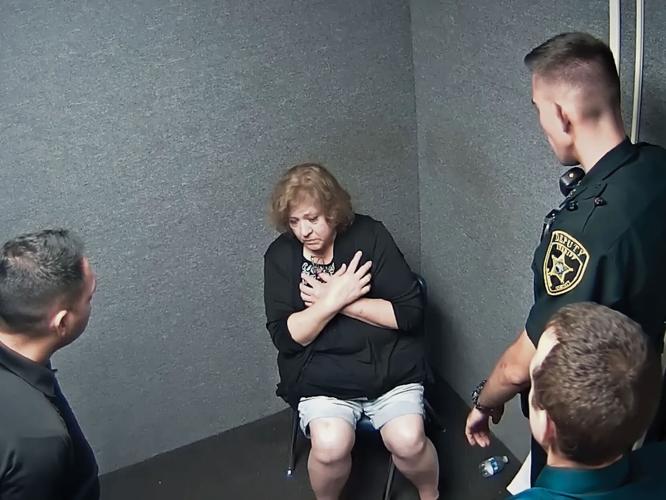
The Perfect Neighbor, streaming via Netflix
Director Geeta Gandbhir subverts the use of body-cam footage in this Florida documentary about a new neighbor who terrorizes the community she moves into. The police body cam becomes the film’s camera operator. Saying more would be a disservice. A must-see.



