

There’s a recurrence that happens, growing up in America, where you don’t realize how much is kept from you until you run into it in a more dramatic context. Whole swaths of Americans had never even heard of the 1921 Tulsa Race Massacre until it became a crucial plot point in HBO’s 2019 Watchmen series, and it illustrates perfectly the pernicious way in which political forces are even still trying to purge history lessons of ugly truths. So it’s tragic but also not surprising that what happened in the early 1920s in the Osage Nation in Oklahoma is not something taught in the majority of history classes.
When oil is found on Osage lands, industry comes calling, finding new ways to serve, infiltrate and exploit the newly wealthy Native people. Gambling, usury and discriminatory pricing structures work to shake up these new economic structures, but the most insidious is the way white men start marrying Osage women, tying up petrochemical dividends in blood and writs. It’s just accepted as a hazard of life at the time, even as shamefully suspicious deaths mount all around.
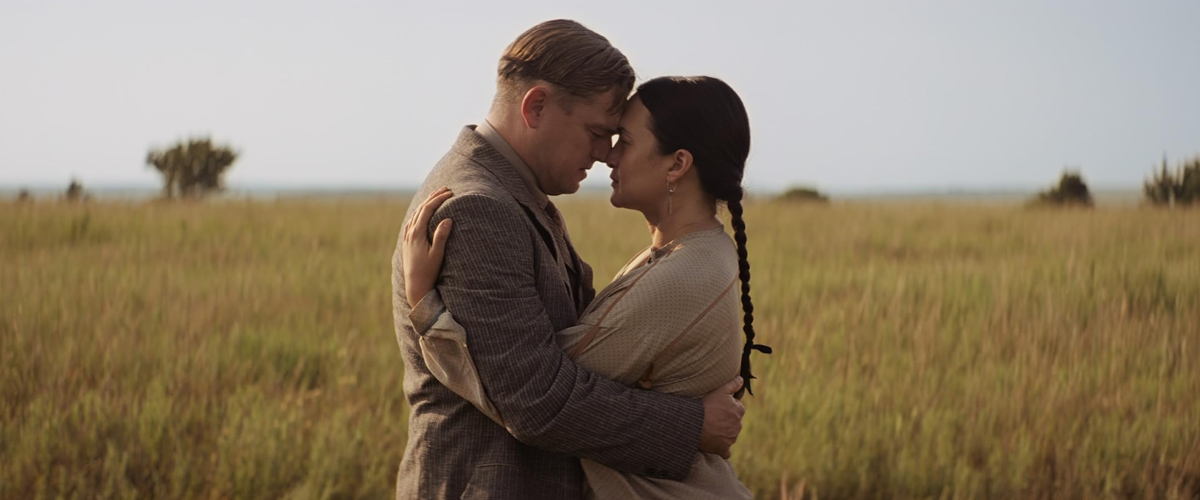
Killers of the Flower Moon's Molly (Lily Gladstone from Certain Women — which if you haven’t seen, please remedy that) is the focal point of this whole situation. A woman watching her family and their holdings slipping away by attrition, tossed around by malign forces that see through her to her headrights. And in the midst of this, she finds love with Ernest Burkhart (Leonardo DiCaprio). He’s a mildly conscientious guy, if oafish, and his uncle, King Hale (Robert De Niro, getting all Angel Heart with it), has been a vocal supporter of the Osage Nation. We view this loose, complicated conspiracy of bleeding resources from both inside and out.

Killers of the Flower Moon
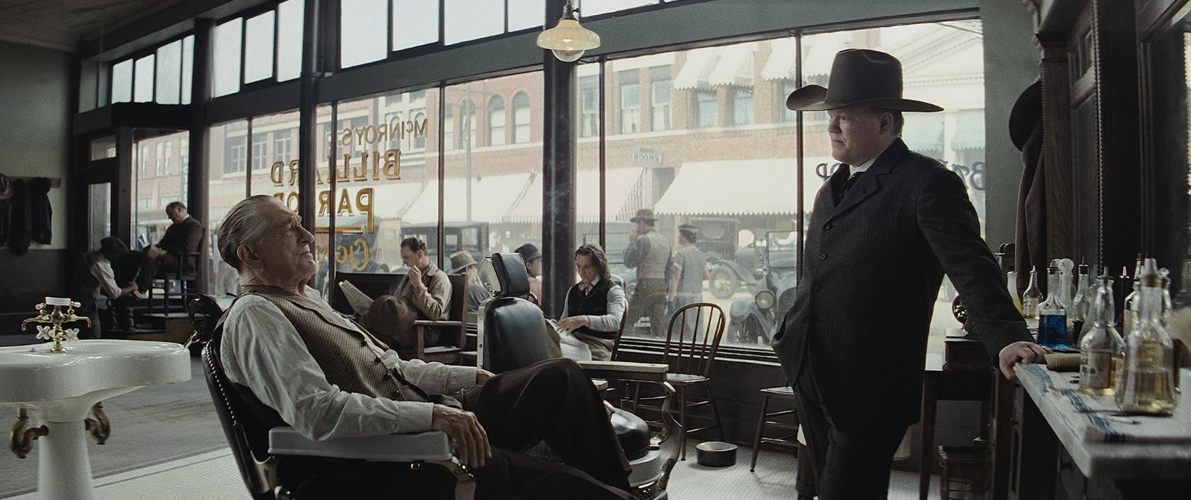
Director/co-writer Martin Scorsese, in adapting the book by David Grann, finds a new through line that embeds in the Osage community and the mechanism of exploitation around them rather than structuring things, like the book, in the framework of the development of what would become the FBI during the federal investigation into the deaths. When Thomas White, the head Bureau of Investigation investigator, shows up, he’s played by Jesse Plemons in a role that gives off down-home Columbo energy. But the transition from book to film makes a very smart choice, eschewing the structure of a mystery, and letting us know from the beginning that Hale and Burkhart are both directly involved with the strategic murder of the Osage people.
This is Leonardo DiCaprio’s Barry Lyndon. To watch this epic (but brisk) three-and-a-half-hour journey into some ugly parts of American history is also to watch Leo be tossed into a rock tumbler bent on shredding whatever movie star vibes he’s been carrying around with him since Titanic. And it’s a staggering mainstream breakthrough for Gladstone, who has to incarnate the strength of a nation and the instincts of a mother while not turning a blind eye to the horror around her house. It’s a delicate turn with a center of steel, and if you play the awards game, do not underestimate how she reconciles so many different emotional states of being.
This film will do some good. If you don’t know the history — which, like every example of racist greed, is now even harder to address in educational contexts — the brazen horror of it all can be overwhelming. We’re none of us surprised that a situation wherein Indigenous people came into heaps of money led to orchestrated exploitation and outright thievery and murder. So let’s hope that a work of political art with this kind of mainstream star power can help increase awareness, and make it harder for renegade school boards to whitewash troubled histories.



