

Few experiences are as dreadful, as internally discomforting, as finding yourself lost and alone in an unfamiliar country where you only speak a crumb of the local tongue. Though it’s not a horror film in the slightest, To the Ends of the Earth is an immersion in that specific experience of horror. It’s fitting, then, that director Kiyoshi Kurosawa (no relation to Akira) is mostly known outside of Japan for horror films like Cure and Pulse, some of the most existentially terrifying movies ever made.
Over the past decade or so, with movies like Tokyo Sonata and Journey to the Shore, Kurosawa’s films have softened, turning toward melodrama and romance. But even in his genre movies, there’s an underlying humanism. What scares Kurosawa is the uncanniness of our own reality, the incomprehensible strangeness of being alive.
The production of To the Ends of the Earth arose out of a unique opportunity — an offer to Kurosawa from the government of Uzbekistan to make a film in their country marking the 25th anniversary of Uzbek-Japanese political relations. To the Ends of the Earth also honors another historical exchange between the two states: the construction of the Navoi Theater, the gorgeous national opera theater located in the Uzbek capital of Tashkent, which was built with the conscription of Japanese prisoners of war held by the Soviets during World War II. As it’s explained to us in the film, these Japanese prisoners of war became committed to their craftsmanship and work because they had little else to live for. Their story imbues the theater with a kind of ghostly resonance.
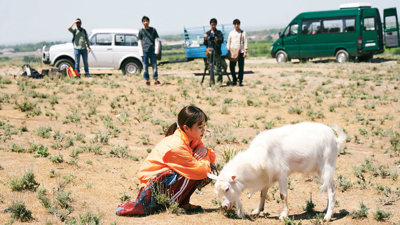
Another filmmaker might have made a simple travelogue or unimaginative documentary, or treated the whole thing like a paid vacation. But Kurosawa takes a more reflexive approach. To the Ends of the Earth is, in some ways, very much about the experience of being tasked with writing a film about a place you hardly know, expressed through a story about being a stranger in a strange land. Yoko (Atsuko Maeda) is the only female member of a Japanese television crew shooting a travel show in Uzbekistan — though their work might seem exotic and enticing on the surface, it’s almost immediately clear that this kind of video production is nothing but pure tedium. Everyone’s tired, the material for the program is stretched incredibly thin, and tensions are simmering. The group has a local translator and host who is part Japanese, part Uzbek, and fluent in both languages, but their work is continually hampered by mistranslation and miscommunication. The pressure is especially tough on Yoko, who is expected to maintain an endlessly cheery and girlish disposition as the show’s host, but who is reserved, shy and isolated when the cameras aren’t recording.
On her off days, Yoko wanders the streets as a tourist, but almost nothing comes of her expeditions but more anxiety — as the title suggests, this is a place where tourists hardly venture, and Yoko is sometimes met with suspicion and hostility. Kurosawa films throngs of bodies with a palpable claustrophobia, as fear begins to suffocate Yoko: fear of being a woman in such a visibly patriarchal world, of being a different race from everyone around you, of speaking out loud and not being understood. As those negative emotions begin to build, the tightly controlled veneer of Yoko’s persona begins to crack, and the movie slowly slides into a slight, almost imperceptible surrealism, that uncanny flavor Kurosawa is so known for.
Amid the anxiety, there’s a sense of complicated tenderness, and many a moment of true beauty — whether it’s existential dread, ennui or something softer, Kiyoshi Kurosawa is one of cinema’s finest conductors of emotional experience.