
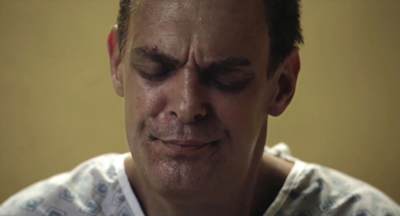


The Dead Center
There is a special kind of dread that stems directly from the literary tradition. That’s not to say dread can’t be cinematic — there are countless examples of how film can conduct a symphony of unease through its fusion of sound and vision. But there’s a kind of stark, fatalistic horror that comes from the way the written word can express the boundless insides of the few pounds of gunk we call a brain, and Billy Senese’s film The Dead Center manages to conjure that same sense.
Some will say The Dead Center is Lovecraftian, and that’s totally fair; there’s an unknowable boundary around the human experience, and if you pass beyond that boundary, you are quite simply fucked. Not inconvenienced, not confronted with a set of obstacles to ford in order to get your life back, not tested by some sort of metric that can shore up reality as you see it. There are some horrors that you can’t escape from. You looked at the Ark of the Covenant. You called to the Candyman. You went through the telepod, were torn apart, and have been reassembled. But as what?
And that’s what The Dead Center does. It’s not just the best Nashville-area-made horror film since Hendersonville and Madison’s John Hughes-meets-Messiah of Evil swoon Make-Out With Violence (with whom this film shares several key crewmembers, including composer Jordan Lehning) 11 years ago — it’s one of the best films made in the city in decades. The film centers on Dr. Daniel Forrester, played by Shane Carruth, who is exactly the committed, dynamic presence needed here. (Carruth himself has batted a thousand as a director and co-star of his own films Primer and Upstream Color.)
Forrester is a psychiatrist, working with people on the edge, and he believes in helping others. He’s the kind of medical professional we all look for — resolutely human in the messy edges of both his suit coat and his emotional state of being. He’s quirky and attentive and smart, and he’s much more concerned with the well-being of others than himself. But he’s not performative about it. He’s a decent person on the business end of the modern world, and like the majority of us, he doesn’t stand a chance.
We never know the specifics of the contagion at work here. Forrester encounters it in a patient (Nashville theater folk hero and pre-eminent film actor Jeremy Childs), and it could be a demon or a virus or an ancient chthonic spell — truthfully, it could be all of those things. But like short-term rental properties, like unchecked gentrification, like pedal taverns and bachelorette parties and the pernicious grasp of state legislators who don’t even live here, there’s an unholy, unreasonable menace widening its grasp — and it’s going to tear Nashville (playing Atlanta!) asunder.
There’s so much local talent both in front of and behind the camera in this movie, and beyond its masterful use of terror, dread and abject consciousness is the way it builds on civic pride, which is not necessarily a feeling you expect to have with a horror film. All good horror is political, whether explicitly presented or subtextually effused. And if it did nothing else but express the helplessness that proliferates when confronting a cosmic obscenity without descending into the “Fuck you, pay me” libertarian zombie wankfest of Walking Deadsville, The Dead Center would be a singular offering among the year’s horror titles. But Senese’s uncompromising vision (it goes there, and no one is safe) and Carruth’s magnetic, empathetic performance make for essential viewing.



