


If you’ve ever seen a Chinese movie in an American theater, there’s a good chance it was directed by Zhang Yimou. His films were critical favorites in the 1990s, but he exploded in the early Aughts, benefiting from the demand from American distributors for visually stunning martial arts epics in the wake of Ang Lee’s Crouching Tiger, Hidden Dragon. Zhang’s 2002 film Hero — featuring an all-star cast of Jet Li, Tony Leung Chiu-wai, Maggie Cheung and Donnie Yen — was the first Chinese film to hit No. 1 at the American box office. Zhang reached even more eyeballs in 2008 when he directed the opening ceremony of the Beijing Olympics.
Shadow, his latest, could almost be sold as a martial-arts-centered take on Jordan Peele’s Us. We are situated in medieval China, where feuding clans engage in perpetual warfare. The titular “Shadow” is Jingzhou, the body double of an elite commander named Ziyu, who has been gravely injured and hopes to use his younger, healthier doppelgänger to seize state power from his deathbed. What unfolds is backroom political intrigue, forbidden romance and buckets of blood.
On the surface, Shadow seems like a return to form for Zhang, whose last movie was the misguided, Matt Damon-starring The Great Wall. That audacious international co-production, authored by American screenwriters Tony Gilroy and Doug Miro, garnered a great deal of negative American press for its supposed whitewashing of Chinese history (nevermind that the whole movie is basically nationalist propaganda about how the Chinese military is better at fighting dragons than Matt Damon) and made only a blip at the box office.

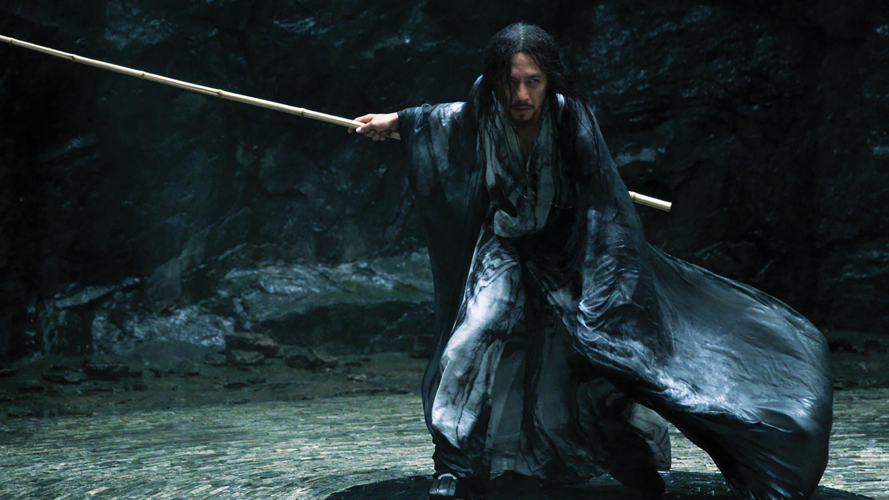
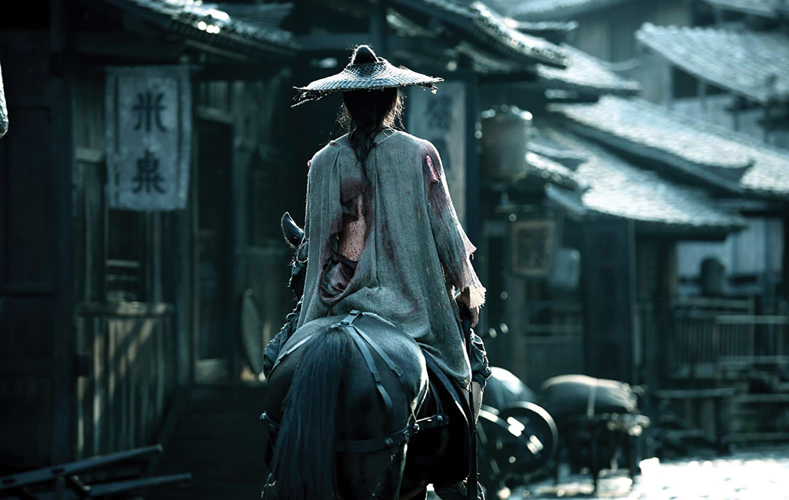
But Shadow is actually more of a departure for Zhang than The Great Wall. If there’s one visual trait that’s responsible for the director’s international reputation, it’s his evocative color palette, which simultaneously evokes the Technicolor aplomb of Old Hollywood musicals and Chinese cinema’s own history of medieval epics. Even if his first English-language blockbuster was aggressively watered-down, The Great Wall still bore traces of that distinctive style: the sparkle of shattered stained glass against the sunlight, the bright-red walls of a towering pagoda. Shadow is still stylized to death, but the departure in look feels deliberate. Every color has had the life sucked out — nothing’s left but black, silver and the sickly pallor of soon-to-be-corpses.
The only other hue on screen is dark red. Blood is a substance that flows more freely in this film than in Zhang’s previous work. Shadow’s violence — which manages to be both graceful and punishing — is the main attraction here. Jingzhou duels with an instantly iconic weapon, a lethal umbrella made from flying shards of metal, which makes for fight sequences unlike any you’ve seen before. Zhang lenses portions of these battles in slow-motion, drawing out every stroke and slash so we get intimate with the action.
But it’s not just the color wheel that’s different here. It feels like Zhang’s ideology has shifted too. Hero is a beautiful film, but its ending, which borders on fascistic, has always left me uneasy. After spending the entire length of the film attempting to assassinate a king, our Hero reneges on his mission, realizing there is no greater heroism than swearing fealty to your overlord. When delivered in living color, that statement seemed sincere. It felt like Zhang really did believe that allegiance to the state should come above all else, which has always made the state-funded film feel a little like propaganda.
As Zhang’s distinctive style has disappeared, so too has that ardent nationalism. There’s skepticism and sadness here, a sense of frayed loyalty and discontent with the current order. Power isn’t a matter of loyalty or meritocracy — it’s all just a game of masks and mirrors. There is nothing but darkness in the past of Shadow, casting shade on our own uncertain present.



