


“Black people in general, cuz, we sell trauma,” said rapper Vince Staples in an interview with Hot 97 a few years back. “Every hot movie. … 12 Years a Slave, the Nat Turner movie [The Birth of a Nation], Django, Moonlight — let’s keep it going. We can all name one right now. For Black people, the Black business is trauma. That’s what we got.”
Staples has a point about how Black pain has virtually become its own film genre. Films that dare to show African Americans as versatile, multidimensional or, dare I say, just like white folk don’t seem to get green-lit as often at the studios. (Thank God cable networks and streaming platforms are around to drop eclectic shows that prove that Black people aren’t a monolith.) But most of the time, whenever you see a Black film at the multiplexes, expect the Black people in it to go through a lot of agonizing, upsetting, miserable shit.
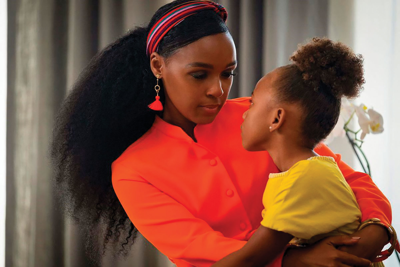
Righteous recording star Janelle Monáe definitely goes through a helluva lot in Antebellum, a psycho thriller streaming on demand via various services this Friday. (It was scheduled for a theatrical release in April, but — well, you know.) As you can probably tell by its title, some scars — both physical and psychological — will be inflicted on most of the film’s dark-skinned characters.
Monáe plays two characters. We first see her as Eden, a slave who recently tried to escape a Louisiana plantation. She ends up being whipped and branded for her insolence. This plantation is run by some textbook white assholes, including the always shifty-looking Jack Huston as a brutal Confederate captain and Jena Malone — whose Southern accent is extra as hell here — as his significant other. In another time and another place, Monáe is also Veronica, an author and motivational speaker with a loving family, a designated ratchet BFF (Gabourey Sidibe is both cringey and thirsty), and a knack for both inspiring Black people to rise up and calling white racists out on their bullshit.
If you haven’t figured out yet how these two worlds will collide, then you should probably watch more movies (especially M. Night Shyamalan movies). Co-writers and co-directors Gerard Bush and Christopher Renz — billed here as Bush | Renz — indeed spend most of the movie jacking the work of other filmmakers, dropping everything from obvious, icy nods to Kubrick and Hitchcock (the latter also morphs into a quick nod to Beyoncé’s Lemonade) and even throwing in the sort of obtrusive lens flares J.J. Abrams can’t get enough of.
Bush (a filmmaker who’s Black) and Renz (a filmmaker who’s white) are the latest directors ready to jolt audiences with a hit of racially charged, thought-provoking horror, now that Jordan Peele has made that a lucrative thing. (This movie is produced by Sean McKittrick, who also produced Peele’s Get Out and Us.) But Antebellum is practically a pileup of all the movies that Staples listed above, merging the disturbing tragedy of Slave and Moonlight with the cathartic vengeance of Django and Birth. The movie also gives us something that’s beginning to get on my nerves whenever I see it in movies: racist white characters who, for some reason, won’t say the N-word! Seriously, how are you gonna make a movie set on a plantation and not have the N-bombs fly as fast and furious as bumblebees?
As I was watching Antebellum, I began to understand how my people felt when they saw Kathryn Bigelow’s Detroit a few summers ago. Bigelow’s so-real-it-hurts depiction of a tragic, police-fueled incident that happened during the 1967 Detroit riots was viewed by many in the African American community as straight-up torture porn — especially since the film was released during a time when the deaths of Eric Garner, Michael Brown and Philando Castile were still fresh in our minds.
We’ve had a cruel year, what with the deaths of George Floyd and Breonna Taylor launching protests and riots across the country, BLM supporters and Trumpers squaring up in the streets, the police still paralyzing men at close range (while ignoring white boys with semiautomatic rifles) and crazy Karens getting caught on video telling minorities what to do. Considering all that, seeing more Black pain is really something we don’t need right now. We already see it on our damn phones every waking moment.



Post a comment as anonymous
Report
Watch this discussion.
(0) comments
Welcome to the discussion.
Log In
Welcome to the discussion.
Keep it clean. Please avoid obscene, vulgar, lewd, racist or otherwise abusive language. Comments featuring hate speech or threatening or violent content will not be tolerated.
PLEASE TURN OFF YOUR CAPS LOCK.
Be truthful. Don't knowingly lie or mislead.
Be proactive. Use the “report” link on any comment that violates our comment policy.
Share with us. We'd love to hear your feedback.