
If the very idea of Real Steel — Hugh Jackman as a has-been fighter and trainer who reconnects with his estranged son on a futuristic robot-fighting circuit — sounds deadly to you, then run, don't walk from any theater showing it. For the actual thing is even more unforgivably contrived than any plot summary or trailer could accurately convey. It's The Champ crossed with The Karate Kid crossed with Transformers, only even less original — and with dance moves thrown in. And it kinda sorta maybe even gets away with it.
The film is, of course, mostly the handiwork of director Shawn Levy, a man who has never let a high concept stand in the way of bland, middling execution. Real Steel, by virtue of the fact that it's not a comedy and has robot fight scenes that actually require some modicum of suspense, pushes Levy's skills, but not too much. Charlie Kent (Jackman) is your typical rough-and-tumble trainer/handler trying (and failing) to get back on his feet on the underground robot-fighting circuit. Into his life comes Max (Dakota Goyo), the son he's never known, whose mother has conveniently just died. (This is the kind of film where the mother's death is never really dwelled upon in any way.)
Soon enough, Max has convinced Charlie to dig up and reassemble a discarded old-model robot found in a junkyard. But Atom (geddit?) turns out to be something special: A robot that can actually see and mimic human movement, as opposed to the kind of heavily armored, hyper-programmed beasts that dominate the circuit today — the latter symbolized by current robot-fighting champ Zeus, who handily crushes all his opponents in massive arenas before tens of thousands of adoring spectators, and who our heroes will get the chance to ... oh, forget it. You know where this is going.
Despite being a successful director of polished Hollywood product, Levy is one of those filmmakers prone to making odd, curiously inept choices. He rarely lets his characters (such as they are) breathe, instead cueing the robot-fighting montages or the obvious villain reveals a bit too early. Random subplots, such as one involving a vaguely redneck loan shark who hounds Charlie, lead nowhere. Evangeline Lilly shows up as Charlie's hot robot-repairing girlfriend and takes up a lot of early screen time — then shows up ever so briefly at the end, like a gorgeous afterthought.
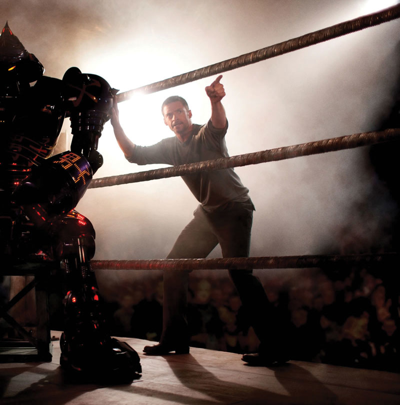
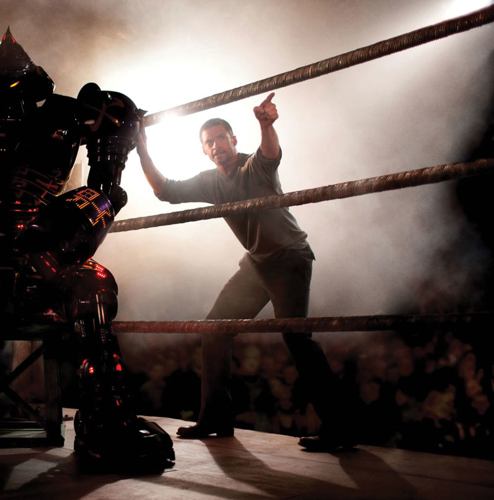
Levy admittedly does a serviceable job with the fight scenes — but to what end? The robots aren't human or invested with much personality, so watching them tear each other to bits feels pointless and empty. What does work, though, is Jackman, who seems to have found a strangely ideal role for himself here, mixing the gruff ne'er-do-well stylings of his Wolverine character with the inherent flamboyance of his theatrical persona. In the final stand-off, when Charlie has to hover just outside of the ring, showing Atom how to fight, it's as if both the character and the actor have been liberated. The giant smile on Jackman's face as he breathlessly punches into the air betrays the actor's furious commitment to this strange, strained film. And for an all-too-brief moment, Real Steel has something akin to a human heart.
Email arts@nashvillescene.com.



