

The birthplace of the cool
Contrasted with such other sui generis American forms like the Western, the film noir was rarely heroic. Its characters were usually too twisted, its milieu too severe, its moral cosmos too dark. It took the French, of all people, to infuse the genre with a kind of romantic individualism. The Belcourt's Noir Fest 2 retrospective, pitting the crime drama's Gallic vintage against a fine selection of British iterations, makes this abundantly clear. Whether it's world-weary gamblers pulling off one last heist, or supernaturally talented (and supernaturally attractive) hitmen on the run, French noir took the brooding world of the crime thriller and infused it with an undying sense of cool.
Of course, that's not hard when you have actors like Jean Gabin and Alain Delon to work with. Gabin, once deemed "the world's coolest movie star," had recently hit it big in his home country when he collaborated with director Julien Duvivier on 1937's Pepe le Moko (Feb. 19-21), the tale of a charismatic French gangster in Algiers who plays a cat-and-mouse game with the local authorities while falling for a rich woman who might just be out of his reach. Duvivier's film is less a bona-fide film noir (which, as a genre, dates from the 1940s) than a visually poetic practice run for its later variations.
True, impossible loves and charismatic criminals are nothing new to cinema. But Gabin/Pepe's Zen confidence in the face of a world determined to bring him down feels like something new — contrast it with, say, the wicked broadness of James Cagney in American gangster films of the same period. Desperation and the survival impulse have given way, it seems, to an existential ease. Pepe toys with the cops, he falls in and out of love, he even completely loses his shit a couple of times, but it's hard not to feel like he's almost always completely in control of the world around him.
Gabin makes a second appearance in this series in Jacques Becker's 1954 drama Touchez Pas au Grisbi (Feb. 28-March 2). By this point, the dashing, burly young face of Pepe had given way to the white-haired eminence grise of Max, an elegantly jaded gangster brought out of retirement for one last score, a man whose loyalty nevertheless trumps his determined criminality. One could also easily imagine Gabin starring in the following year's Bob le Flambeur (Feb. 11, 13-14), Jean-Pierre Melville's thriller about an aging thief who has to put together one last immaculate heist using an expert if ragtag team. By some fluke of film history, though, the lead role went to the similarly white-maned though significantly more courtly Roger Duchesne.
Of course, the pinnacle of French heist flicks is probably Jules Dassin's classic Rififi (Feb. 22-24), also from 1955, whose nearly silent, extended jewelry-robbery sequence launched a thousand international imitators — from Italy's Big Deal on Madonna Street to Dassin's own later Hollywood-made Topkapi, not to mention the original Ocean's Eleven, starring Frank Sinatra and his Rat Pack buddies.
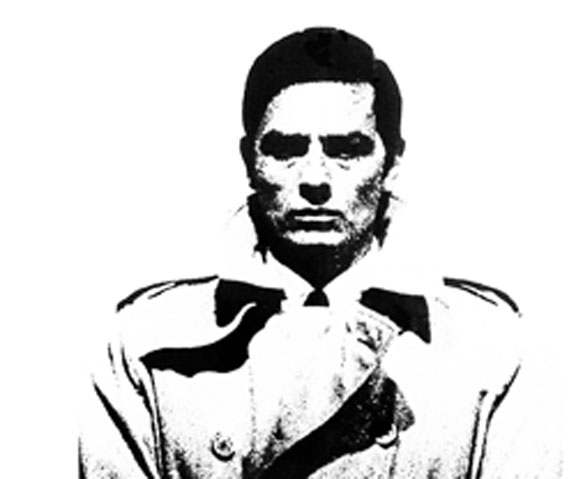
Speaking of near silence, The Belcourt's retro deserves special credit for treating us to four films by the great Melville, a director who served as an inspiration for the likes of John Woo, Wong Kar-wai, Quentin Tarantino and Michael Mann. In the 1960s and '70s, after he had already established himself as a master of the crime film with Bob le Flambeur, Melville stripped the genre down to its essentials, filling his quiet, forbidding worlds with characters who were reserved, aloof, alien — and for some reason furiously compelling. Whether it's the terse professional outlaws on the run played by Alain Delon and Gian Maria Volonte in Le Cercle Rouge (March 5-6 & 8), the supposed police informant played with slippery charm by New Wave icon Jean-Pierre Belmondo in Le Doulos (Feb. 20-21), or Delon's melancholy, expert hitman in Le Samourai (Feb. 24, 27-28), Melville's characters have a hypnotic force that takes them beyond the cynical charm of earlier noir figures and brings them into the realm of myth. The closest analogue to what Melville did for these criminals and gangsters would be what Sergio Leone did to gunfighters in his spaghetti Westerns.
And yet his films also remain grounded in an almost Sisyphean view of the human condition. Is there an image more alternately haunting and pathetic than that of Delon in Le Samourai, sitting in a car that's not his, holding an impossibly long chain filled with what must be hundreds of keys, methodically trying each one in the ignition, waiting, patiently, for the right one, his face fixed expressionlessly on the horizon? Haunting, yes; pathetic, yes — and impossible to resist. —BILGE EBIRI
London killing
It was the French who discovered film noir. Not invented, mind you; we Americans can pat ourselves on the back for that. But when French audiences and filmmakers latched onto the darkness, nihilism, and existential dread that characterizes Hollywood B pictures from the World War II era, it was a match made in heaven. As the Belcourt's exuberant Noir Fest 2 series shows, that spirit crossed the channel and mated with the independent influence those same Hollywood noirs exerted on the British film industry to give birth to a generation of inimitable British crime pictures and thrillers. To the fatalistic notes of Hollywood and the ennui of the French, England added the sour aftertaste of wartime stoicism, enforced pluck, and pessimism on an international scale.
The natural place to begin is Carol Reed's monumental The Third Man (Feb. 11 & 13), a film that perfectly embodies a post-war confusion belied by the brand-new borders and checkpoints delineating Vienna. Reed takes the mystery element that lies behind so much of the noir tradition, and smothers it with uncertainty about whether we can ever know the truth when reality depends on what passport you carry. Much less frequently screened is Reed's Odd Man Out (March 9-11), made two years before The Third Man, and the Belcourt places this hidden gem at the end of its series. James Mason plays an Irish nationalist whose participation in a foiled robbery plot leaves him alone and implicated in a murder. As he tries to rejoin his comrades, the would-be terrorist confronts the limits of human sympathy and questions its relationship to political causes.
In between the two Carol Reeds, and interspersed with the French side of the series, Noir Fest 2 presents an eclectic mix of British cult classics from the '40s to the '70s. If you've seen the witty and dark Kind Hearts And Coronets, treat yourself to director Robert Hamer's earlier film It Always Rains On Sunday (Feb. 19-21), in which an escaped convict interrupts the workaday life of a East End couple, asking the wife (his former lover) for a hiding place. It's a tense, claustrophobic piece, centering on the wife's choice between her settled respectability and the exotic dangers of her past life. At the other end of the series' chronological limits is 1971's iconic Get Carter (March 6 & 8), a brutal piece of Michael Caine bad-assery that has inspired countless imitators. An urban gangster returns to the hardscrabble industrial landscape of his hometown to get revenge for his brother's death. It was director Mike Hodges' coming-out party, leading to one of the strangest careers in the business: Flash Gordon, The Terminal Man, Damien: Omen II, the sci-fi parody Morons From Outer Space, and 1997's stunning return to form Croupier, the movie that gave the world Clive Owen.
If I had to pick two do-not-miss-unless-wrongfully-imprisoned British films from the series, I'd choose Night And The City (Feb. 22-23) and Peeping Tom (March 3-5). Jules Dassin, the American director of The Naked City and Thieves' Highway, was in hot water over his refusal to testify before the House Un-American Activities Committee while making Night And The City in London. Richard Widmark, perhaps the prototypical noir antihero (far less sympathetic and more queasy than many of the leading men thrust into similar pictures), plays a con man with a scheme to take over a wrestling promoter's business by fomenting internecine conflict within the promoter's family. Dassin's camera captures all the ugliness of Widmark's conniving and all the despair of his hubristic downfall without flinching, making London into a dark city on a par with iconic Los Angeles. Dassin next directed the delightful heist picture Rififi, also in the series and the model for a thousand imitators over the ensuing decades, when he went to France to find work after being blacklisted.
Perhaps the riskiest film in the series, however, is British master Michael Powell's disturbing Peeping Tom. Its frank depiction of a young man in the grasp of a dangerous fetish connected to his father's home-movie experiments in fear shocked audiences and disgusted many critics in 1960. They were not interested in allowing Powell to move beyond the beloved Technicolor masterpieces of the post-war years, and he was all but barred from the industry for the rest of his life. It's a fitting climax for any film noir series, reminding us that these are not stories in which action, ambition or attempts to change one's circumstances are rewarded with happy endings. —DONNA BOWMAN
See Steve Erickson's interview with Andrea Arnold, director of the movie Fish Tank (opening Friday), at www.nashvillescene.com.



