
Robert Altman had a habit of deflecting any praise for his best-loved films, saying he thought of his work as one long movie, and that he personally felt as fondly toward O.C. & Stiggs as he did toward The Player. But while there are clear highs and lows to the Altman filmography (yes to McCabe & Mrs. Miller, no to Prêt-à-Porter), he wasn't wrong to think of it as a single piece.
Altman's style is typically defined by his overlapping dialogue and flippant sense of humor, but neither of those are really what makes "a Robert Altman film." As far back as his days helming TV shows like Bonanza and Combat!, Altman would encourage his actors to do something amazing, and then would move his camera around the set, trying to fit as much of what the cast was doing into a scene. In a way, his television episodes and movies all do wind together, as one long pan, dolly and zoom.
The Belcourt's summer Altman series is clunker-free, but does feature a handful of near-masterpieces that are sometimes overlooked in favor of the M*A*S*Hes and Nashvilles. Looking at the five films below, it's easy to understand why Altman wanted to make sure people didn't breeze right past his "second-tier" work. These five (which would've been six if the Belcourt had programmed the profoundly underrated A Perfect Couple) represent who Altman was a filmmaker, and would be legacy enough for almost any director.
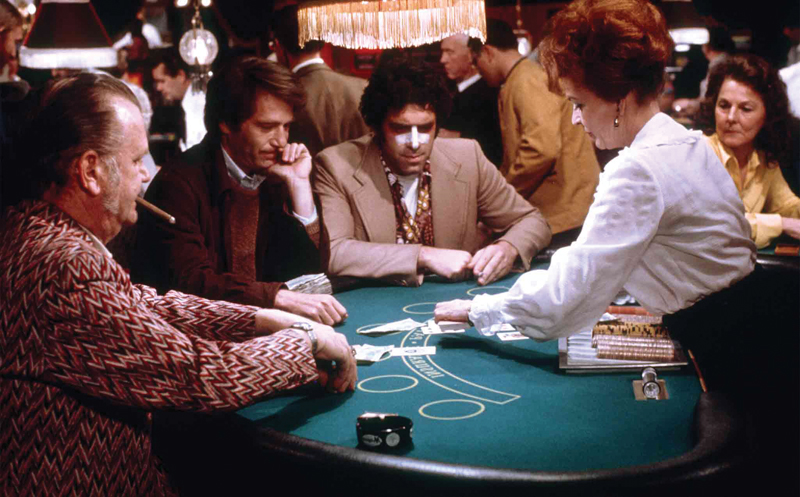
California Split (June 20-21)
Altman drew from his own experiences as an incorrigible gambler when he directed producer-screenwriter Joseph Walsh's shaggy buddy comedy, starring George Segal and Elliott Gould as addicts on a self-destructive bender, ranging from Los Angeles poker rooms to Reno casinos. Like the previous year's The Long Goodbye (showing this Saturday and Sunday), California Split evokes the haziness of early 1970s L.A. and captures the displaced feeling of middle-aged dudes who seem to have wandered in from an earlier era. This is also one of the sharpest movies ever made about the poisonous qualities of some male friendships, as the two heroes dare each other to make one dumb decision after another. Some have described Altman's sense of humor as mean-spirited, but this highly likable film shows he was less misanthropic than empathetic, understanding on a personal level how selfish — and thus how hilarious — humans could be.
Thieves Like Us (June 21 & 23)
Post-M*A*S*H, Altman spent much of the first half of the 1970s making movies that offered his unique spin on classic Hollywood genres, though a combination of bad timing and bad marketing kept him from scoring another big hit. Thieves Like Us — adapted by Calder Willingham and future Nashville screenwriter Joan Tewkesbury from the same Edward Anderson novel that inspired Nicholas Ray's They Live by Night — played to a moviegoing public already burned out on Depression-era gangster pictures, which is a shame, since Keith Carradine and Shelley Duvall are so terrific as gun-toting lovers on the lam. The way Altman's film plays up the youth and relative innocence of these crooks — and uses vintage radio broadcasts instead of a score — turns the movie into a lovely elegy for a vanished American past, as opposed to yet another winking pastiche of old movies.
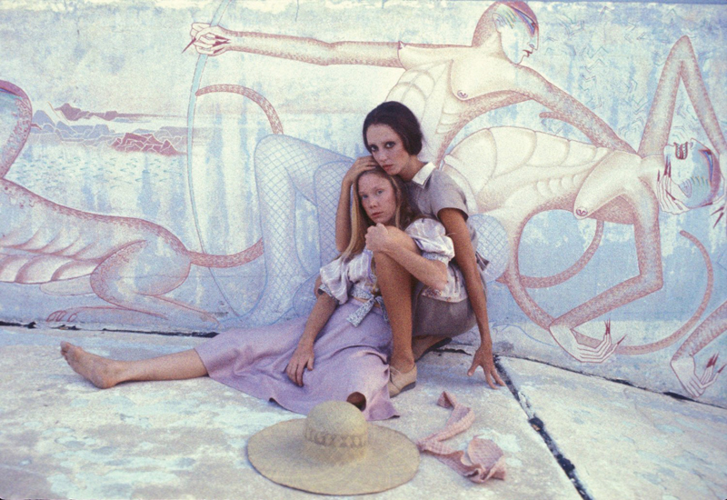
3 Women (June 27-28)
Altman had an aggressively arty side that he indulged from time to time, in interesting but elusive films like Images, Quintet and That Cold Day in the Park (screening June 16 with Altman's widow Kathryn Reed Altman and '70s cinema mainstay Michael Murphy in attendance). The one must-see in the Altman "dream-film" subgenre is 1977's 3 Women, which stars Sissy Spacek as a meek cipher who first idolizes, then copies, then overtakes an obnoxious co-worker played by Shelley Duvall. Set in and around a California desert health spa, 3 Women gets a lot of mileage out of surreal images of water, glass and mirrors, but what makes it one of Altman's best are the performances by Spacek and Duvall, doing a sort of female variation on the dark male-bonding of California Split. The result is both a loose, intuitive Bergman homage and a haunting look at a couple of competitive ladies trying to make names for themselves in a community of abandoned tourist traps and singles' apartments.
Secret Honor (July 2)
In the 1980s, Altman had trouble getting projects financed, so he started working with lower budgets, smaller casts and limited sets, coming up with innovative ways to make "filmed plays." His version of Donald Freed and Arnold M. Stone's Secret Honor has Philip Baker Hall playing a lightly fictionalized Richard Nixon in a one-man show, delivering a long, angry monologue in his office. This is the rare Altman film that shows some sympathy for a man in power, revealing Nixon — or at least this version of Nixon — as a pawn in a larger game. And while Hall's performance makes the movie, Altman does some remarkable things with his camera, moving dynamically through tight spaces to get the maximum use from a minimal location.
The Company (July 5-6)
Late in his career, Altman more or less stopped pretending he cared about plot, and would often just shoot a bunch of scenes he liked, regardless of whether they cut together into a satisfying story. Asked by producer-writer-star Neve Campbell and writer Barbara Turner to make a movie about Chicago's Joffrey Ballet, Altman turned in a typically clear-eyed but uncharacteristically sweet picture, focusing on the joys of collaboration and the capriciousness of the artistic process. Nothing much happens in The Company, but Altman is so clearly engaged and delighted by the people in front of his camera that the film practically becomes a thesis statement for his entire career — the purest expression of what he found so fascinating about humanity and the act of creation.
Email arts@nashvillescene.com



