

Recently, The Hollywood Reporter got into the baseball-season spirit by rounding up a list of the 10 best baseball films of all time. Even though it featured several obvious favorites (the top five predictably included The Natural and Bull Durham, with Eight Men Out in the top spot), like so many ranked lists before it, it made some people — pardon the pun — cry foul. (Personally, I’m surprised that The Bad News Bears, that foul-mouthed kiddie classic, is not on the list.)
Many of the films on that list are included in the Belcourt’s current series, Weekend Classics: Batter Up! (Shout-out to the theater for also programming the forgotten 1976 comedy The Bingo Long Traveling All-Stars & Motor Kings, starring Billy Dee Williams, Richard Pryor and James Earl Jones as Negro League players who form their own team.) This weekend, the theater will also begin showing Eephus, a new film centered on America’s favorite pastime. A low-budget flick featuring a mostly unknown cast, Eephus (named after a slow pitch designed to confuse the batter) may be too indie and recent to land on any ranked lists. But it’s still a fascinating look at Average Joe ball players who, for at least one day, are up in the big leagues, getting their turn at bat.
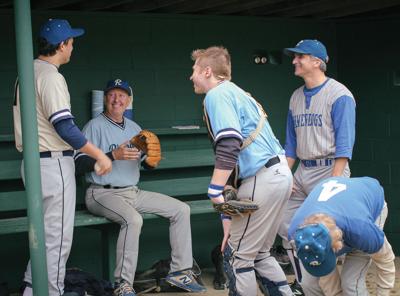
Set in the late 1990s (there are no cellphones to be found), Eephus is an ensemble piece about guys who basically have a love-hate relationship with the sport. Two recreational New England teams, the Adler’s Paint team and the Riverdogs, spend a day playing a game on a field that’ll soon be cleared to make way for a new school. Adler’s leader Ed Mortanian (Uncut Gems goon Keith William Richards) is already lamenting the loss of the field (“My backyard,” he calls it) and how the dugout will most likely be replaced with an art class and “fucking easels.”
Hearing these guys complain about losing their precious ballpark to a school that’ll turn kids into art-loving wimps may turn off arts-education enthusiasts. But Eephus also isn’t a feel-good flick for the so-called “anti-woke” crowd. Co-writer/director Carson Lund crafts a somber, melancholy dramedy about men who use sports to bond. For the guys on these teams — who range from young, spry go-getters to middle-aged, potbellied slobs — baseball brings them together to talk shit, kvetch about their lives, drink beer and shoot off post-game fireworks.
Lund makes Eephus a languid, offbeat mix of Robert Altman (legendary documentarian Frederick Wiseman lends his voice as a radio announcer, spouting absurd announcements like Marvin Miller’s PA announcer in M*A*S*H) and Richard Linklater (the deadpan pacing and misfit characters will certainly have you thinking Lund has seen Slacker way too many times). Although the stands are mostly barren, other quirky characters are lurking around, witnessing these guys give it their all one last time. (My personal favorite is Franny, the elderly baseball-quote-spouting scorekeeper played by Cliff Blake.) Boston Red Sox legend Bill “Spaceman” Lee appears out of nowhere to throw a few left-handed pitches, declare that strikeouts are fascist (an obvious Bull Durham nod) and disappear back into the woods.
It isn’t until these guys are playing well into the night, using their car headlights to keep the game visible, that you realize that Eephus is surrealist 1962 comedy The Exterminating Angel with bats and cleats. The last half-hour is quietly, hypnotically downbeat, as both teams are practically in the dark, refusing to stop playing until somebody wins. The love of the game keeps them going, even when they know damn well that they should be at home with their families, covered in Ben-Gay. (I also got a whiff of John Cassavetes’ Husbands, a movie about guys who do everything they possibly can to not go home.)
At one point, the cynical Mortanian encourages a preteen onlooker to not get involved with the sport. For the sad-sack players in Eephus, baseball is a game that serves up both camaraderie and heartbreak. It’s a mistress who gives them nothing but pain, but they can’t give it up because — to paraphrase that old swingin’ number — it makes them feel so young.



