
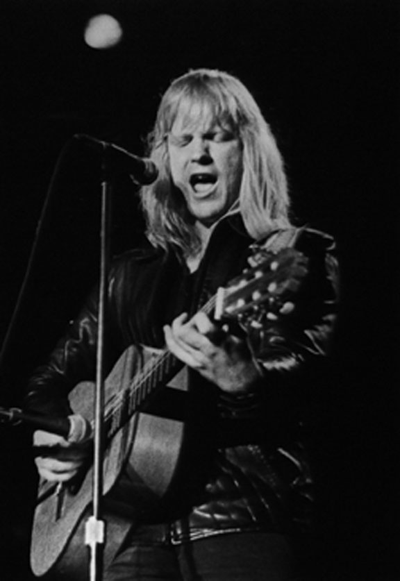

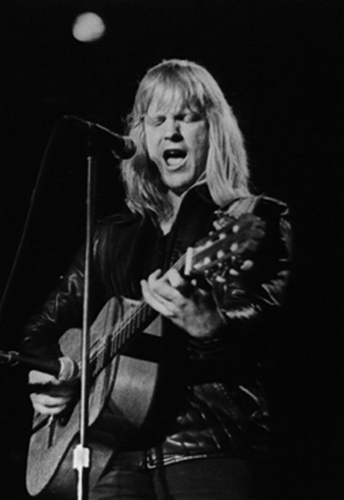
Larry Norman, the late singer-songwriter considered one of the pioneers (if not the founding father) of Christian rock, was a charismatic frontman whose frank, often funny, sometimes startlingly explicit songs had little to do with vague sentiments about devotion. In the early 1970s mainstream critics compared him to Dylan and Paul Simon, and no less an indie-rock idol than The Pixies' Black Francis cited him as a major inspiration.
Yet Norman, who died in 2008 at age 60, was a polarizing figure even beyond his wedding of angelic aims to demon rock. Business associates say they found him ruthless and vindictive; former collaborators accuse him of everything from sabotaging their releases to poaching their wives and fathering an unacknowledged child. How then to reconcile music that meant so much spiritually to so many with the flawed, sometimes exasperating man who made it?
"God will use who He does," says David Di Sabatino, the writer-director of Fallen Angel: The Outlaw Larry Norman, a documentary screening Tuesday at The Belcourt that's kicking up a considerable storm among Norman's supporters and detractors alike. Like many, Di Sabatino was a Norman fan: He remembers taking a bus at age 14 in his native Toronto to buy a Norman album at a Christian bookstore and being bowled over by hard-rocking songs such as "Why Should the Devil Have All the Great Music?"
"That's why we were compelled by him," says Di Sabatino, who comes from a Pentecostal background and authored a book on the "Jesus People" movement of the 1970s, with which Norman is widely associated. "Here's a guy who was making Christianity cool."
As a 2008 cover story by Matt Coker in the O.C. Weekly reports, Norman and Di Sabatino had an initially friendly exchange in 2005 about a documentary the filmmaker shot on the late "hippie preacher" Lonnie Frisbee. The two even discussed plans for a documentary on Norman's own life. But the acquaintance went sour, Coker writes, and the singer tried to derail the project. Even before Fallen Angel was completed, Norman's family and fans accused the director of a vendetta against the late artist.
Nobody will mistake Fallen Angel for hagiography, that's for sure. Among the panelists expected at the screening's post-film discussion is Randy Stonehill, once the singer's close friend and collaborator, who testifies on camera to Norman's many indiscretions (including some with Stonehill's former wife). There's more, and worse. And yet the revelation that lingers is the surprising force of Norman's music, which ranges from nakedly emotional '70s balladry to blazing full-band boogie with a cutting edge of socially conscious sarcasm — music truly on the side of the angels.
"He casts a huge shadow," Di Sabatino says. "At the time he came along, rock 'n' roll was a tough sell to the evangelical community — the devil's music. He created the space for everybody [in Christian rock] to do what they were doing."
Fallen Angel screens 6:30 p.m. Tuesday, April 20 at The Belcourt, followed by a post-film panel discussion. Tickets are $8.50.



