

When I interviewed director Kiyoshi Kurosawa back in 2024, we discussed how his view on technology has changed since he released his film Pulse roughly 25 years ago. “I don’t think there’s anything evil in the internet anymore,” he told me, via a translator. “However, I feel people [online] are getting worse because they cannot see hope in the future, and they have a nervous negativity … that piles up.”
Kurosawa has a true interest in the evils that lie beneath society’s surface, and the prolific director’s late ’90s work feels oddly connected to his recent work — both feature a sense of lurking dread beneath everyday life. In 1995, doomsday cult Aum Shinrikyo attacked Tokyo’s subway system with a nerve agent. To the people of Japan at the time, fear was manifested in the idea of what you don’t know about the person next to you, or the fear of becoming influenced by someone — as depicted in Kurosawa’s breakout film Cure in 1997. His recent return to this idea has evolved to reflect the modern world of late-stage capitalism and radicalization, as shown in 2024’s Cloud. The new evil isn’t the hidden nihilist, but rather the pressure cooker of modern life. This distinction is very apparent when watching the new short film “Chime” and the 1998 feature Serpent’s Path.
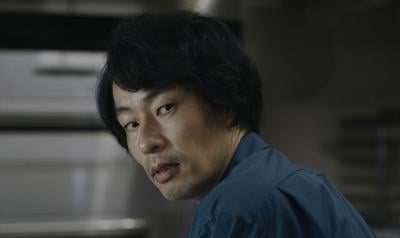
In “Chime,” Matsuoka (Mutsuo Yoshioka) is a cooking teacher with an odd student who starts to hear a chime. When Matsuoka is faced with the pressure of trying to break back into the restaurant industry, paired with an uninspired homelife, he starts to hear the chime too. “I was suggested to make ‘Chime’[in 2023] — it is a medium-length film that was never intended for commercial release,” Kurosawa said of the film. “I made it on an instinct.”
In Serpent’s Path, two men kidnap a yakuza member and torture him in an abandoned warehouse over the killing of one man’s daughter. When they start to question whether they have the right person, they begin to dig for the killer and dive deeper into the horrors being committed by the yakuza.
Both films are products of their own time. Serpent’s Path was shot on video, giving it a staticky, grungy VHS vibe. It was a direct-to-video release in the age of Japanese anxiety over rising technology, which also birthed director Hideo Nakata’s 1998 horror classic Ring. “Chime”was shot digitally, giving it a clean and hyper-sterile aesthetic. It features a very modern industrial soundscape, and its sense of spreading madness is reflected by its experimental release as an NFT.
Both films reflect the anxiety of the age. Serpent leans into the fear of the horrible acts taking place right under our noses in everyday life — the idea that the person next to you could do something terrible. “Chime” plays on the idea that anyone, even you, can reach a breaking point and commit evil. Both themes are delivered via the director’s control over space, motion and sound, creating an atmosphere of immersive dread. This approach has made both films timeless despite their being direct reflections of a specific time, place and culture. Kurosawa’s body of work is not just a great experience in a vacuum, but a series of unique time capsules.
Neither film was really made for the big screen, but both are making a rare appearance at the Belcourt in a limited one-week theatrical run — before returning to their intended format, with no streaming release currently planned.



