
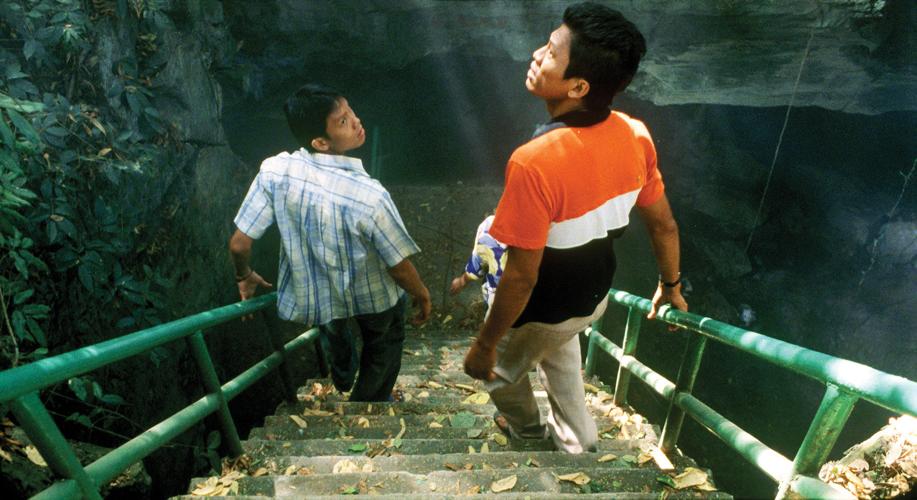
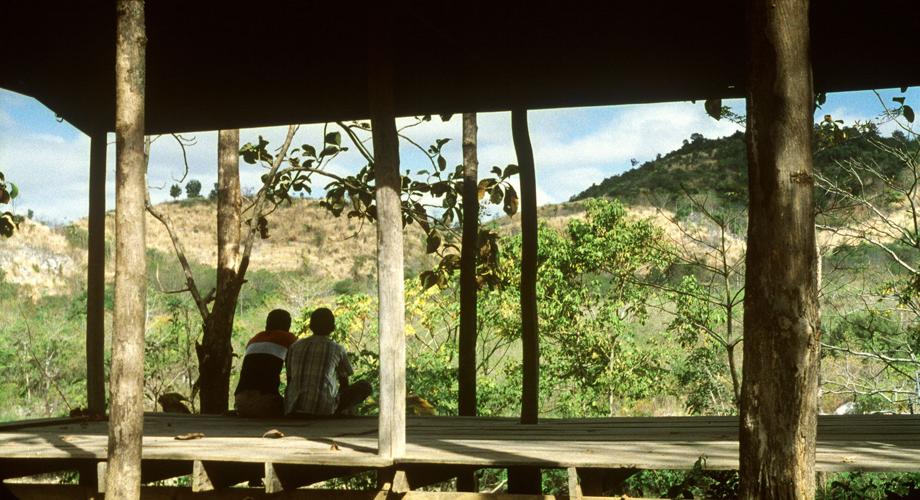
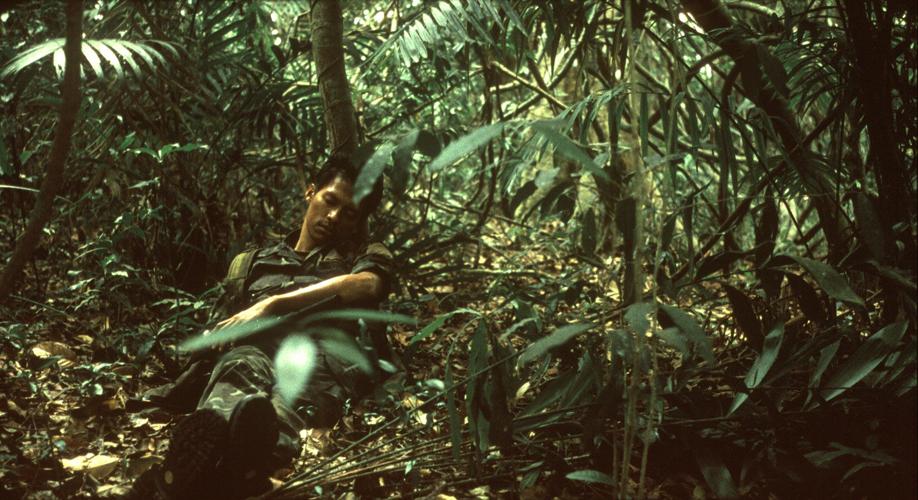
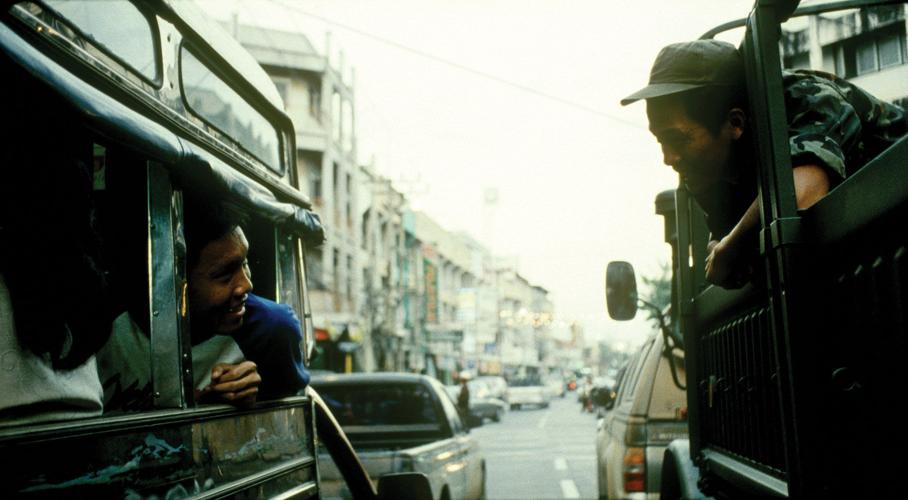


There was a time when Apichatpong Weerasethakul’s Tropical Malady seemed to be a statement about how the passage of time changes all relationships — using its bifurcate narrative to get at all the different possible experiences to be had, making like the great philosopher Kate Bush and exchanging the experience. But now, almost 20 years after its release, it feels like a film populated by countless aspects of the same self. Everyone in the film taps into the empathic instinct, and that includes the animals and ghosts.
There’s a truth about the relationship between affection, infatuation and obsession that Tropical Malady radiates but never makes a point of emphasizing. And to try and get at some of the special majesties of this film, I had to snag some time with friend/colleague/mentor/chef Dave White (of the Linoleum Knife podcast empire), an Apichatpong enthusiast and one of my favorite critics when it comes to discussing unconventional narratives — or, again like Kate Bush, when films step off the page and into the sensual world. A 35 mm print of Tropical Malady will screen at 8 p.m. Wednesday, July 27, as the final film in the Belcourt’s Queer Qlassics series.
Jason Shawhan: This was my first Apichatpong film, and I find myself returning to it again and again. I’ve loved all of his films that I’ve seen (his trans-secret-agent musical epic The Adventures of Iron Pussy, co-directed with Michael Shaowanasai, remains an unchecked box on that list), but there’s something about this film that has never fully left my subconscious.
Dave White: Mine as well, and it felt like being tossed into deep water. I knew after watching it I had to see it again. It was, I think, my first Thai film. And not even taking into account his personal brand of mystery and formal approach, I knew I had a lot to learn after the fact.
JS: Is there something to the fact that this is a film, unlike the majority of his other work, in which he explicitly addresses queerness?
DW: I am certainly very wrong about this, but I like to think that he made a queer romance early in his career so he could say, “OK, cool, did that. Now I’m going to make movies about hospitals, reincarnations, weird sounds and sleeping.”

JS: It’s insane to me how much time can shift perspectives. When I first saw this film, I very much felt like Tong (Sakda Kaewbuadee), flush with the possibilities of new romance, seeing the world through new eyes. And now, almost 20 years later, I am straight-up a tiger ghost, forest daddy, symbol of the passage of time and avatar of uncertain choices made in protean territories.
DW: When we watch the same film over the course of decades, the meaning will always change, and I think anyone who revisits specific films would agree. The older I get and the more times I go back to this specific film, I’d lean toward that darker, more rueful perspective, too. Of course, since then I’ve also seen Apichatpong’s other films and have grown more accustomed to his recurring themes of duality (one person in two or more physical forms like here, and also in Uncle Boonmee Who Can Recall His Past Lives, a person who is asleep but also “awake” and in communication with others like in Cemetery of Splendor) and his recurring use of bifurcate narratives (one physical space from two perspectives, like in Syndromes and a Century) — which I think are meant to simultaneously cleave and unite seemingly opposing ideas. He has been quoted as saying that the two “halves” of this film cannot exist without the other. So, are we different now, have we left the past behind, or do we just have more information and ability to let all that life stuff live in the same place? I lean toward the idea that we are the same, but consciously expanded, over time.
JS: It’s wild to me that of all the films that have come along in the intervening years since this film first came out, I can feel its influence in unexpected places. Firmly, I believe that Guerrilla (part two of Steven Soderbergh’s Che project) has a very strong Tropical Malady influence on it, but I also see its paw prints in a lot of found-footage horror films. There’s a great example of this in a new film called The Outwaters, where the approach to Tropical Malady’s second half meshes with the desert horror of Dumont’s Twentynine Palms and full-on chthonic Elder Gods cosmic mayhem, and it’s wild.

DW: Let’s just go ahead and say that the Venom movies are nods to this.
JS: I really like the way that Keng and Tong’s relationship unfolds. They hang out, they go to the movies, they get to support a local diva and even sing along during a meaningful performance, they bask in the benevolent horny jealousy of some of the village aunties, they go to a magical cave. This is a good road map for building a life with someone.
DW: I think they are getting it right. I think most long-lasting relationships — and no spoilers, but this film’s relationship, from my perspective, seems to be eternal — hinge on the ability to hang out.
JS: It’s a testament to what Apichatpong does, but the entire forest pursuit sequence manages to be both unbearably tense and deeply soothing, and that’s an incredibly difficult balancing act. Now, it is in my nature to do so, but every time I take a walk through the woods or find myself in the bounty of nature, I can’t help but imagine that the animals are talking shit about me. That’s not the philosophy that this film is putting forth, but given the responses we get from the assorted fauna that part-two Keng encounters, I’m sure even Apichatpong believes that some animals are by nature shady.
DW: Well, the animals in the second half aren’t exactly perching on your finger and chirping a happy tune or helping you do housework. Honestly, I think most other animals hate us. But because we cannot truly know, let’s assume for entertainment’s sake that they’re all serving us Bette Davis/Parker Posey disdain.
JS: I remember one of my first visits to Los Angeles, some friends took me to the Chandelier Tree House in Silverlake, and after some dinner wine it looked just like the lightning-bug tree in this film and I started tearing up. No context, no overwhelming bolt from the blue, just this instantaneous realization that this is a movie that I’m always carrying around with me.
DW: I think as queer people, we’re always on the lookout for cultural moments that resonate inside us and that we can carry along for our own well-being. For some people it’s But I’m a Cheerleader. For me it’s this. I like a mystery, and I like to wonder about how I’m connected to it, or if I am at all. And not enough films with queer themes play with mystery or the metaphysical, so when one like this comes along and turns my head and keeps me guessing and keeps me wanting to learn more about it from as many angles as I can, I stick with it.




