
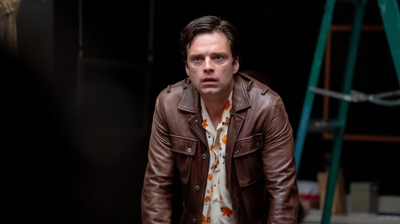

Writer-director Aaron Schimberg puts viewers off balance in the opening scene of his new film, A Different Man. A small personal crisis plays out in an office suite before the movie cuts to a wide shot, revealing that the scene is taking place on the set of a corporate film production. The crisis in the office is scripted, and a seemingly private conversation is taking place in front of a camera.
Schimberg expertly deploys other surprising cuts, rushing zoom shots and wild handheld footage throughout his film, putting viewers in a kind of trance at the sequences of unique imagery they’re seeing on screen. A Different Man is a formal masterpiece that will excite cinephiles with its self-conscious commentary on film, theater and acting, and its mesmerizing blend of horror, science-fiction, romance and comedy. It will also satisfy arthouse fans who like bizarre black humor peppered with existentialism and glazed in pathos and rich aesthetics.
Edward (Sebastian Stan) is an aspiring actor living alone in a small apartment in New York City. He suffers from neurofibromatosis — a genetic condition that results in large tumors under the skin — which has distorted his lips and jaw so much that he’s unable to whistle. From the moment Edward’s face is revealed, Schimberg has audiences questioning whether they’re looking at an actor wearing makeup in a commercial being filmed in the movie, or if the character has been made to look that way throughout this film, or — ultimately — if the actor playing this character in the movie actually has neurofibromatosis. A Different Man blurs these lines throughout its runtime as it offers fascinating examinations of acting, masks, performative friendships, relationships and jobs. It’s a picture that focuses on appearances to speak to deeper truths about self-acceptance and generosity, success and happiness. It’s a movie about casting people in roles. And it’s a movie about character, played by characters.
Edward undergoes a new experimental treatment that results in a gorefest of a transformation — the scene reminded me of Lou Reed’s 1986 video for “No Money Down,” in which an animatronic Lou tears its own face to pieces. Connoisseurs of gooey, squishy practical makeup effects will find plenty to love in A Different Man, and the film’s spooky-season release is a perfect fit for audiences who want to watch something like a werewolf metamorphosis in reverse, which leaves Edward looking like Sebastian Stan. Shimberg isn’t afraid to lean into the horror elements or the science-fiction vibes here, and genre film fans will pick up on this picture’s connections to movies like Charly (1968), which was based on the classic science-fiction short story “Flowers for Algernon.” That film is about a mentally challenged man who takes an experimental drug and becomes a genius, for a time. Stan’s dark hair and rugged face even remind me of Cliff Robertson, who played Charly’s title character. A Different Man evokes fairy tales like “The Ugly Duckling” and “The Frog Prince,” but it also pays homage to Taxi Driver, and the movie’s visuals are saturated, grungy and suffused with shadows. Director of photography Wyatt Garland shot the film on 16 mm — watch for his name among many award-season mentions I’m predicting for A Different Man.
This smartly self-conscious film — which features a performance from Adam Pearson, a British actor with real-life neurofibromatosis — predictably asks questions about representation of disfigured actors on screens and stages. It asks where inclusion ends and exploitation begins, but these are ultimately small details in A Different Man. This film is at its best when it’s tackling big, deep, universal human questions, and it’s up to the task. It interrogates ideas about beauty and standards of beauty, and their implications on everything from interpersonal trust to social and economic success, class and basic personal happiness.
But for all of A Different Man’s brilliance and pathos, there’s a gonzo spirit informing this oddball film. It’s a picture with a brutally absurd sense of humor to match its wounded, winged heart. A Different Man nobly exults the importance of personhood over appearances, but in layers of meta-narrative, delivering timeless lessons in a singular contemporary fable.



Post a comment as anonymous
Report
Watch this discussion.
(0) comments
Welcome to the discussion.
Log In
Welcome to the discussion.
Keep it clean. Please avoid obscene, vulgar, lewd, racist or otherwise abusive language. Comments featuring hate speech or threatening or violent content will not be tolerated.
PLEASE TURN OFF YOUR CAPS LOCK.
Be truthful. Don't knowingly lie or mislead.
Be proactive. Use the “report” link on any comment that violates our comment policy.
Share with us. We'd love to hear your feedback.