

The Founding Fathers signed the Declaration of Independence 250 years ago, freeing the United States from the rule of Great Britain. But it would be 87 more years before Abraham Lincoln signed the Emancipation Proclamation, declaring enslaved people were also free. Two-and-a-half years after that — on June 19, 1865 — the news finally reached Texas.
In 2026, Nashvillians continue to expand how Juneteenth is recognized. Events at the Tennessee State Museum and Centennial Park — both this Friday, June 19 — encompass a variety of celebrations, from living history reenactments to fireworks displays.
At the Tennessee State Museum, each of this year’s celebrations connects to TN250, a statewide campaign commemorating the nation’s founding. The museum’s interpretation of the theme is its Tennessee Voices exhibit, which highlights Tennesseans who have made an impact on bringing the ideals of freedom, liberty and the pursuit of happiness to fruition.
“It does connect with Juneteenth in the ongoing process of realizing freedom,” says Tranaé Chatman, curator of social history at the Tennessee State Museum. “At the point that the Declaration of Independence is signed, people are still enslaved, so it has a meaning for some people and then a non-meaning for others. So we celebrate Emancipation Day, or the day that people were freed from slavery as an extension of those foundational ideals of liberty and justice.”
The museum is also set to offer a full slate of activities starting at 10:30 a.m. on June 19, including living history performers, a children’s story time and crafts, tours of the exhibits, and a performance from the Sankofa African Drum and Dance Company.
“Juneteenth is ultimately a day of celebration,” Chatman says. “It’s the end of slavery. It’s a big day for people realizing that freedom. We want to focus on that specifically, but we’re a museum and we’re focused on history, so we have to be able to provide the context of it as well.”
In 1980, Texas became the first state to recognize Juneteenth as a state holiday, and it became a federal holiday in 2021. Nashville’s tradition is still evolving, building on strong Emancipation Day celebrations in the state on Jan. 1, the date the Emancipation Proclamation was signed, as well as Tennessee’s official Emancipation Day on Aug. 8 — that’s the date many East Tennesseans typically celebrate, Chatman points out.
“It’s always time for new traditions — especially ones that are really important, like this one,” Chatman says. “I think the tradition is definitely still evolving.”
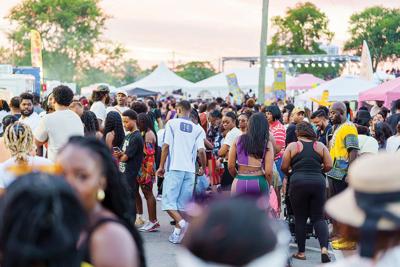
Local media personality and event organizer Big Fella has been instrumental in that evolution. Due to construction at Fort Negley, his company Fellavision’s Juneteenth615 event will move this year to Centennial Park — a first for the event, which began in 2018.
Big Fella measures success through how many local families host their family reunions — and how many local high schools host their class reunions — at the event. This metric makes it clear that the community is embracing Juneteenth, even as the state and federal governments’ attempts to dissolve DEI policies caused several sponsors to drop out. Plus, Big Fella explains, Centennial Park is a more expensive venue than Fort Negley, but as a free event, Juneteenth615 doesn’t earn any ticket revenue.
“I’m nervous about next year,” Big Fella tells the Scene, “because at the rate the sponsors are declining, and the rate that we’re growing, we’re in a scary place. It’s hard to stop the growth when it’s going so good, and it’s becoming such a part of the community, but I’m afraid that we will outgrow our ability to get new sponsors.”
The event, which starts at 5 p.m., is set to include two stages of performers, including Common Hymnal and T-Ran, in addition to food trucks and vendors. The Nashville African American Wind Symphony will accompany fireworks to cap off the night.
“There’s no barrier to entry for anybody, you don’t have to have anything, you just gotta want to come and celebrate freedom in America,” says Big Fella.



Post a comment as anonymous
Report
Watch this discussion.
(0) comments
Welcome to the discussion.
Log In
Welcome to the discussion.
Keep it clean. Please avoid obscene, vulgar, lewd, racist or otherwise abusive language. Comments featuring hate speech or threatening or violent content will not be tolerated.
PLEASE TURN OFF YOUR CAPS LOCK.
Be truthful. Don't knowingly lie or mislead.
Be proactive. Use the “report” link on any comment that violates our comment policy.
Share with us. We'd love to hear your feedback.