
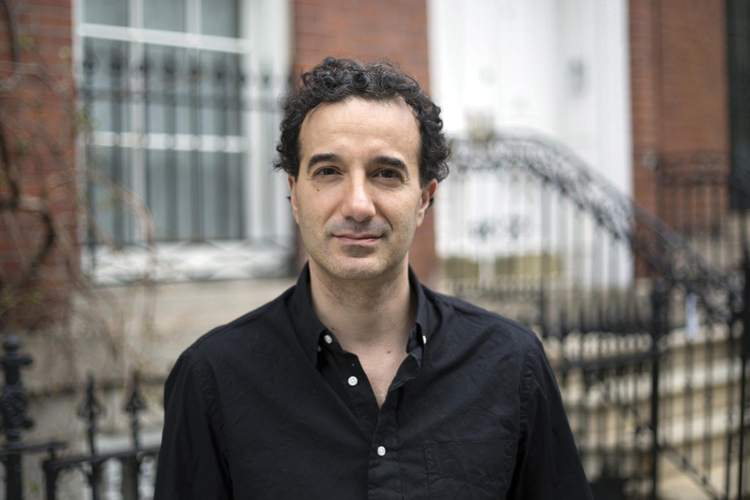

Country music may be thoroughly woven into Nashville’s public persona, but being here doesn’t mean you live and breathe country. Nashville native Jad Abumrad — who you’ll know as the cohost of WNYC-FM’s long-running science-centered program Radiolab — was inundated with country music growing up, but definitely didn’t absorb it.
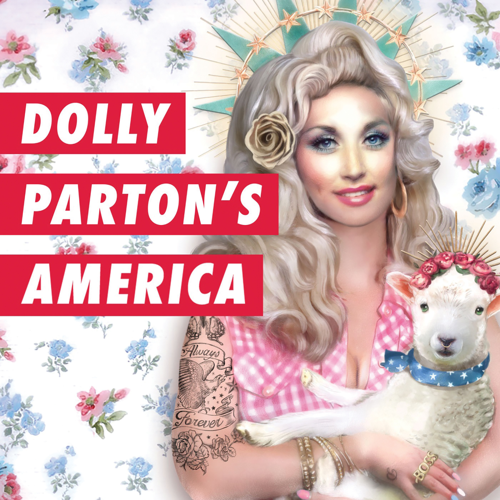
But New Yorkers’ ecstatic responses to a concert Dolly Parton did a few years ago in New York prompted Abumrad to take a deep dive into the breadth and depth of the phenomenal singer and songwriter’s seemingly universal appeal. His new nine-part podcast Dolly Parton’s America explores the many sides of Parton — expert storyteller, savvy businessperson, cultural icon and more — through extensive conversations with music and cultural scholars, folks in the music business and Parton herself. Ahead of the premiere of the first episode on Oct.15 (new episodes are set to be released weekly), Abumrad spoke with the Scene by phone from WNYC.
Did you think of your audience as divided between Dolly superfans and folks who, for one reason or another, don’t have an interest in country music?
You know, I didn’t start there. I was sort of following a personal curiosity, as somebody who grew up in the South but who had never really known her music. Honestly, I was a child of really bad hair metal, right? So, that was my jam, unfortunately. I was aware of Dolly Parton, but didn’t actually know her stuff.
Around 2016, she came and did a concert in Queens, and … I have a visceral memory of people just losing their freaking minds when she came here. And the level of excitement kind of caught me off guard. I was just curious about this person who seems so part of my life, except not really — and was suddenly a part of everyone’s life here. It raised a lot of questions for me.
As I got more into the series, I did start to really think about: “Oh, there are people for whom Dolly is like Saint Dolly.” … For those moments in the series where I want to take a slightly independent look, where I want to draw in people who maybe are a tiny bit critical of her, I started to think about those folks and how that would play. But no, most of the time I don’t think about the audience. I guess that’s sort of a luxury — just trying to answer the questions as best as you can for yourself and for the people around you.
From listening to the first episode, it’s clear that having a deep familiarity with her work was important. How did you go about developing that?
There was a moment where we just sat down with Apple Music and went through the entire discography. There’s a lot of stories early in the series about ’60s-’70s Dolly, and that’s a really interesting Dolly. There are very discrete Dolly Partons that existed in those two decades, and I had no clue about it. I knew the “9 to 5” Dolly, I knew the “Islands In the Stream” Dolly, but I didn’t know “Daddy Come and Get Me” Dolly or “Just Because I’m a Woman” Dolly. They were very different Dollys.
In telling the story of her life, and of the country at those moments, I felt like I really had to start with the music. I listened to all those albums. They were releasing — when I say “they,” I mean her and Porter Wagoner through the ’60s and ’70s — it was just a fricking Niagara Falls of music. … That was one of the things that I was initially stunned by, was just how much music she has put out in her life. But yeah, I can’t say I’m an expert, but I’m pretty good at ’70s Dolly, which is now my favorite Dolly.
In the podcast, you have an interesting conversation with music scholar Helen Morales (author of Pilgrimage to Dollywood). You discuss how Dolly Parton had been overlooked as a songwriter and storyteller, and now there’s much more scholarly interest in her work. Did that lead you to some bigger questions or realizations about the cultural divide we’re experiencing?

You’re seeing generations of young women see in her sort of this “spirit guide of third-wave feminism.” These are not my words, it’s just how it was put to me. I think you’re seeing a lot of people look to her for the first time as somebody — through her longevity and through the example of how she lives — who has created a space in America where it is truly nonpartisan, or bipartisan, or unipartisan. I don’t even know what the right word is, but I think people are seeing that in her for the first time.
There are Dolly-ologists for the first time ever. There are academics and classes and people coming up who are doing that. So I just think that there is some kind of sea change happening right now, and people are looking at her as not just as a musician and a singer and a songwriter, but as somebody whose life means something bigger than that.
Bigger in what way?
I’ll start with Helen Morales. One of her arguments that I find compelling is that, if you look at Dolly’s lyrics over time … she is a kind of lyrical, musical encapsulation of the last 50 years — of how far women have traveled, and still have to travel. She somehow represents it all.
I think as a person who fiercely refuses to take political stance, [Parton] does represent an interesting ethos when it comes to politics. Right now, I feel like the norm has become people yelling and screaming their opinion. She refused to do that. And on certain days it can seem weak, and on other days and that can seem almost sacred, in a way — it depends on how you see it in the context. … She holds a space that is pretty singular in America right now.
The power of a platform isn’t something to be taken lightly, but it doesn’t seem like she’s abdicating her platform. She’s just using it in a different way.
I think it’s too simple to say that she’s refusing to take a stand, because of the things that she has done and gone through in her life. I think she embodies a lot of the stands that people would have her take. … I’ll be completely upfront: She refuses to take a lot of the stands that I would take. But at the same time I think: “Well, do I need her to say that stuff?” It very quickly becomes more about me than about her. That’s I think what’s interesting — what good does it do? Is it just moral vanity? ’Cause I want my opinion validated? Or do I really think that hurts — [that Parton speaking out directly] could force a change in the world? I don’t know. And I’m not sure that there’s a clean line between those two, to be honest. These are the kinds of questions that I get into with [Parton] in the series.
How has your relationship with Parton’s body of work, or your perception of other peoples’ feelings about her, changed as you’ve worked on the series?
I can now have a long, in-depth conversation about different songs of hers, whereas before, I just sort of knew her as a persona. On some basic level, I actually have a relationship with her work now. … Asking the people who love her and think deeply about her — asking them what they love about her has made me think differently about a lot of things. That made me think differently about the South, about the political landscape of feminism. It’s made me think differently about the politics of the Trump era. It’s made me think differently about country music and about Nashville. A lot of the stories that we get into are as much about Nashville — the city of Nashville, the industry — as anything. So it let me think differently about a lot of that stuff.
Without giving too much away, could you tell me a little bit more about how some of your feelings about Nashville changed?
Nashville is this interesting place where people from rural areas come to the city to sing about rural areas, right? It was a place that grew out of a desire to preserve a place that no longer existed — people would leave those places to come to Nashville to sing about those places.
Nashville always had a really interesting kind of, like, “country but not” quality to it. And it was really interesting to see the way in which Nashville became such a big city in its own right. … That was really interesting, because I remember growing up in Nashville as this Arab kid with a funny name, and feeling like I’d stepped into a storybook that I wasn’t somehow written into. I realized that story was very much a commercial product, and that had developed over the 20 years prior. And so that was kind of interesting. It made me sort of reflect back on my own experience, and my dad’s journey — really, sort of seeing Nashville as an idea.



