

A zine can take the form of a 50-page book of poetry, a collection of articles or essays or even a sketchbook of doodles. It’s a self-published work completely open to interpretation — and sometimes, that’s the hard part.
“The first zine is the hardest zine you’ll ever make,” says Graeme Morris, owner of design and print studio Risology Club. “The second, third and fourth are super chill, and then you can really do some wild stuff. It’s so hard to let yourself be done with it.”
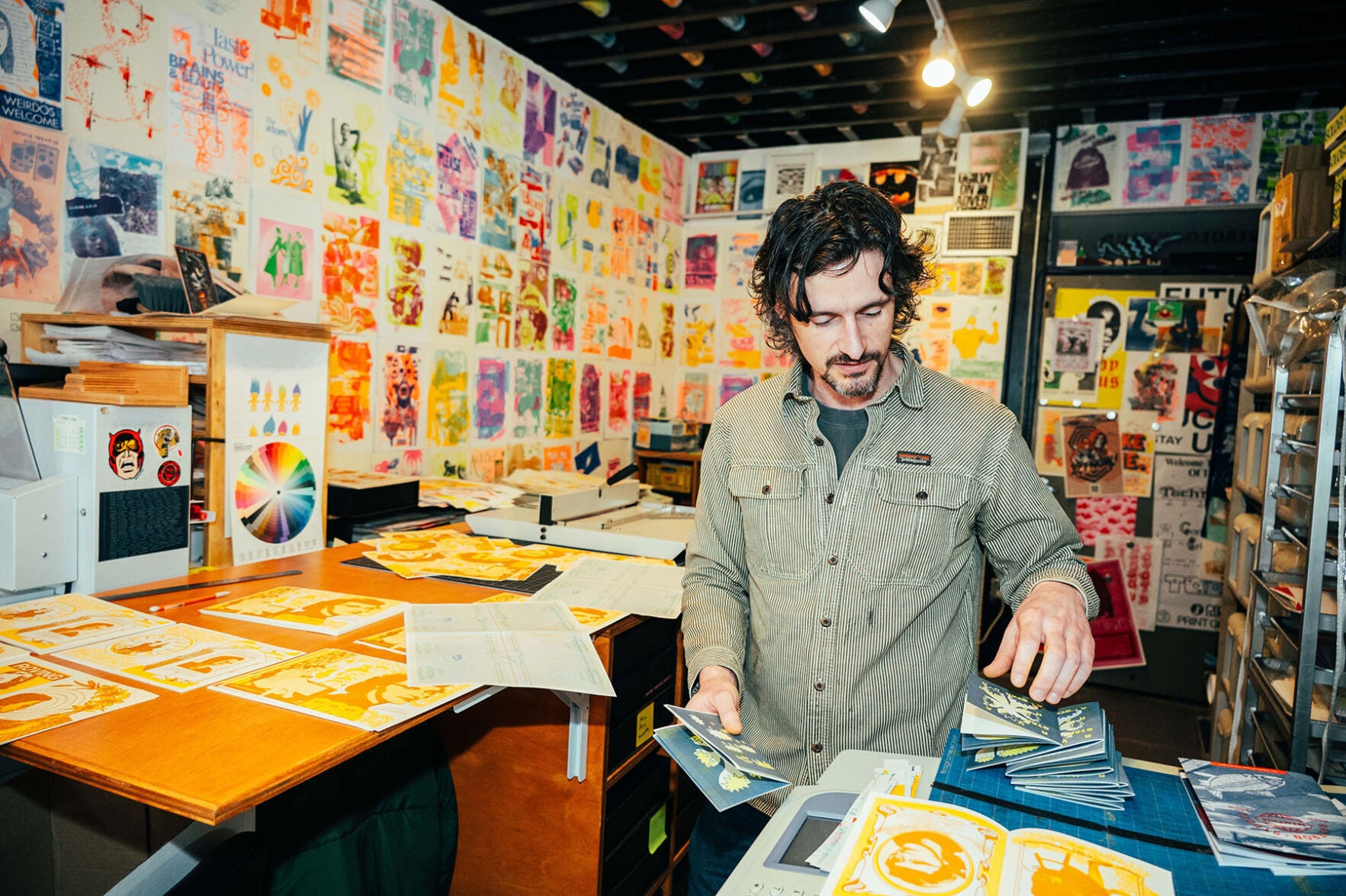
Morris shepherds area zines and art prints as a master of the Risograph, a printer traditionally used for media like church bulletins and letterhead. Morris uses the machine to make eye-catching art that stretches beyond what he can make on a computer or phone screen.
Zines have a long and rich history, with roots in the “little magazines” of the Harlem Renaissance, which highlighted lesser-known voices of the time. Then there are “fanzines,” unofficial publications that for decades have celebrated science-fiction, horror and comics, among other more niche fandoms. Zines also have roots in the punk and riot grrrl movements, with publications that championed feminism and LGBTQ causes at a time when mainstream media wasn’t doing the same.
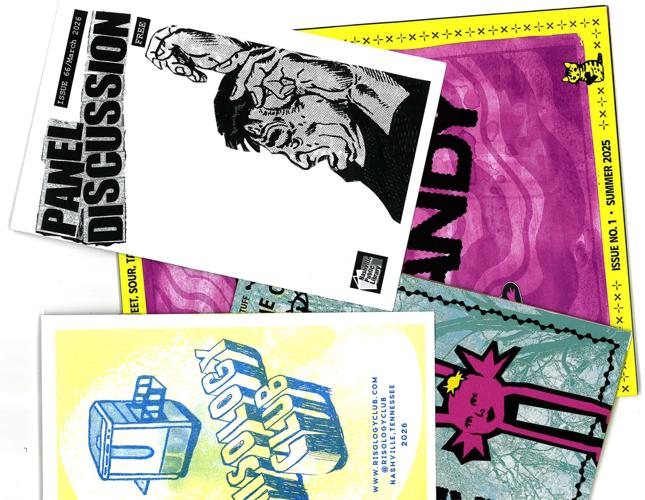
Lara Carvin, founder of the zine Hard Candy, wanted to turn zine making into a group project. The only stipulation: Submissions must come from a woman or nonbinary person.
“It could be a list of your favorite words or a doodle that you’re really proud of, but it could also be your best painting you’ve ever done,” Carvin says. “I think there’s something really lovely about reading stories or seeing art from women that live in your area, so you can feel closer and connected with one another.”
Where Hard Candy is broad in theme and polished through design software and professional printers, local zine Panel Discussion, distributed through the Nashville Public Library, takes a more traditional approach. Panel Discussion creator and librarian Jeremy Estes produces a grainy black-and-white booklet focused on the library’s comic book collection that also points to monthly meetings of his comic book club, also called Panel Discussion.
“I have always loved the punk rock cut-and-paste flyer kind of thing,” Estes tells the Scene.
Action Cat, a yearly zine founded by Middle Tennessee State University students, highlights the DIY music scene across the Southeast. Social media manager Omorose Emwanta also produces a roundup of shows each week on the zine’s social media. One of the goals of Action Cat is to highlight artists and bands who might not otherwise get the ink.
“Sometimes I come across some once-in-a-lifetime, generational talents in our everyday communities,” says zine president Dorian Pate.

For many first-time contributors to Action Cat and Hard Candy, being able to hold their work in their hands still means something. Even the digital-native college students who run Action Cat still value print. They’ve made a profit on each issue so far.
“I think there has been a bit of an over-reliance on digital media in the recent age of journalism and news reporting, just because I feel like that can be overly curated for the sake of just pushing out content,” Pate says. “I really like being able to provide a really polished physical product that we can all look at and be like, ‘We put this together.’”
For Carvin, a copywriter by trade, Hard Candy is a chance to share her unedited voice.
“Don’t let perfectionism or the thought of not being a creative person hold you back,” she says. “Part of building a community is you’re not trying to be your most polished, perfect self.”
For Morris, who studied graphic design, it’s a challenge to remove the pressure of professional work. At one point he created the one-page Paper Towel Zine, folded and distributed through an actual paper towel dispenser.
“I have to be a clean, nice, fresh designer [at work], but my true nature is chaos, color and dirtiness, rough around the edges and all that,” Morris says. “It just feels more in tune with my design soul.”
And for Estes, zine making is part of the public-library ethos: It’s free and accessible.
“I felt like for a long time I needed permission or a reason to be doing stuff like this, and then I didn’t,” he says. “I could have been doing this for years, and I don’t regret that time, but I’m just grateful that I finally did start doing it.”

Touring Nashville’s zine scene, investigating the resurgence of VHS, considering the influence of AI in graphic design and more



Post a comment as anonymous
Report
Watch this discussion.
(0) comments
Welcome to the discussion.
Log In
Welcome to the discussion.
Keep it clean. Please avoid obscene, vulgar, lewd, racist or otherwise abusive language. Comments featuring hate speech or threatening or violent content will not be tolerated.
PLEASE TURN OFF YOUR CAPS LOCK.
Be truthful. Don't knowingly lie or mislead.
Be proactive. Use the “report” link on any comment that violates our comment policy.
Share with us. We'd love to hear your feedback.