
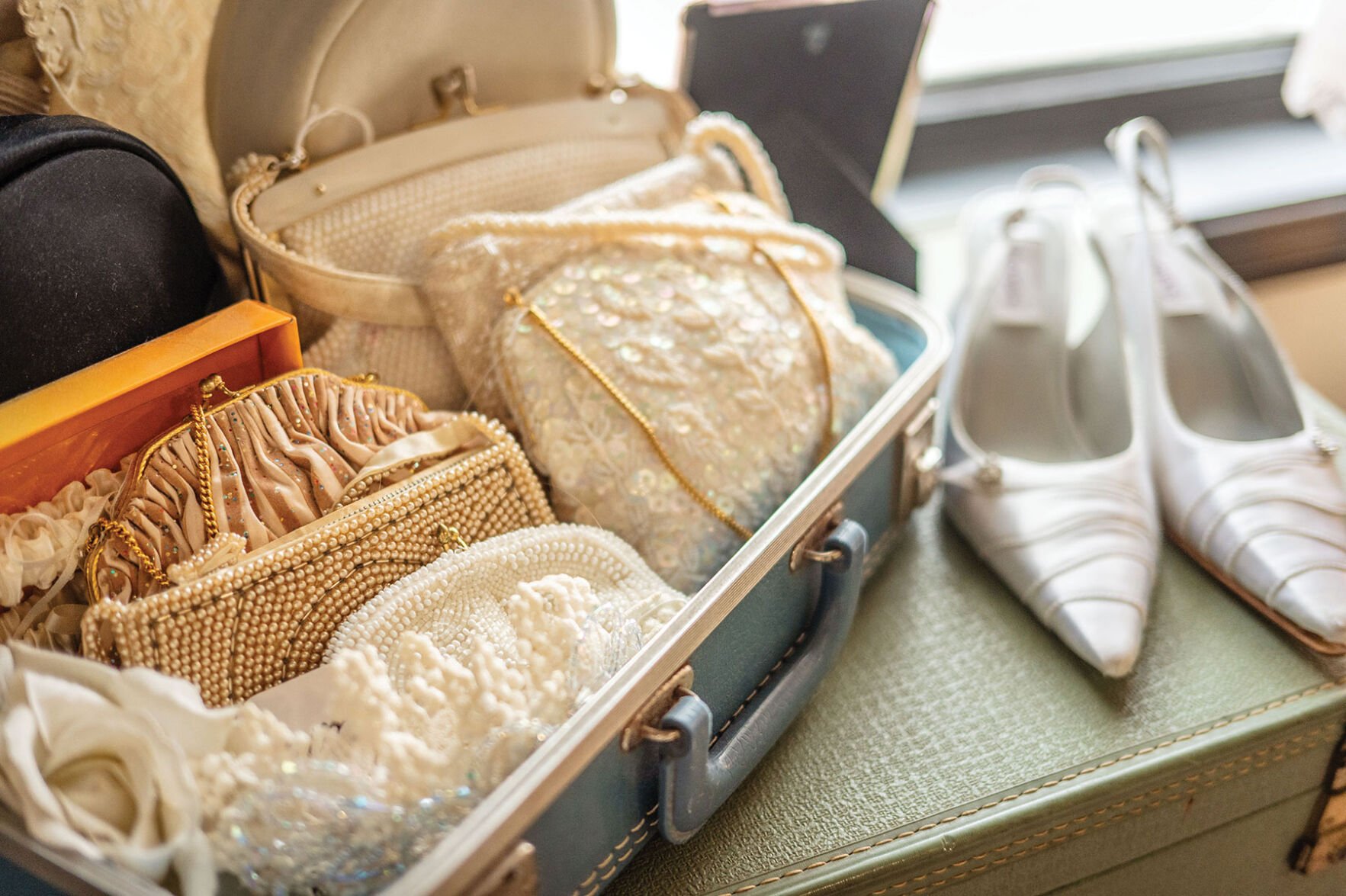
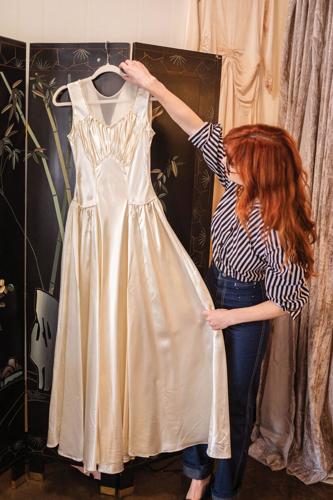
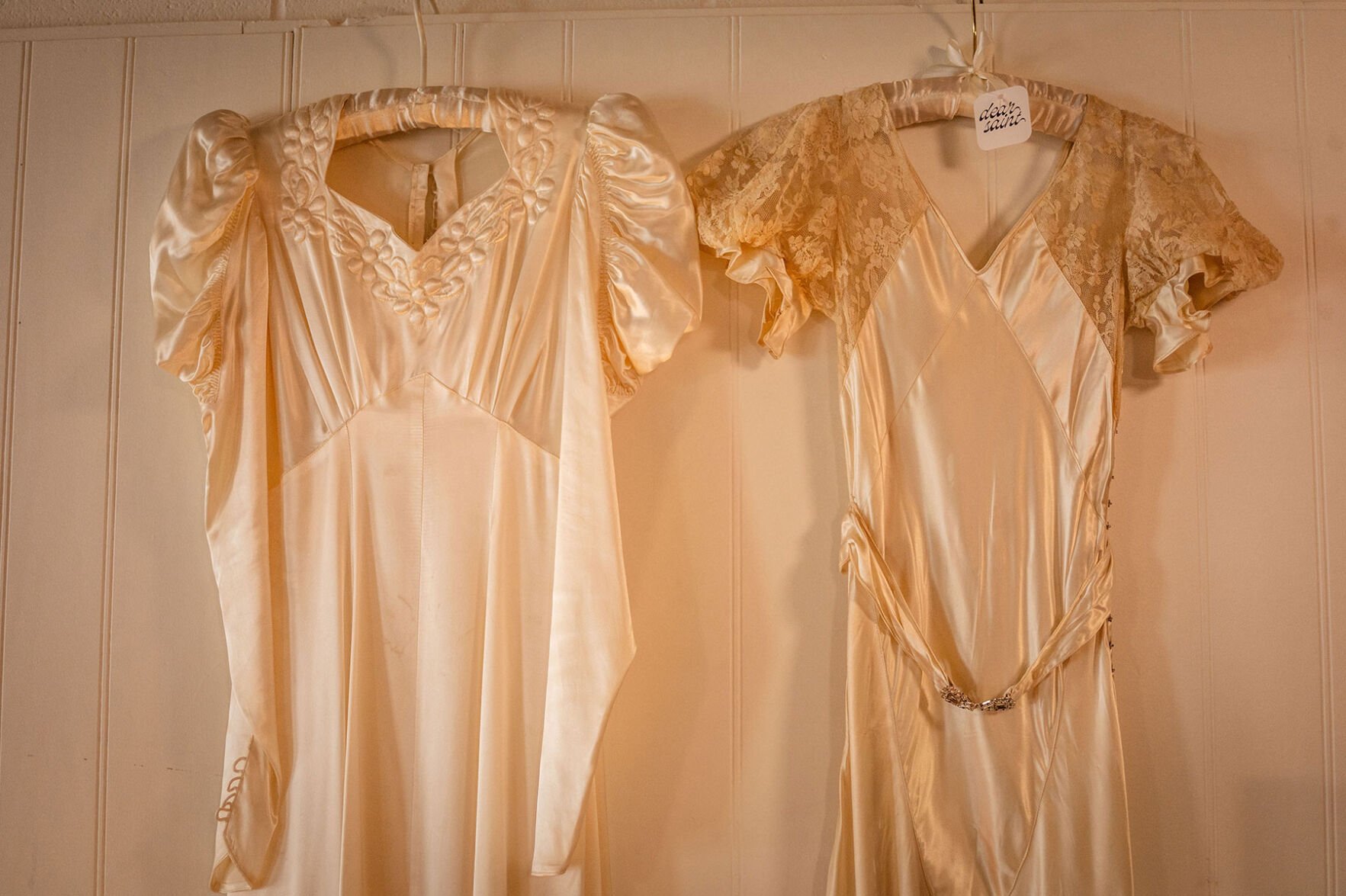
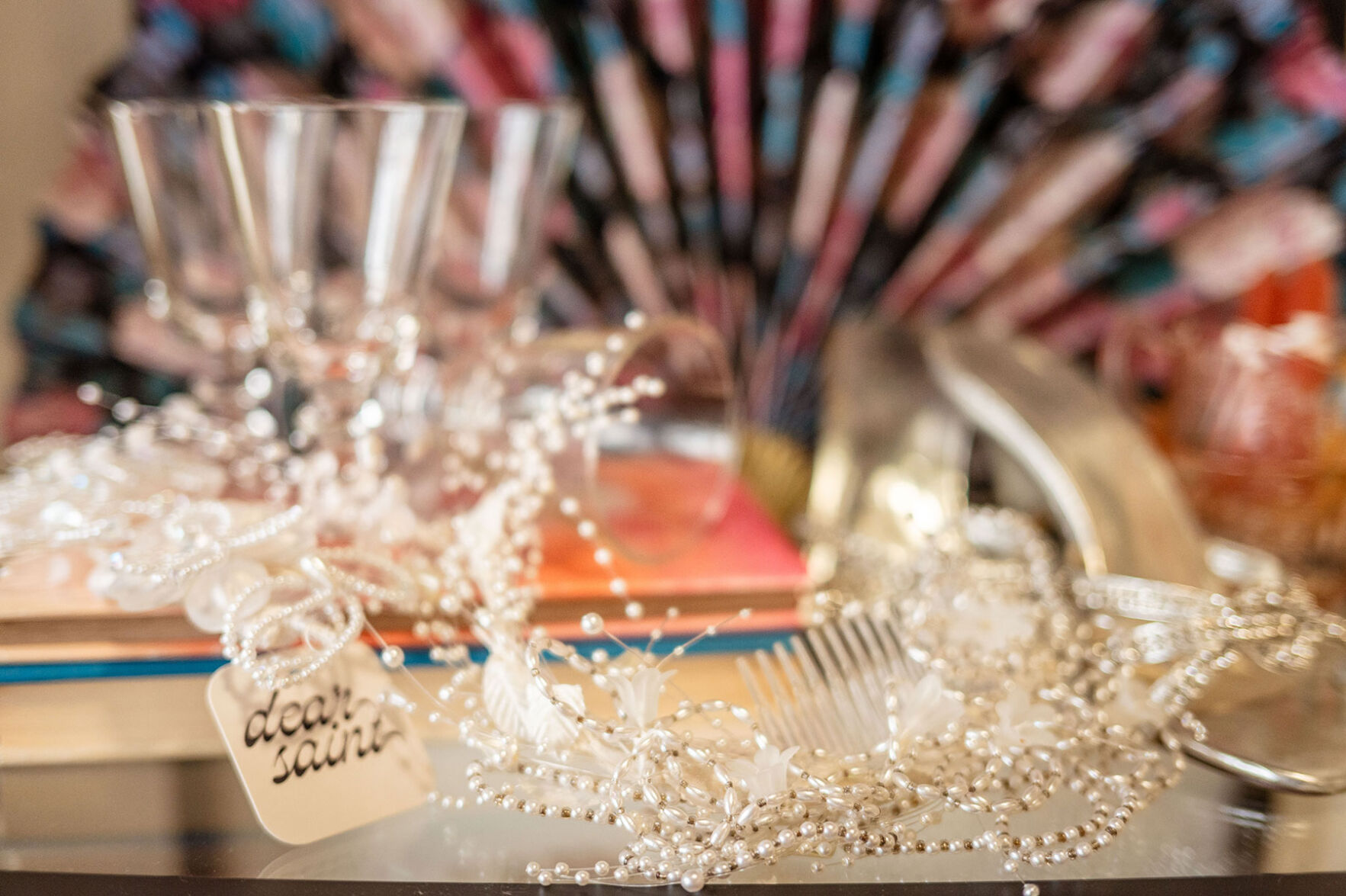
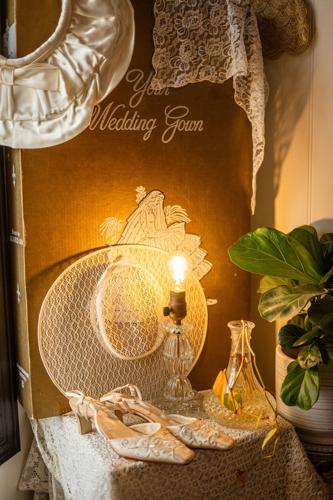
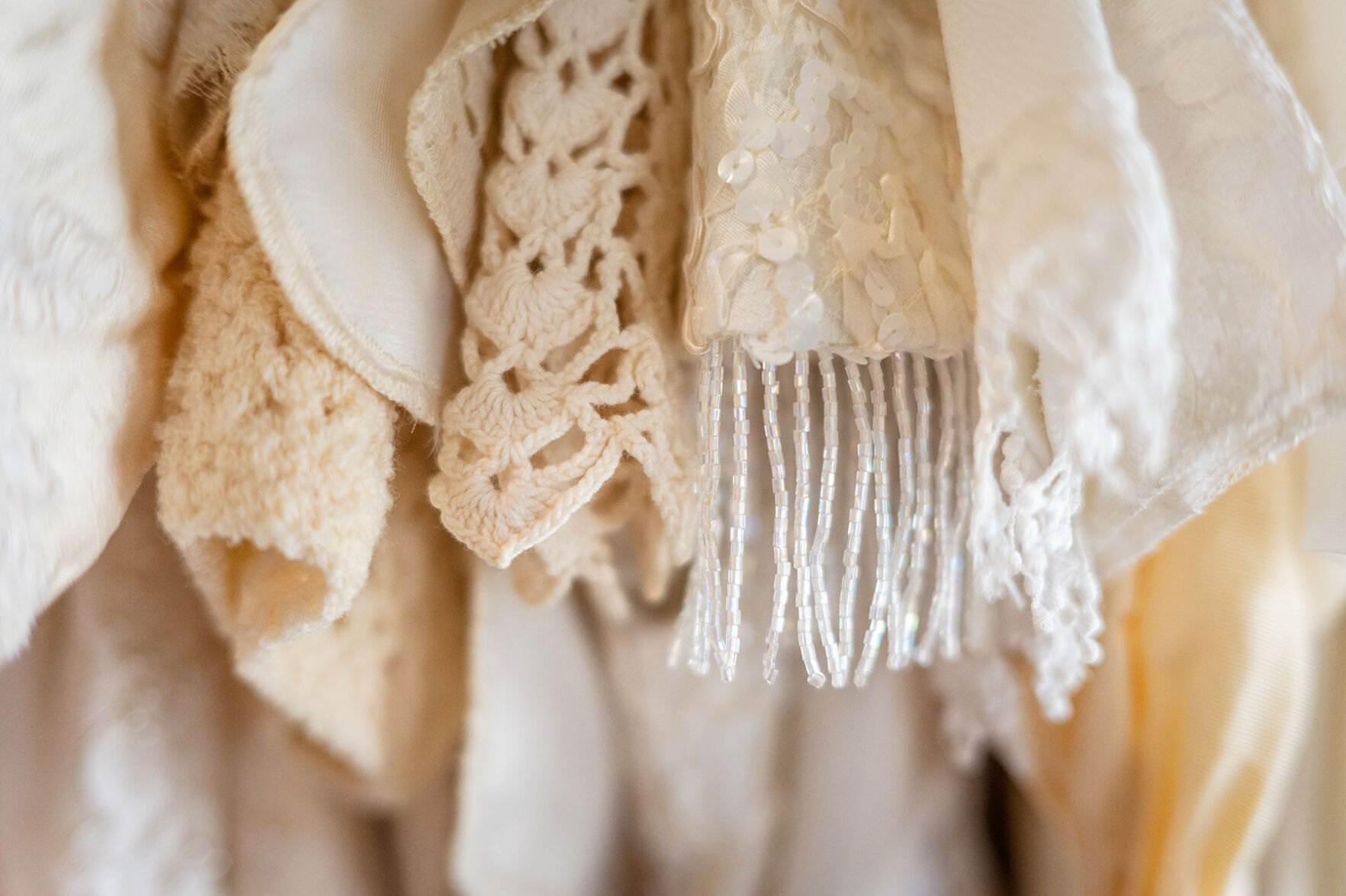

At Dear Saint Vintage, 1950s love ballads play as guests are presented with precisely curated clothing racks. They are full of lace, chiffon, tulle and brocade — wedding gowns that have belonged to generations of brides.
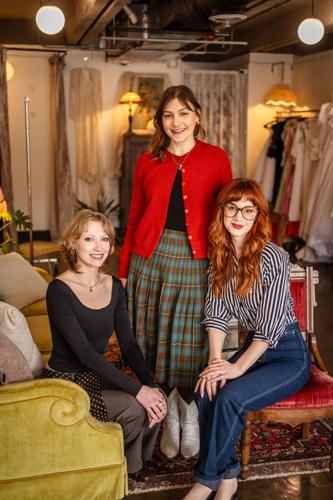
The wedding wear shop began with an idea from co-owners Hope Beard, Kate Hollyfield and Keaton Moore, who met while working at Hip Zipper Vintage in East Nashville’s Five Points neighborhood. While working there, they gleaned knowledge of older clothing, fabrics and pricing of vintage items.
The trio began to see a gap in Nashville’s bridal market for people drawn to vintage attire and those seeking an unconventional look for their big day. Plus, they could capitalize on the city’s bachelorette boom. Beard says they often do business with shoppers who drove several hours or boarded a plane to browse the store’s selection.
They named the store Dear Saint — a nod to a line from Romeo and Juliet — and officially launched online in August 2023. They set up their first brick-and-mortar location within East Nashville’s Scout’s Barbershop in 2024 before officially moving into their current site on Woodland Street in June of last year.
With roughly 200 dresses in stock, the store offers wedding attire from the 1920s through the 1990s, plus a select few from the early Aughts. Most of their inventory is priced below $1,000 — a cost hard to come by in the modern bridal market. The owners say affordability is one reason for what they call a vintage resurgence in the wedding dress world. They also note that an increasing number of brides are concerned about the environmental impact of producing new clothes.
“I think people want to find a way to embrace their individuality and want to shop sustainably,” says Hollyfield. “And I think more and more people are growing weary of the wedding industrial complex, as some people call it, and it’s kind of nice to be able to support a small business and have a really curated experience when you know it’s not funneling back into a big box store.”
Beard says the quality of vintage dresses often far surpasses that of cheaply made contemporary dresses.
“There’s extra care and love that was taken when these garments were made,” Beard says. “A lot of them may have been homemade, and even still, I would say a lot of the quality is above today’s fast-fashion standards.”
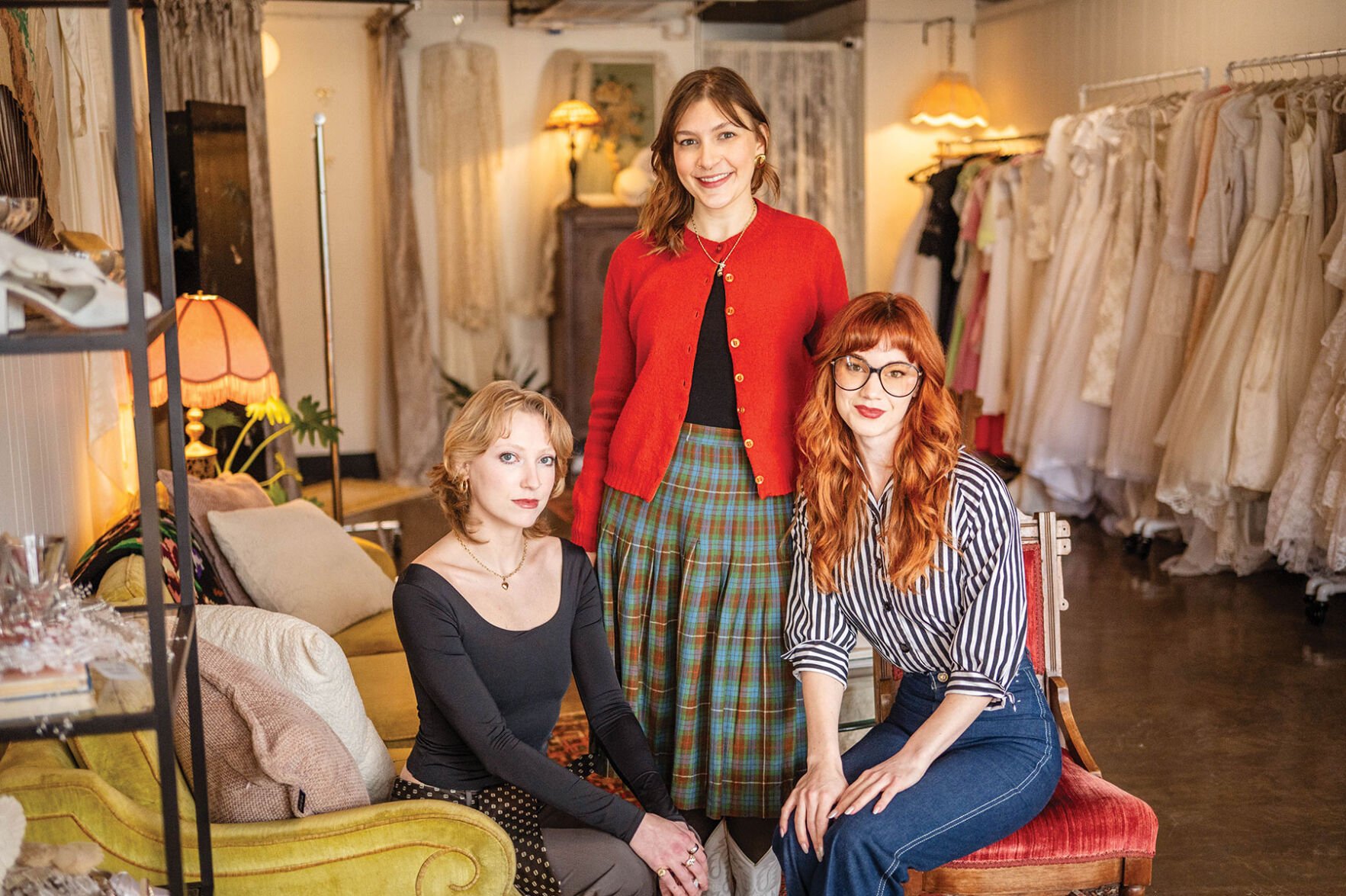
From Left: Kate Hollyfield, Keaton Moore and Hope Beard
As dresses come into the shop, not all of them make it to the rack for sale. Some materials are too aged and fragile and unable to make it through the laundering and restoration process. Others are simply too damaged from the start. Moore jokes that it’s a form of natural selection — if a gown can’t survive the laundry process, there’s no way it would be wearable. However, certain kinds of damage call for alterations to salvage as much of the dress as they can.
“We do try to keep the dresses as close to the original form as possible,” says Moore. “But sometimes there’s just holes in the sleeves or holes in the train, so we’ll adjust that way. And then sometimes we get dresses that are just never going to come back in style realistically. We just have to make a judgment call. … ‘What can we do to this dress to make it more appealing to a modern bride?’ They might not want a super-high neck and puff sleeves and a dramatic train and all of the big statement pieces.”
One of the biggest challenges the store faces is ensuring they offer a wide range of sizes. The owners acknowledge this, saying many of the dresses they receive tend to fall into the petite size range.
The owners say they try to maintain offerings with a waist size of up to 40 inches, though availability can vary, and the process of sourcing vintage has an ebb and flow. Beard adds that the size of certain dresses can be expanded through seam allowances, corset additions and other tailoring methods.
“There is this phenomenon where the dresses that have survived 50 years or more are going to be the smaller special-occasion dresses, because they were only worn once or twice, whereas bigger dresses that were worn more often and well-loved don’t necessarily survive,” says Moore. “The fabric degrades, or it has holes in it or whatever, and it gets altered. So a lot of the dresses we find are small, but we have really tried to make a valiant effort to have as many size options as we possibly can.”
When sourcing dresses, the owners say they often obtain the gowns directly from the previous wearers, or family members who might’ve received the dress as an heirloom.
“A lot of times when somebody has reached out to us and has come and sold a dress, they’re walking out the door saying, ‘Oh, I’m so glad it’s gonna have another chance or a new life,’” Hollyfield says. “And so that’s always a great aspect too, is getting to kind of take that weight off of somebody and turn it into hope for somebody else.”

Exploring mixed-citizenship-status romance, potent advice from a sex therapist, Nashville’s first romance-only bookstore and more



Post a comment as anonymous
Report
Watch this discussion.
(0) comments
Welcome to the discussion.
Log In
Welcome to the discussion.
Keep it clean. Please avoid obscene, vulgar, lewd, racist or otherwise abusive language. Comments featuring hate speech or threatening or violent content will not be tolerated.
PLEASE TURN OFF YOUR CAPS LOCK.
Be truthful. Don't knowingly lie or mislead.
Be proactive. Use the “report” link on any comment that violates our comment policy.
Share with us. We'd love to hear your feedback.