
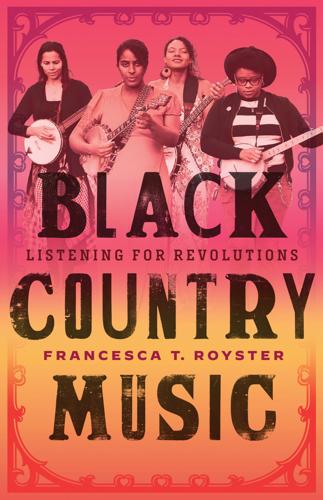

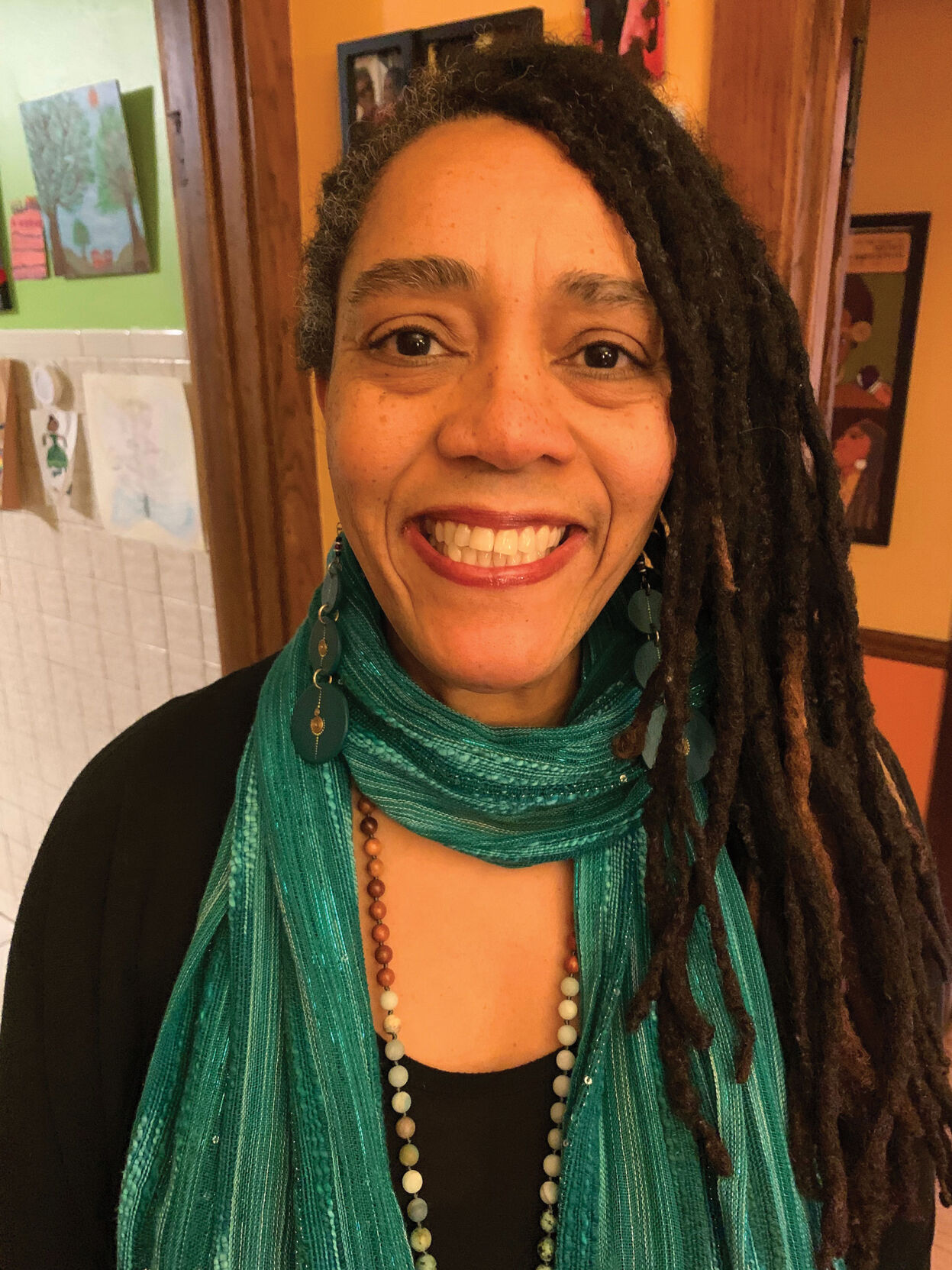
Francesca Royster opens Black Country Music: Listening for Revolutions with a recollection of attending a Chicago country music and barbecue festival in 2014. At one point her heart “gave a lurch” when she recognized the tune of Lynyrd Skynyrd’s “Sweet Home Alabama,” which, she writes, “reminded me of all the reasons I felt wary as a Black woman entering this country music space.”
And yet Royster was no stranger to country music. She spent much of her childhood in 1970s Nashville, where “country music was part of the grammar of living.” Black Country Music delves deeply into the tensions, pleasures and contradictions that Royster, as a Black queer woman, finds in country music as a genre and a cultural signifier. She’ll appear in conversation with Marissa R. Moss, author of Her Country: How the Women of Country Music Became the Success They Were Never Supposed to Be, Sunday at the Southern Festival of Books. Royster answered questions via email.
You write about country music having roots in minstrelsy. Does that legacy still shape ideas about the music for both Black and white audiences?
Yes, I really think it does still shape Black and white audiences. For starters, minstrelsy’s history has been utilized to erase real Black lives and histories and, ultimately, to minimize the roles of Black people as creative and innovative artists.
There’s also a way minstrelsy fed into ideas of “authenticity” and Black sound that limits the ways Black music is marketed and even the ways Black audiences hear themselves.
And finally, the psychic violence of minstrel blackface, as it has been utilized by early country music, may indeed feed the suspicion Black listeners might have of country music and the assumption that country music is racist and only for white (racist) people.
You note the contrast between the experiences of Mickey Guyton and Rissi Palmer, who speak about struggling for a voice within the music industry, and DeLila Black, who’s an independent artist doing her music her way solely through fan support. Do you think both approaches are important?
Yes, I think it’s important to have folks who are working around the edges, as well as the mainstream. Folks like Mickey and Rissi are demanding that Black folks are seen and heard and are holding the industry responsible for addressing racism when it comes our way.
But we also need artists who have no allegiance to the genre or traditions of country per se, who are challenging its boundaries more directly and pushing the edges of things. There’s radical work that can be done outside of the mainstream, in part because energy doesn’t have to be spent getting mainstream labels or radio stations’ ears or translating messages so that they won’t offend. I think all of these tactics are so important for changing the future of country music and audiences.

The chapter “How to Be an Outlaw” looks back at Beyoncé’s November 2016 appearance at the CMA Awards with The Chicks, which got a mixed response, especially coming at such a tense political moment. Given that our politics have only grown more fraught since then, how do you see the audience for country music evolving?
Sappy though it may sound, I do think that music and music makers have the power of bringing people into the room in a way that other forms of communication can’t. I definitely think music is capable of inspiring us to think and feel deeply and to connect to one another across gulfs.
I hear that ability in Our Native Daughters, Rhiannon Giddens’ work with Silk Road Theater, or some of the efforts of Brandi Carlisle and Jason Isbell. And it can help us dream of new futures (like the music of Valerie June and DeLila Black). While I don’t know if I have a clear view of the country music audience broadly, I see these artists shaping and encouraging positive forms of community and connection that are bringing together many different groups.
There are so many disparate threads woven through in this book — race, queerness, pop culture and your personal story, as well as diverse artists and musical genres. Can you share some thoughts on how you approached the writing?
I wanted to offer up an analysis that got at the feeling of being a country music fan, and really to demonstrate the ways country music is a part of my life and the ways I see the world as a Black queer woman who lives in an urban space and can be part of my own queer worldmaking — making the world I want.
I wanted to also offer up a kind of writing that’s vulnerable and that attempts to tell hard stories truthfully — something I admire in the best country music. And finally, because music is so much a part of my life, and the way I approach my family, I wanted to weave in all these threads to demonstrate the broader way that music exists and functions for listeners, linked to all of these histories and aspects of everyday life.
To read an extended version of this interview — and more local book coverage — please visit Chapter16.org, an online publication of Humanities Tennessee.

The ‘Celebration of the Written Word’ will take place Oct. 14 through 16 at War Memorial Plaza and the Nashville Public Library



Post a comment as anonymous
Report
Watch this discussion.
(0) comments
Welcome to the discussion.
Log In
Welcome to the discussion.
Keep it clean. Please avoid obscene, vulgar, lewd, racist or otherwise abusive language. Comments featuring hate speech or threatening or violent content will not be tolerated.
PLEASE TURN OFF YOUR CAPS LOCK.
Be truthful. Don't knowingly lie or mislead.
Be proactive. Use the “report” link on any comment that violates our comment policy.
Share with us. We'd love to hear your feedback.