
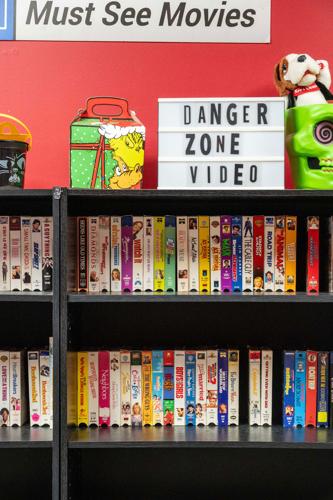

Danger Zone Video
Local filmmaker Justin Sulham describes streaming as “a thankless format.”
He’s the director behind the new slasher Big Bad Betty, a horror-comedy he recommends for fans of Tucker and Dale vs. Evil and Shaun of the Dead. It’s available now, but you won’t be able to find it online — he’s made a conscious decision to distribute the film only on Blu-ray and VHS.
At a recent Big Bad Betty pop-up at Mt. Juliet’s Danger Zone Video, Sulham explained his decision to skip the streaming services: “This is my first feature film, and I wanted it to mean something.”
Physical film media, referred to by fans as simply “physical media,” is having a moment. Comedian Pete Davidson has made headlines for buying VHS tapes as collectors’ items, racking up tens of thousands of dollars for certain titles. Recent data from the Los Angeles Times shows that DVD sales, plummeting for years, dropped only 9 percent in 2025 compared to more than 20 percent in previous years. On social media, collector-creators like Sarah the Gremlin are making moody highlight reels of title screens and close-ups from their tapes — sometimes by recording modern streaming-only series to tape as “customs.” Closer to home, the Nashville Public Library’s Donelson branch announced a free media digitization studio last week to preserve the contents of decaying cassettes and negatives, while Emergency Movie Services travels to pop-ups and parties selling videos and “weird little treasures” from a repurposed vintage ambulance.
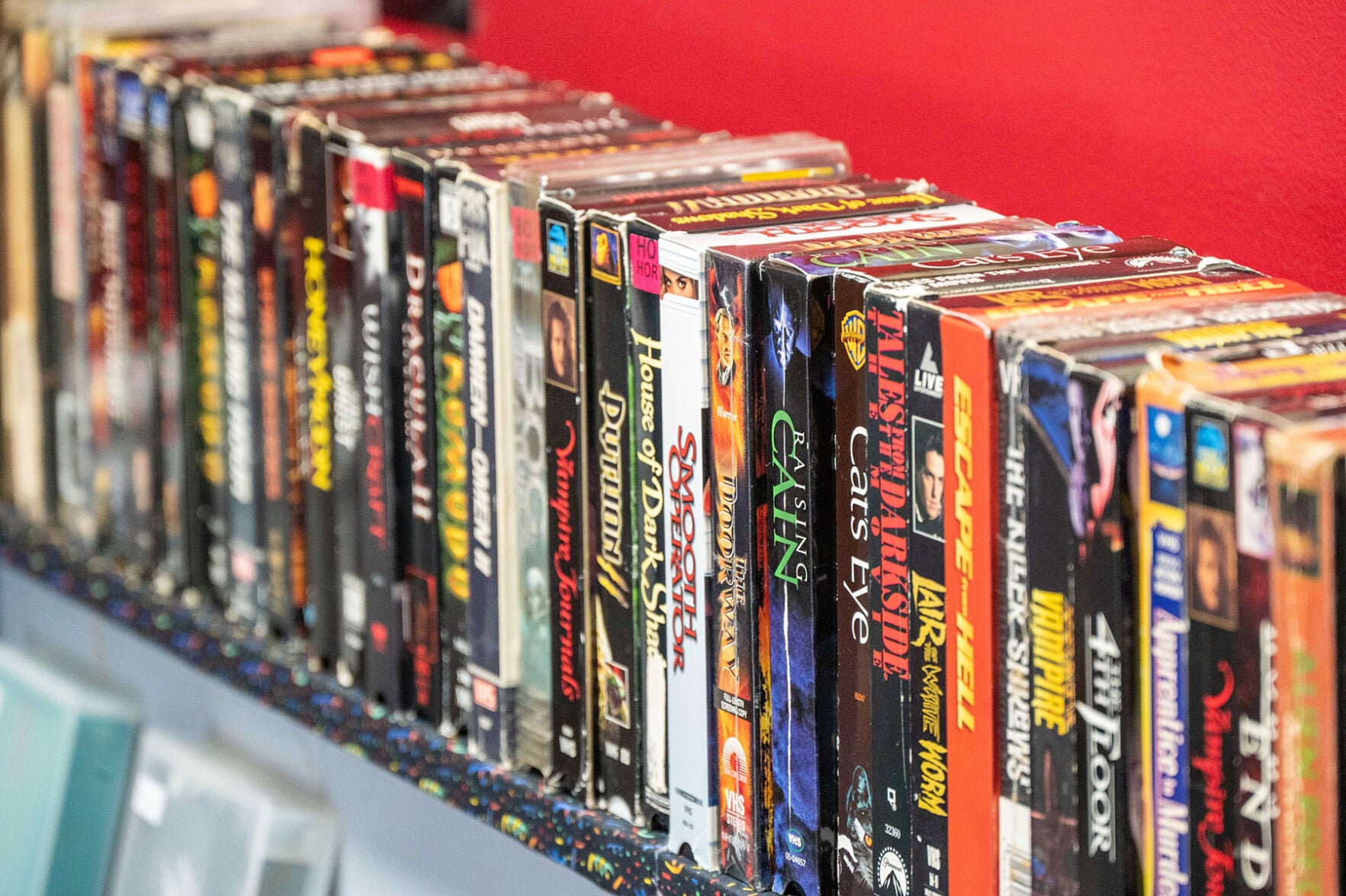
Danger Zone Video, which focuses on selling VHS tapes and DVDs but bills itself as “much more than a video store,” has become a regional hub for physical media fans. Owned by Jesse Butler, the shop has grown from a pop-up on an embalming table to its own brick-and-mortar shop, with an impressive selection of favorites and rare finds and a busy schedule of in-store events. Along its walls are cardboard cutouts of Universal monsters and stickers for organizations like Nashville Hardcore and the Tennessee Transgender Task Force. In one corner, a vintage TV screens old movies at all hours, giving the whole place a cozy living-room feel.

Danger Zone Video
Butler used to work for Independent Wrestling TV, doing a mix of commentary, backstage work and “the occasional really gross death match.” He started collecting tapes as a hobby — his Holy Grail is the media preview copy of the 1988 cult classic Killer Klowns From Outer Space — and began selling them when the COVID-19 pandemic put wrestling matches on pause. He believes the physical media market, while still niche, is growing. Horror and sci-fi aficionados are common, but so are collectors of Disney movies and even ’80s exercise videos — Danger Zone has a healthy selection of Richard Simmons tapes.
“People are buying everything,” Butler says.
Jess Maxfield runs the locally owned online resale shop Monster Maul with her husband Alex, and she agrees that the market is on the rise. Monster Maul started off selling collectible horror merchandise but found an audience hungry for the movies themselves, and transitioned to focusing on physical media. It’s a self-sustaining side hustle: With no current physical location and no employees to support, they’re able to keep overhead low and new inventory coming in.
“We actually were out of the red within the first three months with our startup money,” Maxfield says.
But why the physical media craze, and why now? There’s the obvious nostalgia factor: For some die-hards, time-honored films like Texas Chain Saw Massacre are best consumed in what Sulham calls the “gritty, grainy and ugly” VHS format, and Maxfield speaks of wanting to share her childhood experiences of movies with her own kids. There’s an affinity for the tapes and DVDs themselves: Big Bad Betty star Ray Bruce says he loves the smell of clamshell VHS cases the way some people love the smell of old books. Criterion Collection DVD releases are prized by what Maxfield calls a “thriving community” of collectors, gaining value over time as pre-owned stock.
And then there’s streaming fatigue, which many think is a growing motivator for younger generations. One common assertion among enthusiasts: You never actually own a copy of anything you stream online. A favorite series or movie can change streaming services or disappear entirely, leaving fans at a loss. Plus, Sulham thinks younger generations are especially eager to break out of the algorithm — when they watch a copy of a movie that they physically own or check out of a library, “they know that their privacy isn’t being invaded.”
On a fundamental level, the ritual of choosing what to watch is romantic in a video store, but scrolling through trailers and Letterboxd reviews gets grueling fast. “I’m locked into owning what we watch,” says Butler. “That’s always going to be my first option, as opposed to, ‘Let’s thumb through for an hour-and-a-half.’”
Regardless of the reasons people love it, Nashville’s physical media community is thriving, and Danger Zone is helping nurture it. When Monster Maul was first starting out, they hosted a pop-up at the store that Maxfield says netted their highest sales at the time. Events like that are a practice that Butler holds dear. He credits Shayne Parker, the late proprietor of vintage retail shop Dead People’s Things, with giving him not only a space to start out but a sense of community that guides his work.
“We love supporting small businesses that way,” he says. “2026 is [about] focusing on in-house, our community and just bringing everyone here as much as we can.”
Among sellers, the congeniality is good for business — if Monster Maul doesn’t have what a customer is looking for, they can send people to Danger Zone, and vice versa. It’s also heartening to hear about a secondary market that is, at its core, about preserving the art and schlock that brings people together.
“We’re all just weird punks,” says Butler.

Touring Nashville’s zine scene, investigating the resurgence of VHS, considering the influence of AI in graphic design and more



Post a comment as anonymous
Report
Watch this discussion.
(0) comments
Welcome to the discussion.
Log In
Welcome to the discussion.
Keep it clean. Please avoid obscene, vulgar, lewd, racist or otherwise abusive language. Comments featuring hate speech or threatening or violent content will not be tolerated.
PLEASE TURN OFF YOUR CAPS LOCK.
Be truthful. Don't knowingly lie or mislead.
Be proactive. Use the “report” link on any comment that violates our comment policy.
Share with us. We'd love to hear your feedback.