
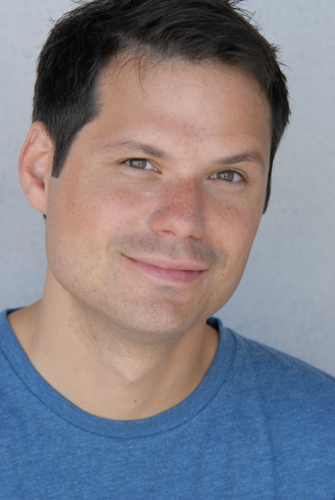
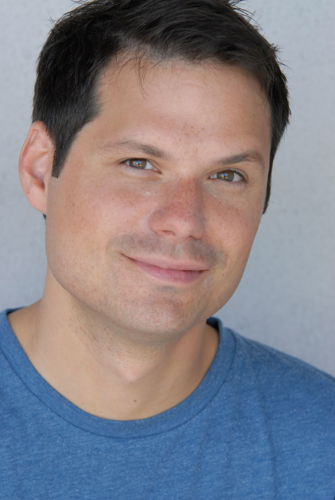


Michael Ian Black used to be known for dick jokes. In Stella, his late-’90s comedy trio also featuring former The State co-stars Michael Showalter and David Wain, Black & Co. loved whipping out a poorly timed dildo to make a sketch as awkward as possible.
Though you might never have guessed it while watching him jerk off a hot dog in the woods next to Paul Rudd, Black’s career eventually evolved into that of a prolific political activist. On Twitter he challenges his millions of followers to demand gun safety, fight for equality and rethink what it means to be a man. In February, he penned an op-ed for The New York Times titled “The Boys Are Not Alright,” linking mass shootings to aggressive masculinity. “America’s boys are broken. And it’s killing us,” he wrote.
That said, he’s still funny as shit. He plays Peepers on Comedy Central’s Another Period and McKinley on Netflix’s Wet Hot American Summer: First Day of Camp and Wet Hot American Summer: Ten Years Later series, and he’s authored both children’s books and books for adults, including Navel Gazing: True Tales of Bodies, Mostly Mine (but also my mom’s, which I know sounds weird) and A Child’s First Book of Trump. You can see just how funny he is on Sunday, when he’ll perform a stand-up set at Zanies with comedian Nick Thune. Even he doesn’t know exactly what’s in store yet.
“I think we’ll probably do some stuff together in the beginning, and then we’re gonna flip a coin to see who goes first each night,” says Black. “Beyond that, I don’t know. There’ll be jokes! I can promise you there’ll be some jokes.”
During a break at the Global Milken Institute Conference, which he attended last week as a panelist, Black talked to the Scene via phone — while Sen. Cory Booker, Black says, was standing just eight feet away. We spoke about Twitter trolls, masculinity and his struggle to find the right balance of comedy and politics.
Watching your career evolve has been really interesting. You’re known as a comedian, but you have also become politically active over the years, and some people are having a hard time accepting that you can be both an entertainer and a political person. Were you surprised by that?
Oh no, I totally expected it. I’m like that! I’m like that when people have causes and shit — I’m like, “Shut up!” I’m like that to me! I hate myself on Twitter. Oh God, I’m the worst. But I can’t not say it. You know, if something’s really bugging me about guns or about the person who is running the country, it feels like a lie to me if I don’t say it. I’m just compelled to do it. I wish I could just shut up, I hate it.
Have you tried quitting Twitter?
I’ve certainly thought about it, but the truth is it’s been really great for me. It’s been a really great platform, and I’ve met a lot of great people. And, just politically speaking, in a very narrow way, it’s helped me really refine what I believe. Because I’ll put something out there and then I have to defend it, and I better be able to marshal an argument to defend whatever I’m saying. Twitter forces you to do that. I mean, I can ignore the people that are pushing back at me, but I don’t. I think it’s important — if I go out there and say, “The NRA is a terrorist organization,” which I say all the time, I better be able to defend that.
Do you feel like you’re a better listener, too? In those exchanges, have you learned how to have more empathy for people and where they’re coming from?
Yeah, I’ve had great conversations with people who vehemently disagree with me. I’ve had great conversations with trolls! They’ll call me a name, and rather than insult them back, [I] approach them sincerely. It’s been really interesting. It’s given me strategies for how to just communicate with people. And that has actually been really helpful for me, not just for my online life, but my life life.
It was on Twitter that I discovered your podcast How to Be Amazing. I love how it’s not about celebrities, necessarily, or trending names or politics — it’s just a pocket of thoughtful conversation.
Yeah. That’s exactly what it is.
It almost seems like it was born out of, “Let’s step away from this cesspool that is social media and just sit down and listen to one another.”
Well, it started before the craziness of the 2015 campaign, which obviously lit a fire under a lot of people’s asses. But it began as a project intended to just discuss creativity in all of its form. How people do what they do and why they do it. It’s apolitical, which is not to say that we never express political opinions on it. What I like about it a lot, and by design, [is] we really talk to people from all kinds of different fields, and it’s really not geared towards entertainment. We just had a mountain climber [David Roberts] on.
You were politically active before Trump became president, but has his election changed your outlook and changed what’s important in what you do and how you use your efforts and time?
Yes. It has. The things that I have become interested in after this election are not directly related to Trump as an individual, but more towards what him winning the election revealed to me about the country. That’s a broad, empty topic that encompasses every aspect of our culture, and so I’ve been really reading a lot, learning a lot and speaking out a lot about a variety of different issues. It could be racism, it could be LGBT things, but it’s also issues of masculinity, it’s things about education. All of those are related in very profound and real ways. And so what’s been fascinating to me is learning all the ways that these issues are related in their larger historical context and how the nation was formed and who we are.
Have there been points where you don’t know where to begin, and once you start, it feels like you haven’t even made a dent?
Oh, yeah.
And how do you fight through those moments?
For me, it’s an interesting schism between feeling — almost simultaneously — incredible optimism and incredible pessimism. I mean, I feel like they coexist for me. Because so many of the problems not only feel systemic but are systemic. But at the same time, there’s constant glimmers of hope that emerge. Constant things that I see that make you go, “Oh, you know what? Maybe we’ll be all right.” But you have to fight for them, and so there’s a lot of different things that I’m fighting for.
In your essay in The New York Times, you say that boys are broken and you’re hoping to inspire conversation. Do you feel like, since publishing that essay, you have started some kind of conversation around that topic, how society has failed boys?
Well, I don’t want to take credit for anything. I did not start a conversation, but I personally was unaware of a conversation around this issue that’s been happening, literally, since the founding of the country. I mean this conversation, even the phrase “a crisis in masculinity,” you can see repeated in like 1992, 1993, 1994, when there’s this sort of gang issue and all the gang violence. This idea has been around for a really long time, but it has never quite penetrated into the mainstream consciousness for reasons that I think speak really directly to the problem, which is [the idea that] men saying to other men “I need help” is actually counterintuitive to their own masculinity. In a way that women can speak to women to get help around gender issues. To me, it’s a fascinating topic, and I’m trying to find ways to make it stick to other people.
Maybe the activism has had really bad branding and we just need to put some starbursts on the packaging and make it seem cool so people listen.
Yeah, I was at a panel today where they were talking about the intersection between art and politics and [screenwriter and producer] Damon Lindelof was talking about how it used to be that you would, sort of, Trojan horse your message into entertainment. But then this year, for example, Black Panther came out, where the message was the entertainment. The entertainment was the message. And you have to figure out ways where you’re not hiding your message, you’re just doing it. Which is, you’re being thoughtful and intentional about your work, and that’s what I’m trying to do, but I haven’t cracked the code on that in terms of doing stand-up in these issues, at all.
So does your stand-up get political these days or is that still separate?
I’m not a political comedian — I’m struggling with it, I really am. There’s people who are so gifted at being political comedians and I’m just, I’m not one. My comedy definitely has a more political edge to it, but I haven’t quite figured it out. Don’t get me wrong, I’m very funny. [Laughs]
You are very funny! I don’t think you need to be politically funny. I think you can be political and I think you can be funny.
Yeah. I don’t know. I’m figuring it out. But as I think any artist is constantly trying to figure out who they are and what they’re doing, and how whatever they’re doing changes and evolves over time. I mean hopefully, as an artist, that’s what you’re doing.
You’ve probably been asked this before, but have you considered running for office?
You know, it’s funny. I have been asked that before, and I think I would be terrible at it. I think I would hate it. And I think I’m disqualified because of all the horrible things that I’ve said over the years.
I mean, everything you just said defines Trump, and he is president.
That is true. That is absolutely true. I mean, the answer is yes, I have been asked. The next answer is, I don’t think I would ever do it, and I don’t know how you do it. I really don’t. Mostly because I don’t see how you spend your whole day, trying to ... just asking people for money all day every day. I couldn’t do it.



