
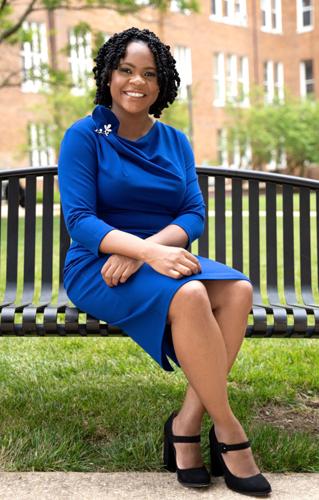


Almost two years ago, Yolanda Pierce moved to Nashville to become dean of the Vanderbilt Divinity School. This was and is intensely good news. Pierce is an activist scholar, an accomplished administrator and a renowned public intellectual. Michael Eric Dyson says she’s “arguably the greatest interpreter of religion in our present age.”
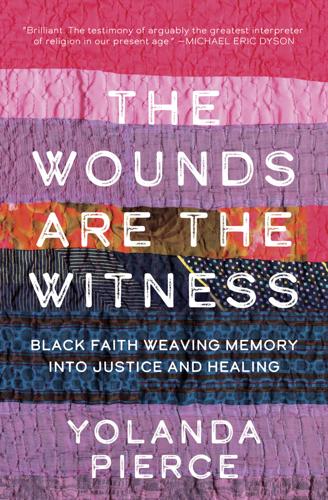
Following Hell Without Fires and In My Grandmother’s House, Pierce brings us a new work that is equal parts memoir and cultural commentary, both righteously personal and political. In The Wounds Are the Witness, she laments “the calculated amnesia” of disinformation-driven legislation in these United States while lifting up the witness of Jesus of Nazareth, whose way of lovingly confronting the criminal injustice system of his day might yet inform our own: “He loved. And he rebuked. He comforted. And he chastised. He pleaded. And he surrendered.”
In a spirit akin to the work of Howard Thurman, the book serves as devotional reading, a summons to self-care, and encouragement for everyday action and outspokenness.
I am struck by the ease with which you overcome debilitating binaries. You critique the toxic conceptions of God at work within church communities, while also carrying forward the tradition of your elders. How did you learn to narrate your life this way?
Binaries can quickly become toxic. In theology, the black/white binary is often used, where “blackness” refers to evil and “whiteness” refers to goodness. This flawed binary upheld slaveholding theology in this country for a very long time. So as a womanist theologian today, I work with the idea of “tensions” and how to hold those tensions together, instead of reinforcing binaries. Places of faith can be sanctuaries and sites of healing for many, and those same places have often harmed and been toxic to some. Both things can be true, even at the same time. The tension is telling the truth about the harm and also being willing to work to elevate the healing.
I love how you reworked Fred Rogers’ “Find the helpers” line as “Find the healers.” As you follow that counsel, who have you found as healers in Nashville?
There are people who still value human connection. There are folks who stop whatever they are doing and genuinely inquire about your health or your family. In a world with so much loneliness and disconnection, this is a beautiful thing — a basic recognition of your humanity in your everyday life. As the dean of the Vanderbilt Divinity School, I only have to name any social justice organization in town and I’ll find one of our graduates. It is a blessing to work at a place where people believe in healing as a vocational calling.
What are dangerous memories, and why are they essential?
Dangerous memories are the things that the larger society wants you to forget because it would change the narrative of how history is remembered or taught. For me, as a Black woman, the acts of resistance and survival of my ancestors are dangerous memories; they upend how slavery is often taught about in this country. Remembering and resurrecting these dangerous memories — literally putting flesh on the bones of the past — is healing work and justice work.
You speak of the Spirit of the Lord as present wherever real justice and radical inclusivity are made manifest in “beloved community.” In your view, is there a difference between beloved community and the kingdom of God?
Beloved community is a term for the here and now; we can build it and create it and everyone is welcome. The kingdom of God is often used in an eschatological sense — the world that is to come or some point after divine judgment. I’m invested in this world, this community, this nation into which I was born. Building a beloved community of radical inclusivity is the work of this present world.
Why do you carry a vial of anointing oil in your purse?
I love this question! I was raised in the Holiness-Pentecostal tradition, so I maintain some of the old-school habits of this tradition. I carry it now for two reasons. First, because of the job, I’m often asked to pray for people. Secondly, there’s nothing special or magical about the oil itself. I understood that even as a child, where we practiced foot-washing and the anointing of oil. But what I still love about the tradition is that it represents “holy touch.” In a world where so many people experience abusive or violent touch, to be lovingly anointed with oil and prayed for with tenderness and compassion is a gift.



