
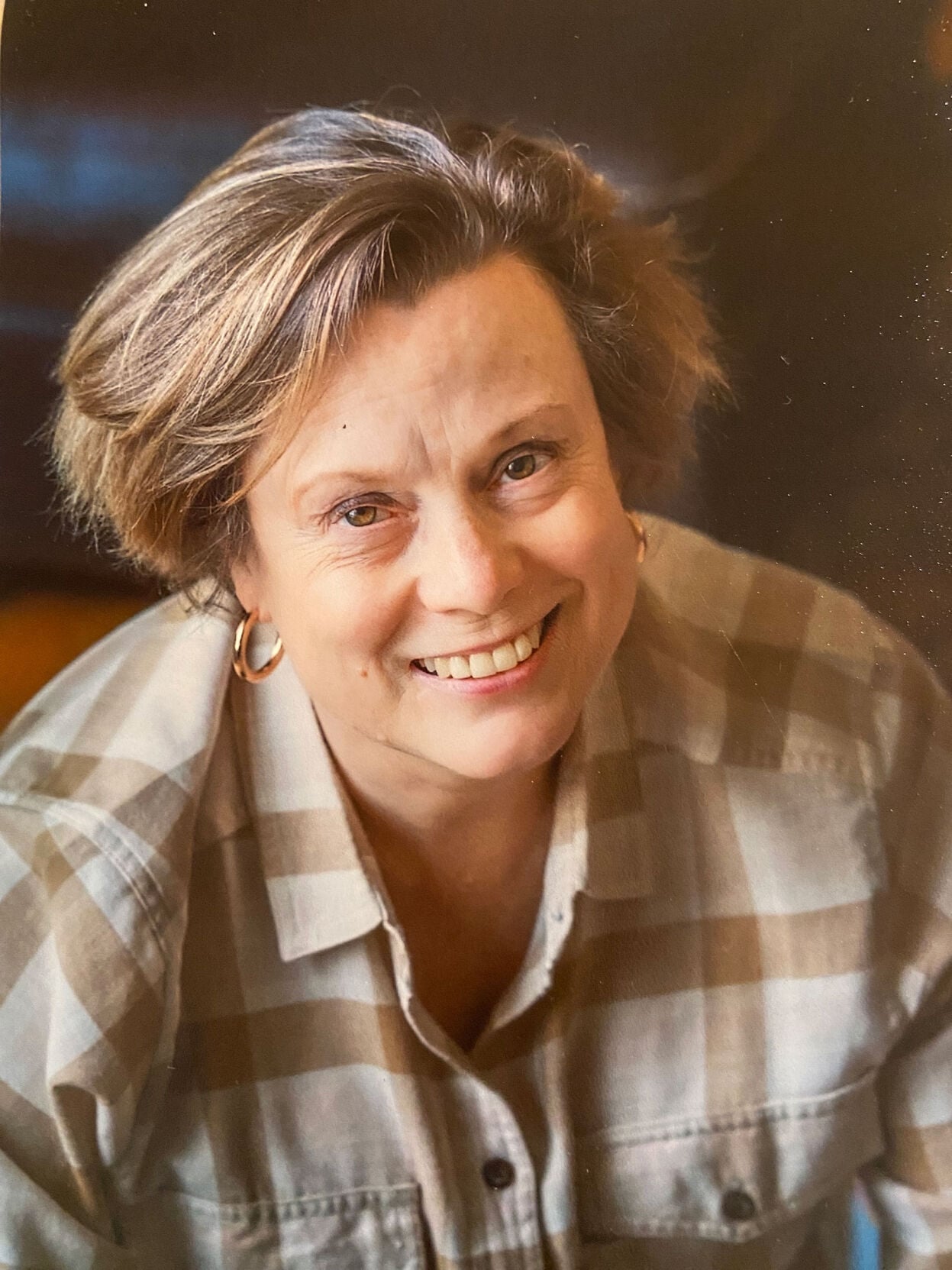
Sheri Lea Sellmeyer
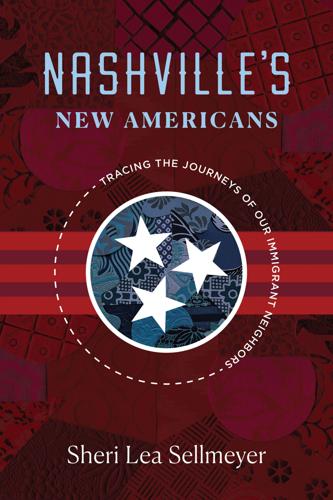
It’s easy to get stuck in a neighborhood rut, wearing deep grooves in the paths we take every day to work and school and back. That’s why I was so grateful to read Nashville’s New Americans: Tracing the Journeys of Our Immigrant Neighbors by Sheri Lea Sellmeyer. The book serves as a powerful reminder of the immense diversity the city contains — and why it’s worth venturing outside the familiar.
Sellmeyer profiles more than 30 first-generation immigrants from all over the world, describing the often long and sometimes harrowing roads they took to make Nashville home.
James Makuac, one of the Lost Boys of Sudan, has made a home, a living and a name for himself as a visual artist since arriving in the city. He left Sudan when he was 11 and walked thousands of miles with 27,000 other young boys fleeing civil war. They traveled across Ethiopia to a refugee camp in Kenya. Only 12,000 boys from the original group survived the journey. Makuac spent nine years in the camp, where he was able to learn English and math, before receiving the news that he would be resettled in Nashville.
“When I saw my name on the board,” he tells Sellmeyer, “I told my whole group, ‘I’m going to America!’ I was so happy.” He now makes a living as a Swahili interpreter at Tyson Foods, and he depicts his long journey across Africa through his paintings, which have been exhibited at the Frist Art Museum and Belmont University.
Edgar Martinez immigrated to the United States from Mexico with his parents when he was 7. He faced the challenges of learning a new culture and language, translating for his Spanish-speaking parents and being undocumented: “That’s when I had to grow up pretty fast and try to understand what we were dealing with, whether we were paying a bill or signing up for soccer tryouts or ordering some food,” he explains.
Martinez started working as a brick mason with his dad when he was 15 years old, and he had laid brick for 20 homes by the time he graduated from high school. Though he enrolled at a community college, it quickly became too expensive because he was considered an out-of-state student and forced to pay higher tuition. Despite these hurdles, he tells Sellmeyer that when the federal policy DACA (Deferred Action for Childhood Arrivals) went into effect, it was “the happiest day of my life.” He was able to get a Social Security number and a driver’s license and start expanding his business.
Some of Sellmeyer’s profiles are more lighthearted. One details the journey of the Dozzi sisters, three Australian siblings who moved to Nashville to pursue a career in country music. Though they’d reached the top of the Australian country music charts, they knew Nashville held more opportunity.
Another follows German scientist and conservationist Hans-Willi Honegger, who has worked with a group called Radnor to River. Their organization helped save a waterfall and the adjacent land in West Meade from development and is now fighting to establish an “ecological corridor” between Radnor Lake and Beaman Park.
I was surprised to learn that Nontombi Naomi Tutu, daughter of South African Archbishop Desmond Tutu, lived and worked in Nashville for 19 years. (She has since moved to Atlanta.) For most of her life, she resisted entering the priesthood because she wanted to be her own person, outside of the shadow of her formidable father. That changed after a varied career as an activist, consultant and educator.

“But as the decades passed,” Sellmeyer writes, “there was still something percolating in her spiritual life that led her to earn a master’s in divinity from Vanderbilt and complete her Anglican studies in Virginia.”
Sellmeyer notes that the topic of immigration has become highly polarized, but she stops short of delving explicitly into politics. Instead, she uses a “show not tell” method to illustrate how vital immigrants are to the city. They work in our hospitals, build our houses, make the food we eat, play the music we enjoy. One man she profiles works as a supervising engineer at Nashville Electric Service, helping supply the power that runs our homes.
She also attributes much of Nashville’s economic growth over the past several decades to immigrants, noting that “foreign-born workers have helped change Nashville from a midsize city known for country music to an increasingly diverse, multicultural destination.”
Nashville’s New Americans serves as an introduction to Nashville’s many cultures, but it’s also a gentle call to engage with our immigrant neighbors, especially in the current political climate. That could mean learning Spanish, trying the Laotian restaurant in Columbia or finally going to see that folk artist from Canada. Sellmeyer makes it clear that these opportunities abound, and we are all the richer for seeking them out.
For more local book coverage, please visit Chapter16.org, an online publication of Humanities Tennessee.



