
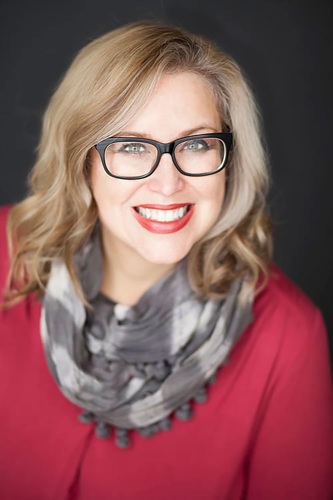

Author J.T. Ellison is a force to reckon with. She blogs, records podcasts and writes a weekly newsletter complete with recipes and book recommendations. With fellow Nashville author Mary Laura Philpott, Ellison co-hosts the Emmy Award-winning A Word on Words, a Nashville Public Television program featuring authors and their books. She’s also established her own publishing house (Two Tales Press), founded a wine-review website called The Wine Vixen, and — though where she finds the time, nobody knows — written and co-written more than 20 novels, many of them bestsellers, that have been published in 28 countries and 16 languages.
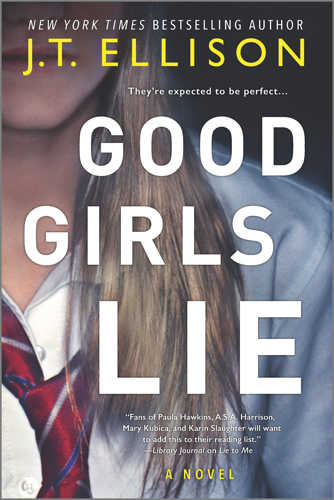
Ellison’s latest, Good Girls Lie, unfurls within the gates of Goode Academy, an elite girls’ boarding school in rural Virginia. The school is a hotbed of hormones and social rivalry, with skeletons in its closets and secrets in its past, and the story opens, dramatically, with a corpse. A student dressed in graduation robes, her face mangled, hangs from the school’s locked iron gates. Is she a murder victim? Did she commit suicide? Is she a sociopath brought to justice?
Ellison answered questions via email.
You’re a prolific writer with a number of side projects that must take up a lot of your time. While you’re juggling everything, are you also planning the book that comes next? How far in advance do you start thinking about new characters and plots?
Funny you should ask this. As we speak, I’m a little more than halfway on my next novel, and last night the spark of an idea, what I want to do next, hit me. When I was writing a series, it was easy to be thinking a book or two ahead. With standalones, though, so much depends on the character, and the plot follows. If I’m lucky, I start developing characters at least a few months before I sit down to think about how to tell their story. That spark from last night won’t be explored in depth for at least four or five months, but I’ll open a file now so I have a place to leave any ideas, notes or other sundries as they pop up until I’m ready to get writing.
In a note at the end of Good Girls Lie, you write that Goode Academy was inspired by your alma mater, Randolph-Macon Woman’s College. Was there a particular reason you chose to set the book’s action in a boarding school, rather than in a college?
There was, and it was done on purpose. My main character, Ash Carlisle, is recently orphaned in a terrible murder-suicide and has traveled from her home in Oxford, England, to attend Goode. She’s been sent there, her parents are gone, and she has no recourse other than the school. If she were older, college-age, she would have more choices. She could get a job, travel, choose another college. But as a teenager she’s stuck. Because of her age, her choices have been stripped from her. Plus, when things start going south, she doesn’t have the means to leave. She’s trapped on the mountain with these murderous young women.
A friend in Nashville, when she heard I was reading your latest, described you as “the best literary citizen.” You’re an unfailing champion of other writers, which is really lovely. Can you talk a little about the literary communities you’re part of and what they mean to you?
That is the highest compliment, thank you! I’ve been so blessed by the writing community. From day one, I’ve been lifted up — by bookstores, by librarians, by readers, by publishers — but most importantly, by other writers. Authors I’d read for years happily endorsed my debut novel, and that paved the way into the literary world for me. Others sat me down and explained how the industry works, how the nitty-gritty of sales and marketing and publicity and distribution works. And more have talked me through my career’s life changes, bolstering, advising, cheering me on.
I try to do the same, reach back down the ladder. I’ve been on group blogs, participated in group marketing teams, traveled with other authors before that was a common practice. I fully believe there is room for all of us in the market, especially our female thriller and suspense authors, who sometimes get lost in the shuffle. A rising tide lifts all boats — that’s how I look at this industry. We are stronger together. Another adage I took away from my college experience.
To read an extended version of this interview — and more local book coverage — please visit Chapter16.org, an online publication of Humanities Tennessee.



