
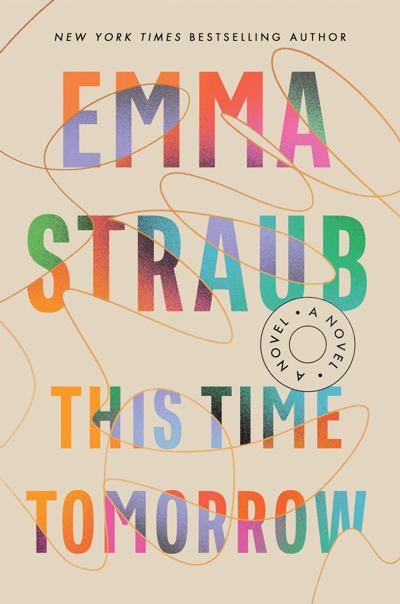


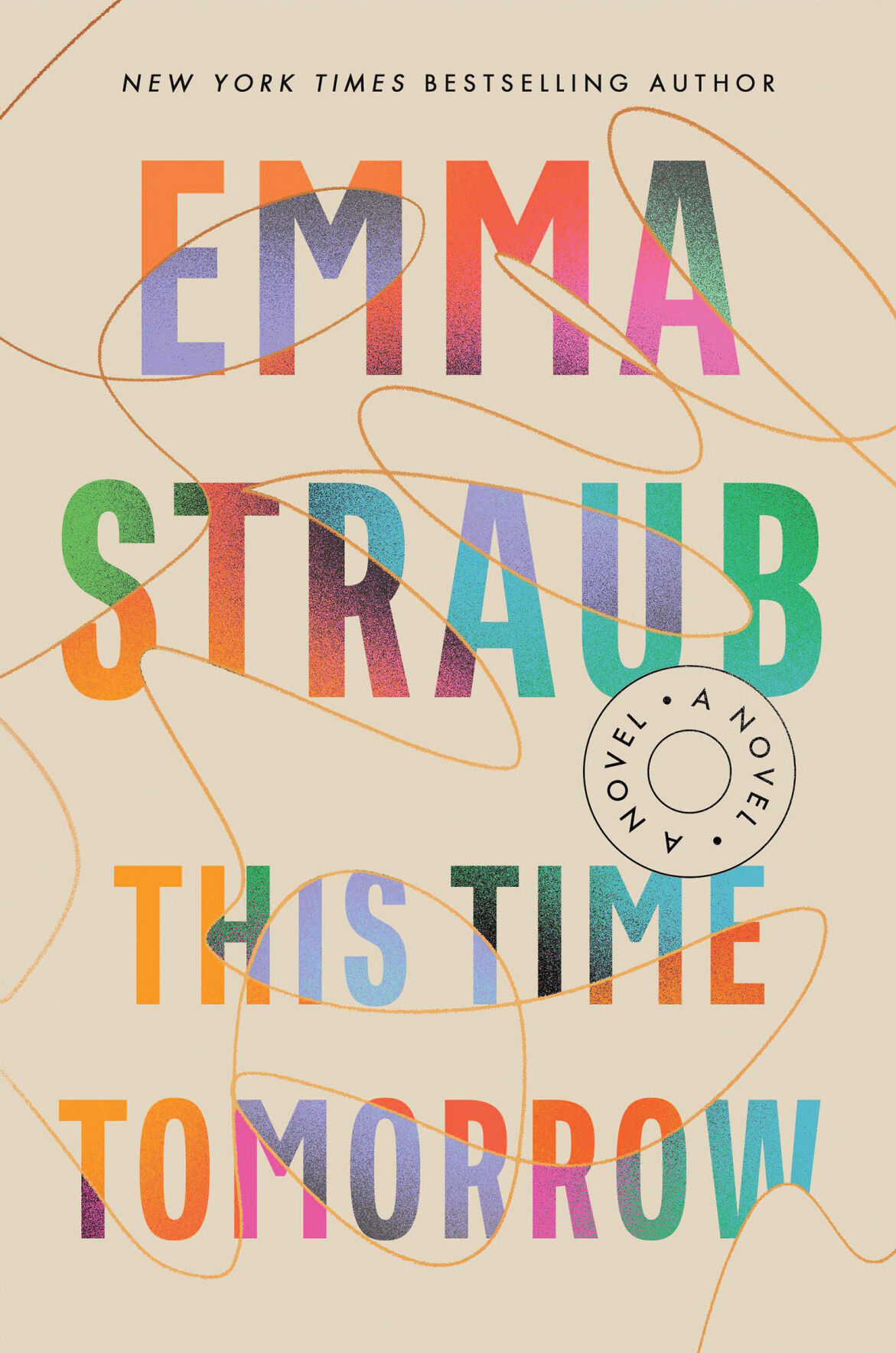
This Time Tomorrow, the new novel by Emma Straub, stands out as the only book of the year (so far) that’s both a surprising bildungsroman and excellent beach read. It fizzes like pop and goes down easily while offering nutritional literary value. Each of Straub’s previous four novels, along with her short-story collection, has been a bestseller; her fiction, without exception, is orchestrated by a steady hand with a light touch.
In a classic bildungsroman, the protagonist faces loss as a child, embarks on an obstacle-filled journey and, ultimately, gains maturity. In This Time Tomorrow, protagonist Alice Stern is not a child but a geriatric millennial. Approaching 40, Alice is placidly skating along the periphery of an existential crisis when she happens upon a neat trick: the ability to travel backward in time to her 16th birthday. Sixteen, no doubt, falls beyond one’s earliest years, but it’s still an age of innocence for Alice, who even as a grownup has yet to arrive as the hero of her own life.
This Time Tomorrow doesn’t partake of the usual clichés associated with midlife crises. Yes, divorce is involved, though it’s not Alice’s but her parents’, and it happened when she was 6. This left Alice to the full-time care of her father, Leonard, a very cool dad with a penchant for cigarettes. In the week leading up to Alice’s 40th birthday, Leonard lies in a New York City hospital bed, neither conscious nor responsive. Alice visits him dutifully. Her days — like her four decades on Earth — are dutiful and empty.
Content in the literal sense of the word, Alice exists in a container. She works in the admissions office of the uptown prep school she attended. She’s had the same best friend, Sam, since they were high school students there. Alice has long since abandoned her scattershot dreams of being an artist. She is secure yet unafflicted by a stultifying prosperity. No one claims her as a dependent. She’s a smoker living in Brooklyn. She has a boyfriend, Matt, whose personality is as flat as his name. Alice’s position is precarious insofar as two matters are concerned: She really, really doesn’t want her father to die, and her life, in more ways than not, resembles that of a hamster who’s been running on the same wheel forever, purposely going nowhere.
Leonard, it so happens, made his mark writing a science-fiction novel about time travel that portends Alice’s experiences. In a stroke of luck, Alice falls asleep on the evening of her 40th birthday and wakes up on her 16th. Given the chance to do it over, she discovers that her choices on that one day in 1996 have the power to change her course forever. Knowing at 16 what she’s learned by 40, she holds her destiny in her hands. (This will appeal to every woman who’s asked herself, “What would have happened if I’d never broken up with my high school sweetheart?”)
About her father’s fate, Alice is certain: “She wanted to save his life, simple as that.” While the adult Alice grapples with the impending loss of her dad, adolescent Alice tries to sidestep — or at least postpone — Leonard’s death by making sure he takes care of himself. “She felt like a walking needlepoint pillow — the way you spend your days is the way you spend your life. She wasn’t a teenage detective; she was a scientist.”
Straub maintains a delicious sort of control, moving backward and forward in time, dancing through various futures for Alice. The result is a beguiling performance and one of the knockout reads of the summer. This Time Tomorrow is a touching and suspenseful novel, ripe with ideas, brilliantly plotted and generous with its dashes of humor.
For more local book coverage, please visit Chapter16.org, an online publication of Humanities Tennessee.



