


John Vercher
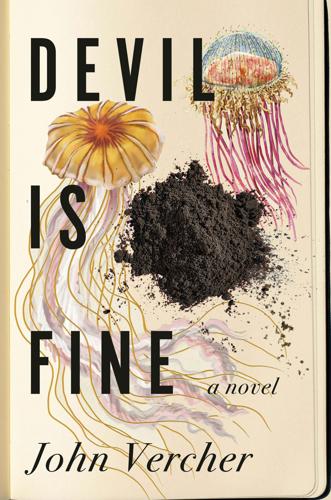
Devil Is Fine is John Vercher’s third novel on biraciality. In this book, a biracial father grieves his deceased son and dying career, realizing he only understands both through a post-mortem examination. To further complicate matters, he finds himself the sudden owner of a former plantation, whose haunting blurs the line between reality and imagination.
We spoke to John Vercher ahead of his appearance at the 2024 Southern Festival of Books. The conversation has been edited for length and clarity.
Like your novels After the Lights Go Out and Three-Fifths, Devil Is Fine deals with themes of biraciality. Why was it important for you to continue exploring biracial identity?
The best answer I have is that I am still exploring it in my own life. While fiction and writing should never be therapy, it can often be therapeutic. Readers are getting a front-row seat to me working out my things, which is exploring these ideas of what it means to be mixed and to be Black in this country, and to reckon with the history of white supremacy and colonialism as relates to my physical presence on the earth.
Do you think that it is only certain writers, like biracial writers, who have the obligation to write biracial protagonists?
I have a hard time giving solid answers about that, not in the sense that I want to be political, but in the sense that it’s hard for me to say anybody can’t write anything. But at the same time, if you’re not coming from a place of authenticity or lived experience, I don’t see how you can speak to it in a way that’s going to resonate with the audience you might be seeking.
Audience is particularly important in this novel since it is addressed to the protagonist’s deceased son. Thinking of it in the style of Ta-Nehisi Coates’ Between the World and Me, would you talk about the power of addressing Black boys in literature?
I have to be honest, it was much more personal for me. It was … about me exploring what it’s like to be a child-father. I feel like I’m still my father’s son, but I am also now a father to two boys I’m trying to responsibly raise and hope to avoid things that were challenging for me and my father.
What do you mean by that phrase “a child-father”?
Because I feel like I’m still a kid, I still feel like I am the son trying to figure out how to be a dad, as opposed to having this thing figured out and I’m in this place of authority and know how I’m going to be able to hand-deliver every situation that arises from my own children.
Does continuing to identify as a child keep you connected to source and trying to figure out who you are?

Oh without a doubt, because so much of my childhood was spent in that identity limbo. When I was growing up, my hair was not like my dad’s. My dad sported a huge proud Afro, and my hair was long and wavy. I was inundated with the “What are you anyway?” questions. You get that question asked of you often enough and you start to ask yourself that question. My dad was taking me on car trips at age 7 and telling me what it was going to be like to be biracial and Black in this country, so I knew I was Black. But when people started questioning me, I was like, “Am I? Am I Black enough for this? Do I look …?” Those things kind of stick, and they follow you all the way until you’re 48 years old.
The novel can be described as Kafkaesque in the ways that you set magical realism in conversation with cultural criticism. Why did you choose the jellyfish as a vehicle to this end?
It started off with a piece of autofiction that I wanted to include. The bit of story where our narrator as a child goes out in the water and is surrounded by jellyfish is a fairly true-to-life story. I ended up falling down this rabbit hole of researching jellyfish, and what became very apparent to me … is the duality of jellyfish. They’re beautiful to look at, but they’re deadly in some cases. … There were parallels to the idea that, yes, you can have a white parent and a Black parent and still be Black. You can be a product of a biracial marriage and still interrogate some of the problematic nature linked to colonialism and white supremacy and still love that, but still question it. All of those things felt like they really lined up with this creature that has so much inherent duality.
To read an uncut version of this interview — and more local book coverage — please visit Chapter16.org, an online publication of Humanities Tennessee.

Oct. 26-27 in downtown Nashville, the festival will celebrate literary excellence close to home



