
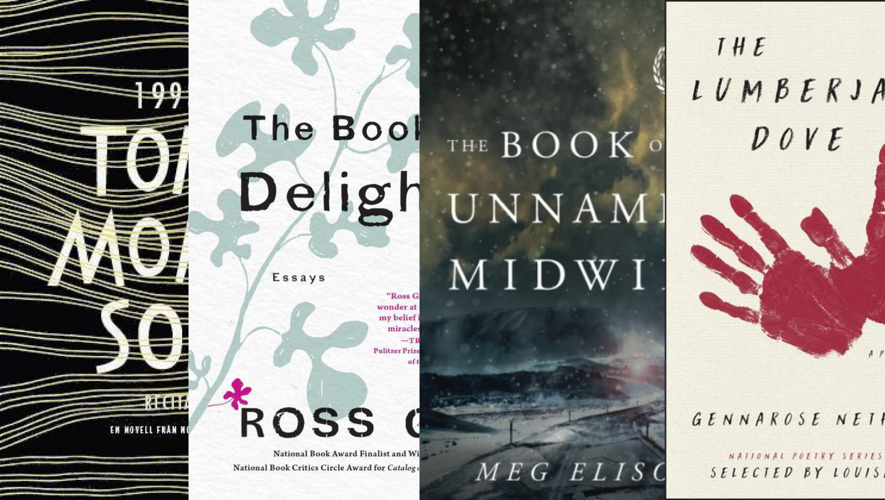


This month’s edition of Book Club takes us into the shelves of some of Nashville’s best poets. Surprisingly, not one of them recommended a book of poetry, but they’ve all written scores of poems that you can find online by exploring some of the links we’ve rounded up.
You can check out all of last year’s Book Clubs right here.

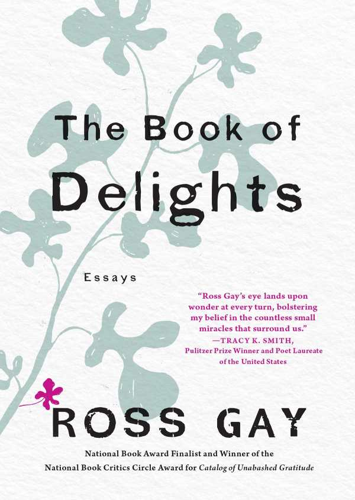
Reading Kendra DeColo’s poetry feels a little like sneaking a peek at Judy Blume’s Forever … when I was 10 years old. Lately, I haven’t been able to get her poem “I Heart Pussy” out of my head. It’s a celebration of pussy: the sound of the word, the sensations it conjures, “how you can say it sober / on a clear morning / and feel the murk sprawl.” DeColo has been published widely in literary magazines and journals and is the author of My Dinner with Ron Jeremy, Thieves in the Afterlife and the forthcoming I am Not Trying to Hide My Hungers from the World. She is co-host of the podcast RE/VERB and the recipient of a 2019 Creative Writing Fellowship from the National Endowment for the Arts. DeColo recommends Ross Gay’s essay collection The Book of Delights.
“Ross Gay worked on The Book of Delights daily over the course of a year,” says DeColo. “This series of short essays (or essayettes) celebrates and grapples with the holy and mundane pleasures of being human, from having to pee in a public space to the intimacy of giving high fives to strangers. You cannot read this book without wanting to dig your hands into the earth, or fail at something spectacularly, or forgive yourself for being ridiculous and messy with desires. In one essay he writes: ‘Is sorrow the true wild? And if it is — and if we join them — your wild to mine — what’s that? For joining, too, is a kind of annihilation. What if we joined our sorrows, I’m saying. I’m saying: What if that is joy?’ Reading this book is to enter such a conversation, to join the true wild of feeling known, perhaps adding your own sorrow, irreverence and reckless joy.”

Ciona Rouse can be found hosting readings and author events, performing poetry with art icons, collaborating with local musicians onstage, reading her work on WPLN’s Versify podcast and more. Her chapbook VANTABLACK was published by Third Man Books as a limited edition in 2017, and it just might be the hardest-to-find title in town. (The press only printed 350 copies — let me know if I can borrow yours!) Rouse’s poems make me feel present and powerful in my body. She’s teaching a three-week course on developing your own poetry chapbook at The Porch in April. The Blair House Collective, Rouse’s project with blueswoman Adia Victoria and poet-performer Caroline Randall Williams, was featured on NPR last year. Along with DeColo, Rouse hosts RE/VERB. She has two recommendations.
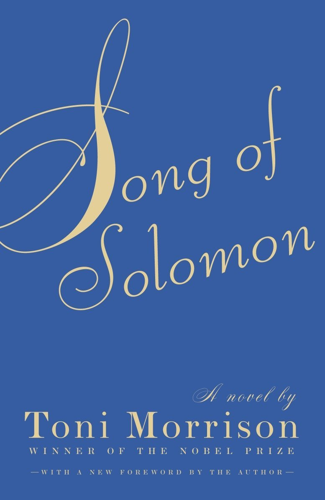
“If this were a short story club, I'd recommend ‘Récitatif’ by Toni Morrison, which was published in Confirmation: An Anthology of African American Women in 1983. Every human needs to read it and wrestle with all of their assumptions and discomforts regarding race. But since this is a book club, couple that short read with Morrison's Song of Solomon. Morrison got curious about what it might be like to tell a story from the male perspective. That curiosity gave us this magical tale of the life of a man named Dead. She can write a sentence like no other. But also, it's imperative to stay curious and follow our curiosities. That's the spirit this book inspires within me.”

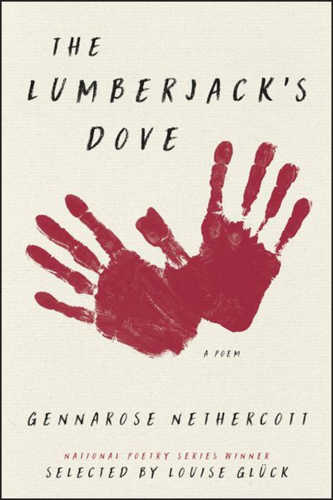
Meg Wade is one of the geniuses behind the maximalist poetry-reading outfit Be Witched. The group’s events incorporate art installations and music with readings from some of the best poets in the city, and some from out-of-state, too. Wade’s own poems are set in truck stops and country fields, at the feet of mountains. Using supple language, Wade conjures erotic images: “I like the way you sprayed the shower wall with hot / water before you pressed me up against it.” Wade was a 2017 National Poetry Series finalist. Her chapbook Slick Like Dark is forthcoming from Tupelo Press. She recommends The Lumberjack's Dove by Gennarose Nethercott.
Says Wade: " ‘The purest way to speak the truth is by lying,’ Glennarose Nethercott proclaims in her profoundly human and deeply real book The Lumberjack's Dove. This book-length, narrative poem taught me more about storytelling than my entire art school education. A lumberjack's ax chops off his hand, it turns into a dove, and it's his responsibility to try and fix it. Filled with longing, sacrifice and loss, this book delicately dances between folklore and the super real, between a cautionary tale and a book of revelations. If you're looking for a book that sings, a new hymnal to keep beside you on the nightstand, this is it.”
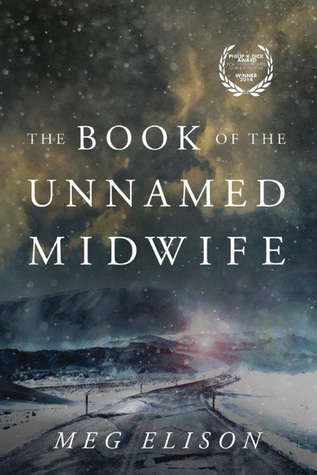
Chet Weise is the editor of Third Man Books — Nashville’s own top-of-the-line indie publisher — where he’s championed the works of Rouse, DeColo, Caroline Randall Williams, the Scene’s own Betsy Phillips and many more. Prior to that, Weise hosted the short-lived but locally beloved Poetry Sucks! reading series, which brought musicians and poets together in a way that appealed to a wide audience. His poetry contains multitudes. At times it’s deadpan and irreverent: “i have a friend who used grindr / for a hot bathroom hookup at the bass pro shop.” Other times, Weise can turn romantic, the lines of his poems swelling with feeling as he pays homage to some sacred beauty: “your eyes do turn me into spaghetti. Like scientists say, the gravity of a black hole can stretch a man.” Weise is a member of garage-rock outfit Kings of the Fucking Sea. You can catch the band Feb. 7-8 at East Nashville’s Soft Junk, where they’ll celebrate a new single “Death Dealer” and record a live album. Weise recommends The Book of the Unnamed Midwife by Meg Elison.
“ ‘When she fell asleep, the world was doomed. When she awoke, it was dead.’ That's a tough spot for the main character in The Book of the Unnamed Midwife to find herself in, especially considering that she's an OB-GYN nurse,” says Weise. “A plague has decimated the population, leaving 10 men to every woman, and spiking the infant mortality rate to 100 percent. It's brutal. It's beautifully written. I've always gravitated toward poetry and science-fiction because these are genres where imagination is encouraged without bounds. I love to see what people create. Similar to what Salvador Dalí said about surrealism — that it's really "extra-realism" — I find that when artists are given the ability to use their imagination freely, their discoveries tend to be more real and more challenging truths or questions. The Book of the Unnamed Midwife is a very hard telling of a bleak world. Elison works with metaphor, simile and irony as a poem would, and as we see the main character struggle to survive while society reorganizes itself, we learn much about the current reality of humans.”



