


Jordan Ritter Conn fills an increasingly rare role in the world of journalism — he’s a full-time reporter focused on long-form storytelling. Unless you work for The New Yorker or one of the other vanishingly few literary magazines still in existence, it’s tough to find a job in this vein, especially if you’re someone not living in a coastal media-hub city.
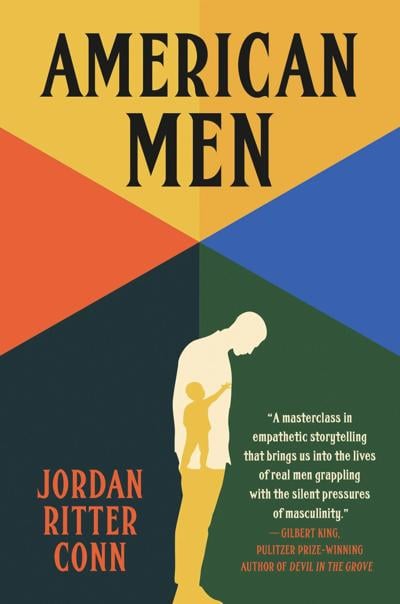
The Nashville-based author released his second book, American Men, on April 21. It’s a starkly intimate and in-depth portrait of four men living in the United States. Ritter Conn’s first book, the acclaimed The Road From Raqqa, focused on beloved local Syrian restaurant Café Rakka. This time he’s telling a broader — but just as effective — story.
Ahead of his appearance at Parnassus Thursday night, we spoke with Ritter Conn about his years-long process of writing the book. This interview has been edited for length and clarity.
How did you first get the idea for this book? It’s both a timeless and a really timely subject.
In a lot of ways, it feels like the thing that I’ve been working my way toward through my whole career. I’ve been doing long-form narrative, human-interest stories, mostly in the sports world. And when you write a lot about sports, that usually means you end up writing a lot about men. So I’ve done a lot of stories that involve talking to men about really intimate pieces of their lives. … Back in the late 2010s, during the first rumblings of a lot of the conversations we’re hearing now, I was paying really close attention to it. You would hear online about men being lonely and not having friends and not being in touch with their emotions.
On the one hand, I bristled at it because I felt like I made my career talking to men about their emotions and things that they were going through in their lives. But on the other hand, I recognized that there was a lot of truth to it. I started working on the proposal for this book in 2020 during the lockdown, and I was thinking that I could really intimately tell the story of several men’s lives, built around their relationship to masculinity. And I did not know the conversation that had begun bubbling up back then would get louder and louder.
How did you land on these four men?
I don’t have the exact number [of men I interviewed], but it was north of 50. And those conversations, they looked different. Some of them were very formal interviews, and we interviewed multiple times. … But then there were others who I just casually talked with. I would bring it up to everyone I met. I travel a lot for my job at The Ringer, and when I was on the road, I was just constantly bringing this up. The thing I found is that, in the initial conversation of “I want to talk to you about your relationship to masculinity,” almost everyone was willing to have it, and almost everyone was willing to be pretty open.
I wanted four stories that really complemented each other. There were a few things that I wanted to make sure that I had. I wanted someone who had engaged with physical violence in a really head-on way. … I wanted someone who played sports at a high level, because that’s a lot of how we kind of think about masculinity in this country. Also, I wanted someone who had a military background, because that’s a lot of how we think about masculinity. I wanted people from different parts of the country with different socioeconomic backgrounds. It was really important to me to have a trans person. I just thought a trans man’s experience would add a perspective to this book that I thought would be really important and worthwhile.

At Café Rakka in Hendersonville — a small restaurant just a short drive north of Nashville — Riyad Alkasem serves up bottles of homemade tea, …
I do have this belief — it sounds kind of trite, but I really think it’s true — that everyone’s story really is interesting enough to hold up to this kind of treatment.
You spent years talking to these guys, and they’re being really vulnerable with you. I’m sure you got close with them; how did that affect how you wrote the book?
I went to [journalism] school. I work as a journalist. Frankly, there are rules that we are taught as journalists that I abide by in most of my work, that I didn’t abide by in this book — the biggest one being letting them read their own stories. … I felt like I had to mention it [in the foreword], just because I felt like I owed that to the old-school journalist reader.
I feel really close to these guys. I have a close relationship with them. I have been to see a couple of them since the book was finished. I felt like those things were necessary in order to get to the level of intimacy that I wanted to get to. I wanted to write it in a way that makes it feel like you’re almost inside their heads. Standard journalistic practices don’t really allow for that … so I felt like it was worth it to be able to fully inhabit their experiences in the way that I tried to do.
How did you decide to structure the book in the way you did?
Any time you write anything, you just want the reader to keep reading. You want them to turn the next page. And I thought what better way to do that than to kind of pull the rug out from under them a little bit, get right up to this moment of tension, and then stop and say, “We’re going to go over here now.” … If I just sequenced them [consecutively], it would feel like a very different book. It would feel like four character studies rather than one coherent thing.

The 38th annual celebration of the written word takes place Oct. 17 and 18



Post a comment as anonymous
Report
Watch this discussion.
(0) comments
Welcome to the discussion.
Log In
Welcome to the discussion.
Keep it clean. Please avoid obscene, vulgar, lewd, racist or otherwise abusive language. Comments featuring hate speech or threatening or violent content will not be tolerated.
PLEASE TURN OFF YOUR CAPS LOCK.
Be truthful. Don't knowingly lie or mislead.
Be proactive. Use the “report” link on any comment that violates our comment policy.
Share with us. We'd love to hear your feedback.