

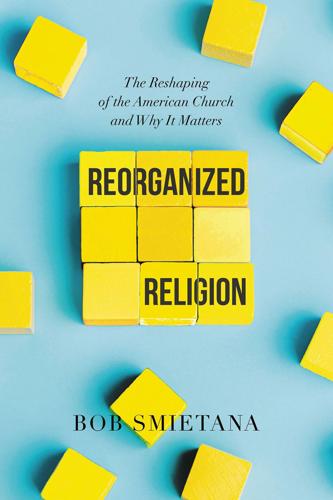


Whether he’s covering Dave Ramsey, Beth Moore, Southern Baptists or snake handlers, Bob Smietana knows how to narrate the cult in the word culture. This is to say he’s a religion reporter. Formerly the religion writer for The Tennessean and a senior editor of Christianity Today, he is currently a national reporter for Religion News Service.
With Reorganized Religion, described by Publishers Weekly as “a superb examination of the future of Christian institutions,” Smietana separates the wheat from the chaff, the healthy from the toxic, with enough depth and affection to give readers a dose of hopefulness.
With compassion and candor, Smietana traces the fallout when “disdain proves more powerful than love,” as well as the harbor found when “someone left the lights on and kept the door open.” He recently answered questions via email.
Bob, you are something of a legend in telling difficult stories with dignity. What’s a little different here is you weave in your own experience of religion, as one whose life has been served and maybe even sometimes saved by it. I got to thinking that you’re someone who loves religion. Do you love religion?
That’s a fantastic question. I love covering religion, for sure — how it affects every part of life and the endless variety of stories, practices and communities that help people find meaning in this world.
Do I love religion though? Yes, I think so. I am grateful for the life, which religion made possible. Not just religion, but organized religion, in my case, organized Protestant churches and institutions and the people who built and sustained them. I love the way religion commands us to be aware of our flaws and make amends for those flaws, creates habits and rituals that inspire us to be better people, and sends us out into the world to make it a place where everyone can thrive.
But here’s the thing: I know that so many people have been harmed by religion. They have been told they are not wanted or betrayed by people who promised to care for them or who used the power of organized religion for great evil. That’s why I am hesitant to say I love religion. But perhaps I love religion enough to know it’s crucial to report on the failings of religious people and institutions.
One theme that emerges among the stories you tell is what power does to communities. How would you characterize the relationship between religion and power?
Religion has power to harm and to heal, to rend and to repair — depending on the choices religious people make. Organized religion can be a channel for that power in the world, helping religious people put their ideals into practice. But people can also use that power to do great harm or to excuse the harm done by religious leaders.
In recounting scandals like the Southern Baptist Convention’s sexual abuse cover-up, your book reads like a report on the apocalypse, a breaking down of an untenable status quo, revealing the trauma and toxicity that were there all along. From your perspective as both a believer and a reporter, do you have faith that everything gets unmasked in the end?

I do. Because nothing stays hidden forever. Sometimes the apocalypse takes a long time, but the truth catches up with us all. We see this right now in the United States, as the ills we have long refused to deal with have caught up to us — and the failing of the country’s founders, especially when it comes to slavery, are no longer overlooked or papered over.
One thing I hope — as a reporter and as a believer — is that we will all be quicker to repent and make amends for our wrongs. One of the main points of many religious traditions is that we human beings are flawed. We are selfish. We love the darkness. And religion confronts those failings and offers us a way out — to admit our wrongdoing and work to make amends for them. But instead of doing that, institutions and leaders often choose self-preservation and self-deception, and as a result, what was a small problem festers into a catastrophic one — and leaves destruction and broken relationships in its wake.
“Religion,” you note, “is only as good as the people who practice it. … Faith harms and heals.” What do we lose when we lose religion?
We lose institutions and communities that at their heart are supposed to be dedicated to healing the world — and that are focused on the welfare of all, not just people in their own group. And we lose the future. And the possibilities of a better world.
Right now, almost [all] the incentives in political and social settings drive polarizations. While writing the book, I learned of an idea called “affective polarization” — which in a nutshell means that we are divided not by policies or values but by group identity. Basically, the way to get things done is by telling people who to hate. And because of the big sort — where people now only spend time with people who look like them, vote like them, think like them — that kind of hate is more effective than ever. All we want to do is throw gasoline on the fire while our communities burn down around us. When religious groups buy into that polarization — rather than trying to put out the fires — then we are all the poorer.
To read an uncut version of this interview — and more local book coverage — please visit Chapter16.org, an online publication of Humanities Tennessee.



