
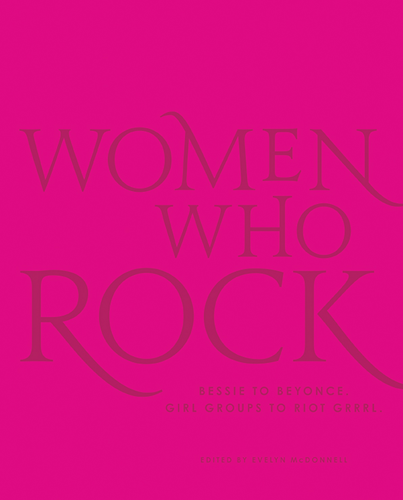
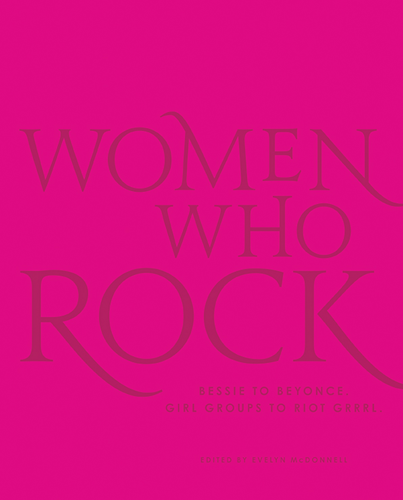

Anna Mae Bullock got out of Nutbush. Dolly Parton left Sevierville. Dusty Springfield found Memphis. Taylor Swift and the Dixie Chicks staked their claim on Nashville, and then the globe. Clearly Tennessee played a profound role in the seismic impact women made on the world of music: rock, pop, soul and country. Women Who Rock: Bessie to Beyoncé, Girl Groups to Riot Grrrl, Evelyn McDonnell’s gorgeous new coffee-table book with illustrations by four impressive women visual artists, traces the evolution of those Tennessee women — and others — in the world of music.
When McDonnell and Nashville-based music critic Ann Powers created Rock She Wrote, 1995’s anthology of women rock critics, artists and writers, it was both a document of criticism from the 1960s through the ’90s and a place for the experience of women critics to be collected. The book considered music in terms of culture, sex, gender orientation, feminism and racial realities. More importantly, it was genuinely fun to read, presenting a fresh perspective on music criticism.
Almost a quarter-century later, in a world awash in the reckoning of Time’s Up and #MeToo, Women Who Rock draws on the work of 34 contributors of varying ages, occupations and genres. As an editor, McDonnell has curated an authoritative journey through a woman’s place in various strains of modern music. She brings together illustrations and essays from an array of writers and performers: Jefferson Airplane/Starship vocalist Grace Slick; noted professors Daphne Brooks, Vivien Goldman, Salamishah Tillet and Gayle Wald; historian Holly George-Warren; authors Gillian G. Gaar and Caryn Rose; producer-artist Peaches; rocker Wendy Case; punk legend Alice Bag; curator Annie Zaleski; and installation artist/oral historian Lucretia Tye Jasmine. The combination of such disparate interests and approaches makes what might be unfamiliar genres comfortable and engaging for readers who aren’t invested in hip-hop, country, punk or pop.
The book’s subjects include June Millington (founder of ’70s all-girl group Fanny), pop duo Tegan and Sara, The GTOs, Against Me!’s Laura Jane Grace, and Poison Ivy of legendary punk group The Cramps, plus icons like Janet Jackson, Joni Mitchell, Madonna, Janis Joplin, Gwen Stefani and Whitney Houston. Even at the book’s impressive 400-plus pages, it would be impossible to include everyone, and notable exceptions include June Carter Cash, Gladys Knight, Meshell Ndegeocello, Loretta Lynn, The Runaways (though Joan Jett gets an essay), Rosanne Cash and Teena Marie. Nevertheless, the diversity here thrills.
Presented in chronological order — with three-page essays that include biographical information, key songs and albums — Women Who Rock is a survey course for people curious about women’s journeys through contemporary pop music. There’s a transgressive sense that self-expression drives these artists, who in turn embody a range of possibilities for their fans: Debbie Harry’s icy punk progressiveness, Ronnie Spector’s bad-girl posture, Odetta’s social consciousness, Pussy Riot’s full-frontal protest.
Powers contributes considerations on folk/protest powerhouse Joan Baez and disco’s diva/dreamer Donna Summer. Both women sought to stretch their work and their careers, and Powers showcases the kind of stretch that genuine talent can afford in the spotlight of very different careers. As Powers writes of Summer, “Her gospelized singing style and African-American identity have led to her being categorized as an R&B artist; yet she began her career in theater and rock, and remained a restless explorer of styles ranging from country to new wave to European synth-pop.”
Jewly Hight, another Nashville-based critic and former Scene contributor, presents the Dixie Chicks as country-style riot grrrls in an essay that goes beyond the controversy of Natalie Maines’ career-crippling criticism of the U.S. invasion of Iraq. Hight makes a case not just for the facts of the group’s career but also for the way their brash courage and musical aggression influenced Miranda Lambert, Maddie & Tae, Little Big Town and Kacey Musgraves: “Their down-home angle on audaciousness was an expression of personality that connected with country audiences — who needed to believe and identify with performers’ personas before buying in to them — and young women who were used to pop stars’ demonstrations of empowerment and alt-rockers’ display of autonomy.”
That is the genius of McDonnell’s book: More than a series of bios, its essays offer context and impact. Women Who Rock embraces each artist’s cultural moment but also advances their lasting importance and influence. If you have daughters, sisters or hip friends who love the work of women in any genre, this is a gift to give. Beyond the original art, there is original thought interlaced with great research and passion for music. It’s a book that deepens a reader’s appreciation for why music by women matters.
For more local book coverage, please visit Chapter16.org, an online publication of Humanities Tennessee.



Post a comment as anonymous
Report
Watch this discussion.
(0) comments
Welcome to the discussion.
Log In
Welcome to the discussion.
Keep it clean. Please avoid obscene, vulgar, lewd, racist or otherwise abusive language. Comments featuring hate speech or threatening or violent content will not be tolerated.
PLEASE TURN OFF YOUR CAPS LOCK.
Be truthful. Don't knowingly lie or mislead.
Be proactive. Use the “report” link on any comment that violates our comment policy.
Share with us. We'd love to hear your feedback.