

When we think about surrealism, words like strange, weird, absurd and bizarre naturally come to mind. While all of these terms might find a place in a discussion about surrealism, the Frist's Real/Surreal: Selections From the Whitney Museum of American Art reminds me that surrealism is a special kind of strangeness — one that specifically explores the relationship between the conscious and the unconscious, the awake and the dreaming, the intellectual and the instinctual.
Surrealism grew out of Dadaism, which spread its weird wings during World War I when European artists responded to the madness of the conflict and its destructive consequences with a kind of horror-filled absurdity that embraced irrationality and intuition. What resulted were the jarring juxtapositions of images so often discovered in the then-beloved techniques of collage and assemblage.
Surrealists became preoccupied with the aspects of Dada that embraced the free play of the unconscious mind — given both movements' origins in early 20th century Europe, this preoccupation with unconscious thoughts and drives is to be expected. Psychoanalysis was a scientific novelty at the time, and many European artists were fascinated by its techniques and claims about our sophisticated interior lives. Sigmund Freud published his first book in 1891, and he published his Introductory Lectures on Psychoanalysis during Dada's earliest days.
Just as Freud and World War I created the Dadaists, who in turn gave birth to surrealism, so European surrealist artists like Salvador Dalí and René Magritte influenced American artists to embrace their preoccupations with dreams and the inspired impulses of the unfettered unconscious. Real/Surreal selects work by these U.S. artists and demonstrates the various ways in which European surrealism was translated into American art between the 1930s and the 1950s.
Man Ray was an American artist who considered himself to be first and foremost a painter. It's fitting for a surrealist that most viewers probably think of him as a European photographer, given his Paris-centered career and the popularity of his camerawork. Real/Surreal restores Ray's identity as an American painter, opening the show with the artist's "La Fortune" and echoing the painting's colorful clouds in the blown-up vinyl signage on the exhibition's title wall.
Ray's expat credentials make him the perfect artist to open a show about the influence of European art on American art, and "La Fortune's" depiction of an elongated billiard table situated in a desert landscape beneath multi-chrome clouds sets the tone for the odd visions to come.
Surrealism doesn't rush to mind at the mention of realist, regionalist artist Andrew Wyeth, but the master's canvases are often shot through with a sense of lonely isolation, and a Wyeth work in Real/Surreal offers insights into the dramatic dismay that infuses the artist's greatest painting, "Christina's World."
"Christina's World" isn't displayed in Real/Surreal, but the inclusion of 1942's "Winter Fields" offers viewers an opportunity to consider whether the painting might have been a rehearsal for Wyeth's 1948 masterpiece. In "Christina's World," Wyeth paints a girl sitting in a dry field, turning her back to the viewer to a look to a farmhouse in the background — the sunlit scene bristles with a sense of panic. Wyeth's model was a young neighbor who couldn't walk, and once you know this you can see how her condition is revealed in her awkward pose.
The dead black crow that dominates the foreground in Wyeth's "Winter Fields" appears at first glance to be just an abstract shape set in the middle of a bucolic landscape — you have to get right up next to the piece to make out the separate feathers that form the wings before you understand what you're looking at. In the case of Wyeth's work, such painterly shenanigans are certainly deliberate. The dark, unsettling form gives off a grave sense of dread even before it's recognized as one element in a composition that's balanced by farmhouse buildings in the background.
In both of these paintings Wyeth offers up beautiful farm landscapes with quiet houses and barns in the background while wounded subjects dominate the foreground not only with their dramatic appearances but also with their subliminal effects.
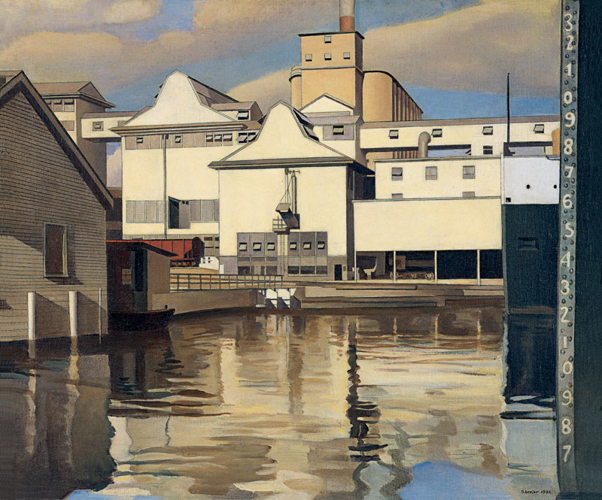
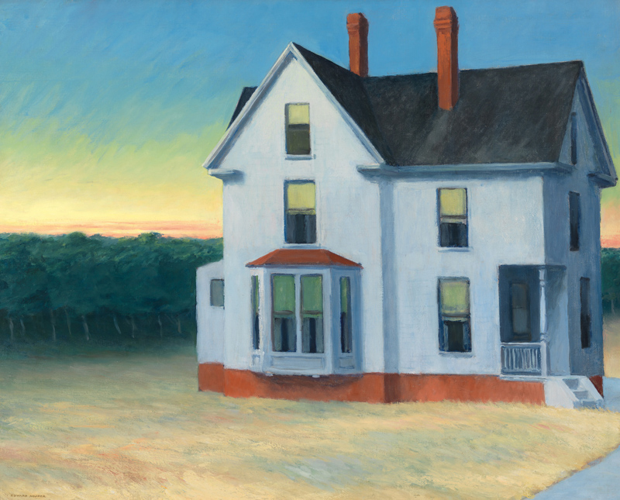
Wyeth's unsettling messaging to the unconscious mind is an example of the most subtle kind of surrealism, and much of the work in the show takes a similar tack — Edward Hopper, George C. Ault and Charles Scheeler offer up lovely buildings, houses and massive factories bereft of any sign of human activity. Also, keep count of all the primates you'll find in the various paintings. The scattered simians put me in mind of the surrealistic aphorisms of Malcom de Chazal. A favorite line reads, "Monkeys are superior to men in this: When a monkey looks into a mirror, he sees a monkey." Real/Surreal reflects what these American artists saw when they stared into the melting clocks of Dali.
Email arts@nashvillescene.com.



Post a comment as anonymous
Report
Watch this discussion.
(0) comments
Welcome to the discussion.
Log In
Welcome to the discussion.
Keep it clean. Please avoid obscene, vulgar, lewd, racist or otherwise abusive language. Comments featuring hate speech or threatening or violent content will not be tolerated.
PLEASE TURN OFF YOUR CAPS LOCK.
Be truthful. Don't knowingly lie or mislead.
Be proactive. Use the “report” link on any comment that violates our comment policy.
Share with us. We'd love to hear your feedback.